Education Resumes
20+ Student Resume Examples
Customize any of these resumes in minutes using our free AI-powered resume builder.
“Rezi is super upfront and continues to improve over time. I've recommended Rezi to several of my friends and colleagues. I just love this product so much.”

Ricky M.
Software Engineer
“Rezi is super upfront and continues to improve over time. I've recommended Rezi to several of my friends and colleagues. I just love this product so much.”
Ricky M.
Software Engineer
Helping users land jobs at 1,000+ companies such as














Applying for jobs as a student comes with one big challenge — you’re competing with tons of people with more experience. I’ve been there, fresh out of college, applying to job after job, and hearing crickets. My degree prepped me for essay writing, but not for landing interviews.
If I had known what I know now, it probably wouldn’t have taken years to kick-start my career. It might feel like you’re hitting a wall, but a well-crafted resume can make all the difference. You’ve gained more skills than you realize from your education and extracurriculars — it’s a goldmine you can use to make your resume shine.
And I’m going to tell you how. This guide will show you:
- Student resume examples and templates, from high school to college.
- How to choose the best student resume formatting and what to include.
- Tips and bonus resources to help your resume get noticed.
If you're interested in resume guides for specific career levels and scenarios, see:
- First-Year Student Resume Examples
- Second-Year Student Resume Examples
- Third-Year Student Resume Examples
- Fourth-Year Student Resume Examples
Student Resume Examples
For many of you, this is your first time building a resume. And if you’ve done some digging online, you’ve probably noticed templates filled with long work experience sections. But what if your only job has been flipping burgers at the local fast-food joint?
Easy — you just make a few tweaks.
You control what stands out, so highlight the skills, education, and experiences that matter. Still in school? Show off that GPA or your extracurriculars. Just graduated? Focus on relevant coursework or volunteering.
Below, you’ll find a range of student resume examples, from high school students to college grads and academic roles.
Teenage Student Resume
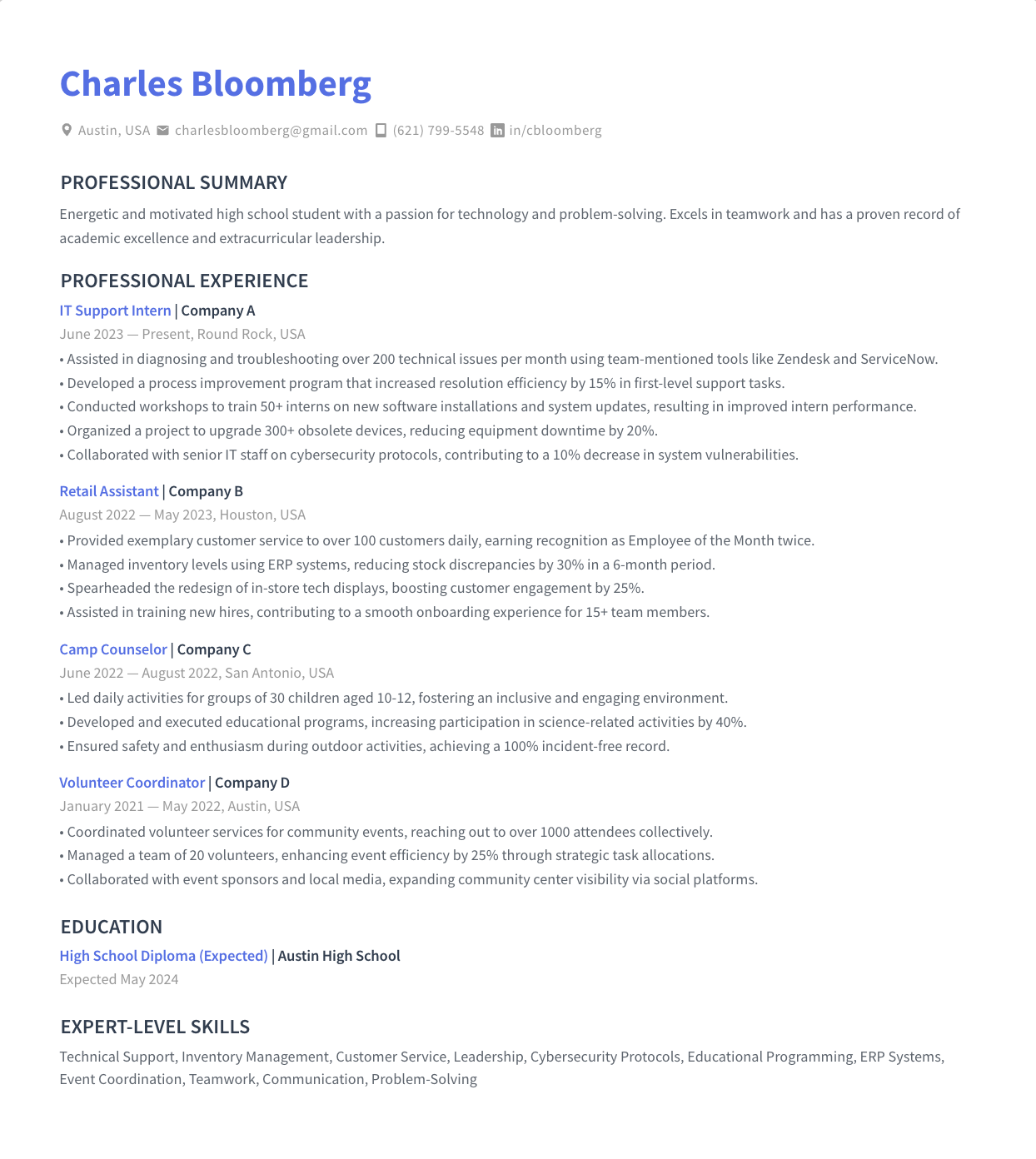
For a teenage student resume, focus on your education and skills developed in school. Highlight relevant projects, achievements, or certifications. If your GPA is 3.5 or higher, include it. Mention extracurricular activities, clubs, or sports that show leadership, teamwork, or discipline. Don’t worry if you don’t have any work experience — volunteering or part-time jobs like babysitting or tutoring also count. Include hobbies that show off your skills and personality.
High School Student Resume
Your high school student resume should highlight your education, part-time jobs, volunteer work, or projects. Focus on skills you’ve gained from school, clubs, or personal projects, like coding, blogging, or other creative pursuits. Include any awards or recognitions that show your achievements. Emphasize relevant skills, such as math or language proficiency — bonus points if they connect to the job description.
High School Senior Resume
With a high school senior resume, list relevant skills like foreign languages, computer literacy, or certifications (CPR, first aid, etc.). Highlight key projects, coursework, or class presentations to show your skills. Don’t forget to include volunteer work — it demonstrates responsibility and a strong work ethic. Mention clubs, sports, or organizations to showcase teamwork and leadership, especially if you’ve held team captain or club president positions.
High School Graduate Resume
Your high school graduate resume should focus on educational achievements, like AP courses or scholarships. Include any part-time jobs, internships, or volunteer work with clear descriptions of your responsibilities and accomplishments — use action verbs and quantifiable results when possible for more impact. List extracurricular activities or academic clubs, and any awards you’ve received for school, work, or volunteering.
High School Student Internship Resume
For a high school student internship resume, tailor it to the job by including specific skills and phrases from the description. Highlight any experience, from school, volunteering, or personal projects that align with the internship. Include a “Projects” section if you’ve done coursework or volunteer work that aligns with your future goals. Add an objective to outline your aspirations and why you want the intern position.
College Application Resume
With a college application resume, focus on extracurricular activities, academic achievements, volunteer work, and hobbies rather than employment history. Highlight your academic performance, including awards and honors, and list key activities that showcase your passions, such as sports, clubs, or non-school activities. Give admissions a full picture of who you are and what you bring to the campus community.
College Freshman Resume
For a college freshman’s resume, list relevant high school experiences like internships, summer programs, and extracurriculars. Highlight your current education, including your college name, expected graduation date, major, and GPA (not SAT scores). Over time, you’ll replace high school activities with college experiences, but for now, focus on your past achievements and any new opportunities you’re pursuing in college.
College Student Resume
After your first year at college, your resume should focus on replacing high school details with college experiences. Highlight research, campus jobs, and shadowing, especially if they’re related to your major. Keep high school awards to a minimum, listing just a few under the Education section. Include any academic awards, extracurriculars, or summer activities from college to show your growth and involvement.
College Internship Resume
Your college internship resume should start with an objective highlighting your knowledge, work ethic, and how your studies relate to the role. Focus on basic skills like computer proficiency, communication, and teamwork. Consider adding a “Professional Skills” section for specific abilities like software or languages, or integrate them into your experience. Include any special projects or extracurriculars that show passion for the field.
College Graduate Resume
With a college graduate resume, place your education at the top, listing your degree, graduation year, and university. Highlight any honors, scholarships, study abroad experiences, or a high GPA. In your work experience section, focus on internships or part-time jobs, providing clear bullet points with relevant skills and achievements, not just job duties. Customize your resume for each job to show how your experience fits the role you’re applying for.
Ivy League Resume
For an Ivy League resume, go beyond high GPAs and impressive clubs — every candidate was top in their class. Include metrics like percentages or numbers to quantify your achievements. Even if the resume is optional, use it to demonstrate how you align with the college’s values and mission. Research each institution and tailor your resume to reflect their focus, showing how your goals and experiences match their programs and philosophy.
Graduate School Resume
Your graduate school resume should focus on how your education and experiences have prepared you for advanced study. Highlight relevant coursework, work, and volunteer experiences that align with the program. Include a skills section showing technologies and competencies relevant to the field. Demonstrate a clear link between your background and future goals to tell a story about your readiness for grad school.
Academic Resume
For an academic resume, focus on detailing your educational background and academic experience. Include teaching or research roles, publications, presentations, and any honors or awards. Highlight your leadership roles and affiliations with professional organizations. List references who can speak to your qualifications and work ethic. Keep your resume tailored to the job, and avoid including unrelated or non-academic information.
Student Resume With No Experience
With little work experience, highlight your education and potential. List any classes that align with the job you’re applying for, like English or computer science. Include your GPA if it’s 3.5 or higher, and mention any academic honors. Add extracurricular activities, like sports or clubs, to show teamwork, leadership, and commitment. These can illustrate your skills and interests, even without formal job experience.
How to Write a Student Resume
Short answer:
To write a student resume, start with your contact information at the top, followed by a brief objective or summary highlighting your career goals. List your education, including school name, graduation date, and GPA (if it’s above 3.5). Focus on relevant soft and hard skills, and detail any work, internships, or volunteer experiences in reverse chronological order. Include extracurricular activities, honors, and personal projects to show you’re well-rounded with the potential to grow. Keep the formatting clean and professional, and proofread for errors. Tailor your resume to each opportunity by emphasizing the most relevant experiences and skills.
For more relevant resume samples in education, check out:
- Student Technical Assistant Resume Example
- Research Assistant Resume Example
- Graduate Student Researcher Resume Example
Choose the right student resume format
While it’s tempting to sprinkle your resume with color and fancy fonts, play it safe by keeping it simple. You want it to look professional and not take the attention away from your education and experiences.
Here’s a breakdown of the formatting must-haves to keep your resume clean and easy to read.
- Font and font size: Stick to a professional font like Arial or Calibri. Keep the font size around 10–12 points for the body text, and use 14–16 points for your name or section headings to make them stand out.
- Headings and sections: Clearly label sections like “Education,” “Work Experience,” “Skills,” and “Extracurriculars.” Use bold or slightly larger font sizes for section headings to make them easy to spot and organize your details neatly.
- Margins: Aim for 1-inch margins on all sides. If you need more space, you can go as low as 0.5 inches but don’t cram too much text into the page.
- Bullet points: Use bullet points to list responsibilities, achievements, and skills. It keeps your resume clean and easy to skim. Focus each bullet on an action and result.
- White space: Don’t overload the page with text. Leave plenty of space between sections to avoid a cluttered look, making the resume easier to read.
- Consistency: Maintain a consistent style throughout the resume — use the same font, bullet style, and heading format.
A quick “resume template” Google search will show plenty of examples, with work experience taking the top spot. But as a student, you can recenter the focus on your education and academic achievements.
Here’s what your section could look like for a student resume:
- Name with contact information
- Resume objective
- College or high school education
- Work experience or volunteer work
- Extracurricular activities
- Skills and interests
- Any additional sections
List all your education and work experiences in reverse chronological order. It’s the most popular format and puts your latest achievements at the top, where they’re easiest to see. Recruiters and Applicant Tracking Systems (ATS) are also most familiar with this format, so they’ll know exactly where to find what they need when scanning your resume.
Discover the best practices for resume formatting: How to Format a Resume & What Standard Resume Format to Use
Start with your name and contact details
This part is hard to mess up, just check for any typos — you don’t want to lose the job because you wrote the wrong digit in your phone number.
Place your contact information at the top of your resume, just under your name, which should be displayed loud and proud — you want to make it as easy as possible for recruiters to reach out.
Here’s how you can list your contact details:
- Full name: Use a larger, bold font, so your name stands out at the top.
- Phone number: Add your current mobile number, and get rid of any “gotcha!” voicemails.
- Email address: Say goodbye to your old bellaboo@hotmail.com email address and opt for something more simple and professional — like firstname.lastname@gmail.com.
- Location: Just include your city and state — they’re not popping over for a visit, so there’s no need for your full street address.
- Website: If you have a LinkedIn page, blog, or portfolio, you can add a link to that too to show you’re ready to enter the professional world.
Here’s an example of how to list your contact information:
Bella Swan
(555) 123-4567
bella.swan@gmail.com
Forks, WA
linkedin.com/in/bellaswan
Learn more: What Sections to Include on Your Resume?
Include a student resume objective
Most professionals kick off with a resume summary with work experiences, skills, and big achievements. But what if your only job has been walking the neighbor’s chihuahua twice a week?
If you don’t have tons of work experience, a resume objective is a better fit as it looks more to the future. It’s your chance to give a quick intro, show off your strengths, and share your professional aspirations in just a few sentences.
Keep it brief but specific. You don’t need to spill all the details — mention your key skills, what you’ve achieved so far, and what you’re hoping to get from the role.
Don’t forget to tailor your objective to each job. Adjusting it for different positions shows you’ve done your homework and are genuinely interested. Even though it’s a small section, getting it right can make a strong first impression.
Here’s an example of a student resume objective:
Enthusiastic college student majoring in Marketing with strong communication and organizational skills. Eager to apply my knowledge and hands-on experience in a dynamic marketing internship. Looking to contribute to a creative team and grow professionally while bringing fresh perspectives and a proactive attitude.
Focus on your college or high school education
Your education is a big deal when you’re a student or a recent grad. It’s your main selling point, so don’t just list the basics. You want to give extra, so talk about those standout moments throughout your educational journey.
Place this section right under your resume objective. List everything in reverse chronological order with your most recent school experience. If you’re early in college, you can include your high school details. But as you get further along, focus solely on your college experience.
For high school students, mention your school’s name, expected graduation date, and GPA if it’s above 3.5. Adding relevant projects, class rank, certifications, or any special achievements can help this section pop.
Here’s an example of a high schooler education section:
Springfield High School
Expected graduation: June 2025
GPA: 3.8
• Class President, 2023–2024
• National Honor Society Member
• Completed AP Biology and AP Calculus
For college students, include your major and minor, expected graduation date, and any academic honors. If you’re pursuing a Master’s, include your Bachelor’s degree too. List your GPA if it’s impressive (3.5 or above) — if not, it’s okay to skip it. Also, mention relevant academic achievements, thesis projects, or coursework related to your career goals.
Here’s how to list your education as a college student:
University of California, Berkeley
Bachelor of Arts in Marketing
Expected Graduation: May 2026
GPA: 3.7
• Dean’s List, Fall 2023
• Marketing Club President
• Coursework: Consumer Behavior, Digital Marketing
For a deeper dive, check out: How to List Education on a Resume
Mention extracurricular activities and associations
Competition is fierce, and the harsh reality is there are plenty of other candidates out there with more experience fighting for the same job. You need to give yourself an edge, something that’ll get you noticed.
Adding extracurricular activities and associations to your resume is a great way to catch the eye of recruiters. It shows you’re involved, can juggle your time well, and are committed to things beyond school or work.
Think about what you’ve been involved in outside of class. Were you on the debate team? That’s a great way to highlight your communication and critical thinking skills. Are you part of the school volleyball team? Perfect for flaunting your teamwork skills and drive.
Even personal projects can fit here if they’re relevant. Maybe you have your own YouTube channel or blog — these show initiative and passion, both of which employers and admissions officers love.
Here’s how to add some flair to your resume:
Debate Team Member
• Developed strong communication and critical thinking skills
• Competed in regional and national tournaments
Lacrosse Team Captain
• Led the team to a state championship
• Coordinated practice schedules and team events
Founder of “TechTalk” YouTube Channel
• Created and hosted weekly tech reviews and tutorials
• Gained over 1,000 subscribers and engaged with a growing audience
Is this your first job? Take a look: How to Write a Resume With No Experience
Outline any work experience or volunteer work
Don’t stress if you haven’t landed a formal job yet. Part-time gigs, internships, casual jobs like babysitting or tutoring, and volunteer experience all count. These experiences show you’re responsible and motivated — qualities employers really appreciate. Just keep things relevant to the job you’re aiming for and list everything in reverse chronological order.
Treat your volunteer work just like a job on your resume. Mention the organization, your role, what you did, and how long you were involved. If you can, highlight any positive results to paint a success story.
Focus on the challenges you faced, the actions you took, and the results you achieved. Saying you tutored a classmate is a nice touch. But describing how you helped them improve their grades in Math and Science shows you can deliver. It’s about showing employers your potential and what you can bring to their company.
Here’s what your student work experience can look like:
Part-Time Tutor
Self-Employed
• Tutored classmates in Math and Science
• Helped improve grades by an average of 20%
• Developed personalized study plans and materials
Volunteer Coordinator
Local Animal Shelter
• Organized weekly adoption events
• Managed a team of volunteers and handled scheduling
• Helped increase adoption rates by 30% through effective event planning
Babysitter
Various Families
• Provided reliable child care for multiple families
• Planned engaging activities and ensured safety
• Built strong relationships with families, leading to repeat bookings
Learn how to make your work experience stand out: How to Describe Your Work Experience on a Resume.
Add relevant skills and interests
You don’t need a strong professional background to develop solid skills. Employers know everyone starts from somewhere — if you’ve got the foundation, you have the potential to grow.
Include a small section for hard skills (abilities you can measure) and soft skills (personal qualities). Hard skills could be anything like speaking another language, using Excel or mastering a design tool. Soft skills? Think communication, creativity, or problem-solving.
In most cases, focusing on your hard skills is a smart strategy, as recruiters can quickly view this list to check off any requirement boxes for the job. Soft skills are equally important, but you’ll need to prove it. Anyone can say they have the gift and the gab — but can you nail a sales pitch, or just chat about cat memes for hours?
Throughout your resume, connect your skills to things you’ve done. Show your leadership by explaining how you led a group project, or your communication skills by talking about a successful presentation. And always focus on the results — don’t just say you gave a presentation, say you gave one that got you an A+.
And don’t pad your resume with irrelevant details. Sure, you might have mastered TikTok, but it won’t help you land a job at a call center. Look at the job ad and match your skills to what they’re asking for — you want to show them why you’re the perfect fit.
Need some inspiration? Take a look at these in-demand soft and hard skills:
Learn the top strategies for showcasing your skills: How to Put Skills on a Resume
What Makes Student Resumes Different
In short: direct the focus to any relevant achievements and your willingness to learn.
The biggest difference between a student resume and a “professional” one? Lack of work experience — but that’s not necessarily a bad thing. Young employees bring fresh perspectives and curious energy — it’s about highlighting that desire to grow on your resume.
Lean into your education. You’ve probably given presentations, joined clubs, or played sports during this time — how many full-time workers can say they’ve done all that recently? Take the skills and commitment you’ve developed from these experiences and make them pop on your resume.
Take a look at these student resume tips to maximize your skills and potential.
Highlight any honors, awards, or certificates
Your resume is a highlight reel of your skills and achievements — but for the most part, employers have to take your word for it. Adding certifications or awards adds that extra layer of credibility and shows others have also recognized your efforts.
What this means for you:
- You can add flair to your education section by including your awards, honors, and certifications. Or if you have a bunch of accolades to show off, you can give them their own dedicated section and separate them into categories, such as sports and academics.
- Include anything that backs up your skills and successes. Won a trophy in sports? It shows your commitment and drive. Got a certification in Microsoft? That’ll be handy if you’re going for an admin role.
Show your personality with hobbies
Recruiters see tons of resumes from recent grads, all listing the same extracurriculars, coursework, and part-time jobs. While there’s nothing wrong with that, you don’t want to blend in with the crowd. A few bullet points about your hobbies can make you more memorable and relatable.
What this means for you:
- Be specific. Instead of just saying “reading” or “sports,” mention the type of books you enjoy or the sport you play — who knows, the hiring manager might share the same interests.
- Choose hobbies that highlight transferable skills. For example, “volunteering at animal shelters” shows compassion and responsibility, while “blogging about tech” highlights writing skills and tech knowledge.
Emphasize your willingness to learn
The job market’s evolving faster than ever — with shifting economies and new tech, you’ve got to stay sharp or risk falling behind. And there’s the challenge: with all these changes and technological advancements, employers are looking for more skills and experiences, even for entry-level positions.
What this means for you:
- Everyone starts somewhere. A strong education is a solid base, but you can set yourself apart by adding extra courses or online classes to your resume to show employers you’re serious about upskilling.
- List activities or clubs to show your curiosity and eagerness to get involved beyond academics. Even better if they relate to your career interests.
Tailor your student experiences to the job
You wouldn’t show up to picture day in a Halloween costume, right? Read the room. You want your resume to align with the job you’re applying for and the skills and requirements. Mentioning you’re a seasoned plant mom might be cool for a landscaping position, but less for a call center job.
What this means for you:
- Review the job ad and highlight the abilities or experiences you’ve gained in school, internships, or extracurriculars that align with what they’re looking for. Pinpoint specific phrases or skills emphasized the most and weave them into your resume.
- Tailor your resume’s objective or summary to show why you’re perfect for that specific role. This is the first thing recruiters see, so make sure it grabs their attention and shows you’re the right fit right away.
Bonus Resources for Students
You’ve probably heard of the “skills gap,” right? With technology and AI evolving fast, employers need workers who can keep up. In fact, a 2021 McKinsey survey showed that 87% of companies either have skill gaps or expect them soon.
The reality is that new graduates are finding it tough to meet these new expectations. The bright side? There are plenty of resources and paths you can take to upskill.
As well as continuing your education, you can access a wide range of courses and certifications on popular learning platforms like Coursera and Udemy. Saying you’re Microsoft certified won’t look too shabby on your resume.
Check out my top picks to boost your skills and add some extra finesse to your resume.
Coursera
- Microsoft 365 Fundamentals Specialization: Learn to boost productivity by using Microsoft 365 tools, including creating and editing workbooks, managing presentations, and visually representing data through various applications.
- Crash Course on Python: Master Python basics, including strings, lists, and dictionaries, and write simple scripts for automation tasks.
- Effective Problem-Solving and Decision-Making: Understand the strengths and limitations of problem-solving and decision-making, and how they affect personal growth, team dynamics, and organizational success.
- AI For Everyone: Learn AI fundamentals, including machine learning, neural networks, and how to identify opportunities for AI applications while exploring ethical considerations.
- Introduction to Cloud Computing: Explore cloud computing, its key characteristics, service models (IaaS, PaaS, SaaS), and different deployment models (Public, Private, Hybrid).
EdX
- AI for Everyone: Master the Basics: Learn the fundamentals of AI, including machine learning, deep learning, and neural networks, and explore its applications and impact on everyday life.
- Digital Marketing Analytics: Tools and Techniques: Master digital marketing analytics by learning SEO, paid search strategies, web analytics, and AI/Big Data applications to enhance your marketing strategies.
- Data Analytics Basics for Everyone: Understand the core concepts of data analytics, including the data ecosystem, its process, and career paths within the field.
- CS50’s Introduction to Programming with Python: Learn Python programming fundamentals, including writing, reading, testing, and debugging code, with no prior experience required.
- Analyzing Data with Excel: Develop essential Excel skills to analyze data effectively, focusing on basic functions and key features of spreadsheet applications.
Udemy
- Python: Master Programming and Development with 15 Projects: Master Python programming, including data science, machine learning, and desktop applications. Build projects using data types, loops, file handling, and big data analysis with over 60 million data points.
- Introduction to Web Development: Learn the basics of web development, including HTML, CSS, JavaScript, and the tools used by developers. Understand how to create simple web pages and the role of different web technologies.
- ChatGPT Complete Guide: Unlock the full potential of ChatGPT to create content, and generate targeted ads, newsletters, and images with prompt engineering techniques. Enhance creativity and efficiency in content creation.
- How to Build your Professional Network: Learn how to start building a professional network, interact effectively, and use online platforms to grow your influence, skills, and relationships in your industry.
- Business Fundamentals: Marketing Strategy: Understand customer needs, wants, and demands. Learn to develop a marketing plan using the 4Ps of marketing and strategies to effectively reach and engage your audience.
Summary
Here’s how to create a professional resume that stands out to employers and admissions committees:
- Put your name, phone number, email, and LinkedIn profile or portfolio at the top. Make sure your email is professional — no funny nicknames.
- Briefly state your career goals and what you’re aiming for with a resume objective or summary. It’s your chance to grab attention and highlight your enthusiasm.
- List your education with your school name, expected graduation date, GPA (if it’s 3.5 or above), and any relevant coursework or honors. If you’re in college, focus on that and leave high school off.
- Include any work experience, internships, or volunteer roles. List these in reverse chronological order, and describe your responsibilities and achievements using action verbs.
- Mention any clubs, sports, or projects to show recruiters you’re well-rounded and can manage your time effectively. Highlight leadership roles or significant contributions that show off your skills.
- Include any relevant recognitions like awards and honors. Whether an academic award or a sports trophy, these boost your credibility.
- If you’ve worked on relevant projects or have a personal blog or YouTube channel, you can add these to demonstrate initiative and passion.
- Include hard skills (like software proficiency) and soft skills (like communication) throughout your resume. Tailor these to the job or program you’re targeting.
- Keep your resume clean and easy to read. Use bullet points, consistent fonts, and enough white space to make it visually appealing.
- Double-check for typos and grammar errors. If you want to play it safe, ask your school’s career advisor or a mentor to proofread your resume before sending it.
FAQ
What is a good profile summary for a student resume?
A good resume summary for a student resume is a brief, compelling statement that highlights your key strengths and career goals. It should also be tailored to the position you’re applying for.
For example: “Motivated high school senior with strong communication and leadership skills, seeking a part-time job to develop customer service experience. Proven track record of academic excellence and active participation in school clubs, with a commitment to delivering high-quality work and learning new skills.”
Try our Rezi AI Resume Summary Generator. Just input your job title and skills, and our AI will quickly craft a tailored resume for you — minimal effort needed.
How to make a resume as a high schooler?
Creating a resume as a high school student is about showing your skills, achievements, and any relevant experience. Focus on your education, part-time jobs, volunteer work, extracurricular activities, and academic achievements. List these in reverse chronological order to highlight your most recent experiences.
Emphasize leadership roles or special projects, as they show initiative and dedication. Even if you haven’t had much formal work experience, including achievements like honor roll or winning a school competition can help make your resume stand out.
What is the best format for a student resume?
For a student resume, the best format is usually a reverse-chronological layout. This means listing your most recent experiences first, which helps employers see your latest accomplishments.
Start with your contact details, followed by an objective or summary statement, then education, experience, skills, and hobbies. Keep it clean with clear headings and bullet points. Using a professional font like Arial or Calibri and keeping your resume to one page ensures it’s easy to read.
How to make a resume for a first job high school student?
For your first job as a high school student, focus on your skills and any relevant activities rather than extensive work experience. Highlight part-time jobs, internships, or volunteer roles, and include responsibilities and achievements in those roles.
Emphasize skills like customer service, teamwork, or time management that you’ve developed through school or extracurricular activities. A strong objective statement at the top of your resume can also help show your enthusiasm and readiness to take on a new role.
How to write a master’s degree on a resume?
When listing your Master’s degree on a resume, include the degree title, the institution you attended, and your graduation date. Add any relevant coursework, research projects, or a thesis. If you’ve completed any notable achievements during your studies, such as awards or publications, include those to further show your qualifications and expertise.
Here’s how to list your master’s degree on a student resume:
Master of Business Administration (MBA) University of XYZ, City, State
May 2024
- Coursework: Strategic Management, Financial Analysis, Marketing Strategy
- Thesis: “Innovative Strategies for Digital Marketing in the Modern Era”
- Achievements: Graduated with Honors, Dean’s List (2022-2024)

Upload or drop your resume to get started
Upload your resume to get started
Score my resume
Contents
Resume Formats & Examples
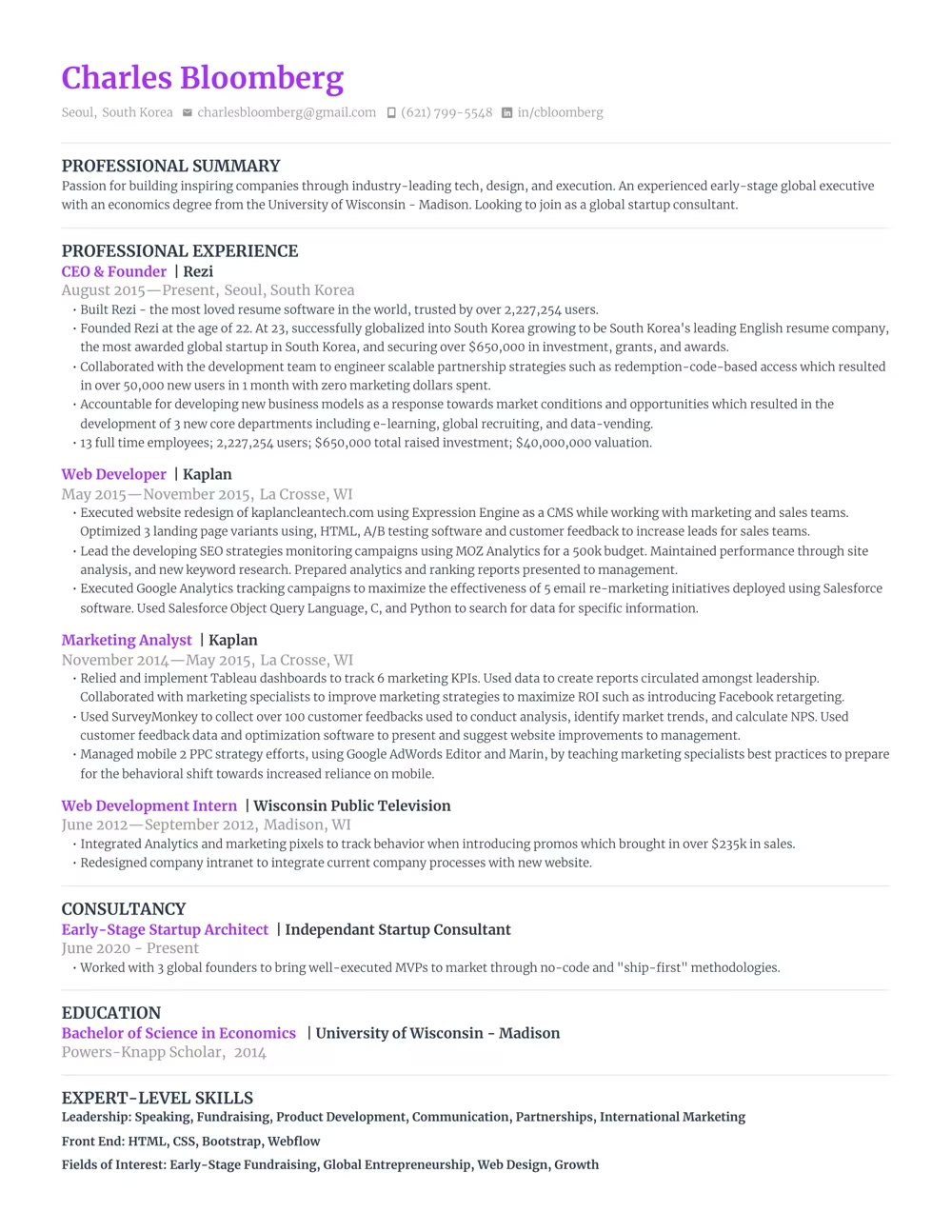
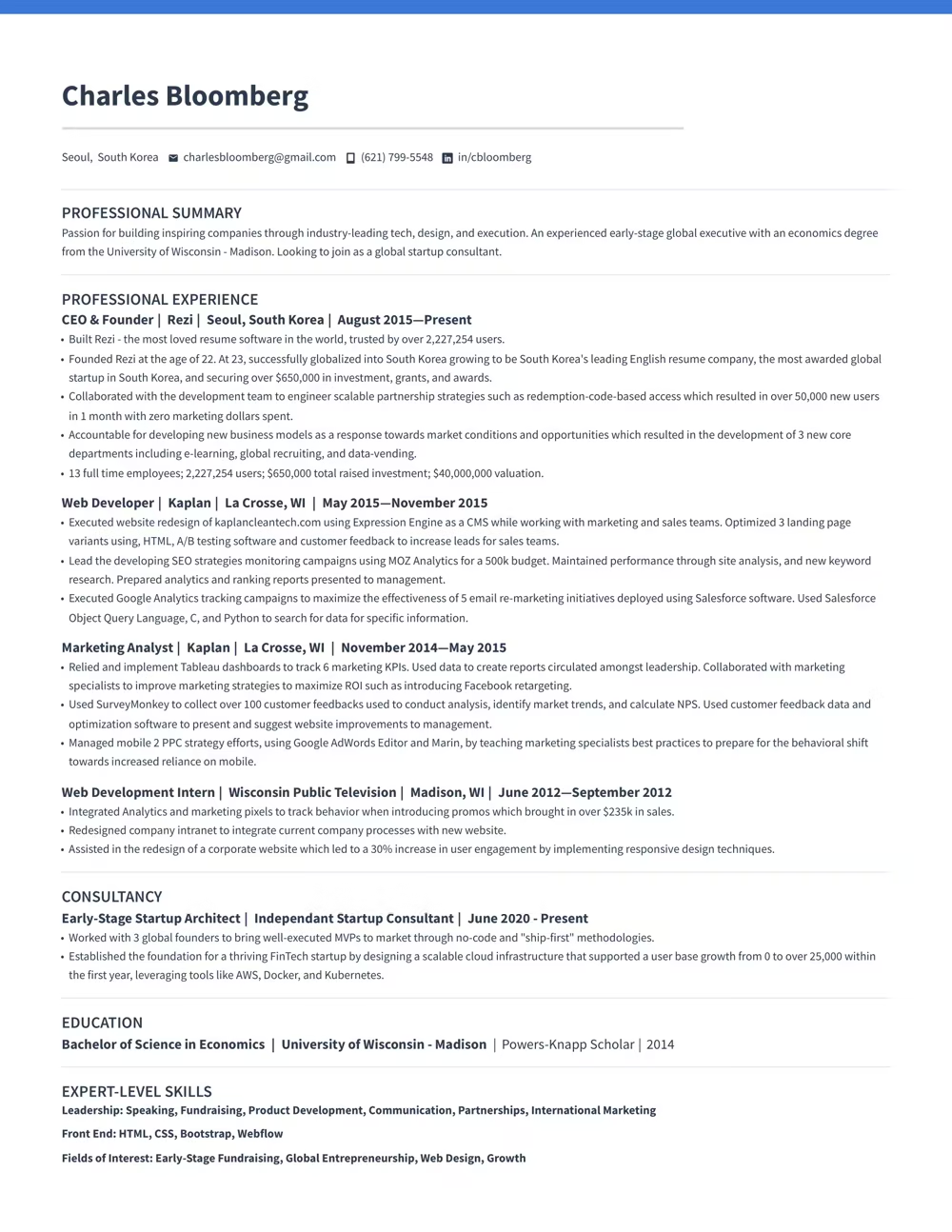
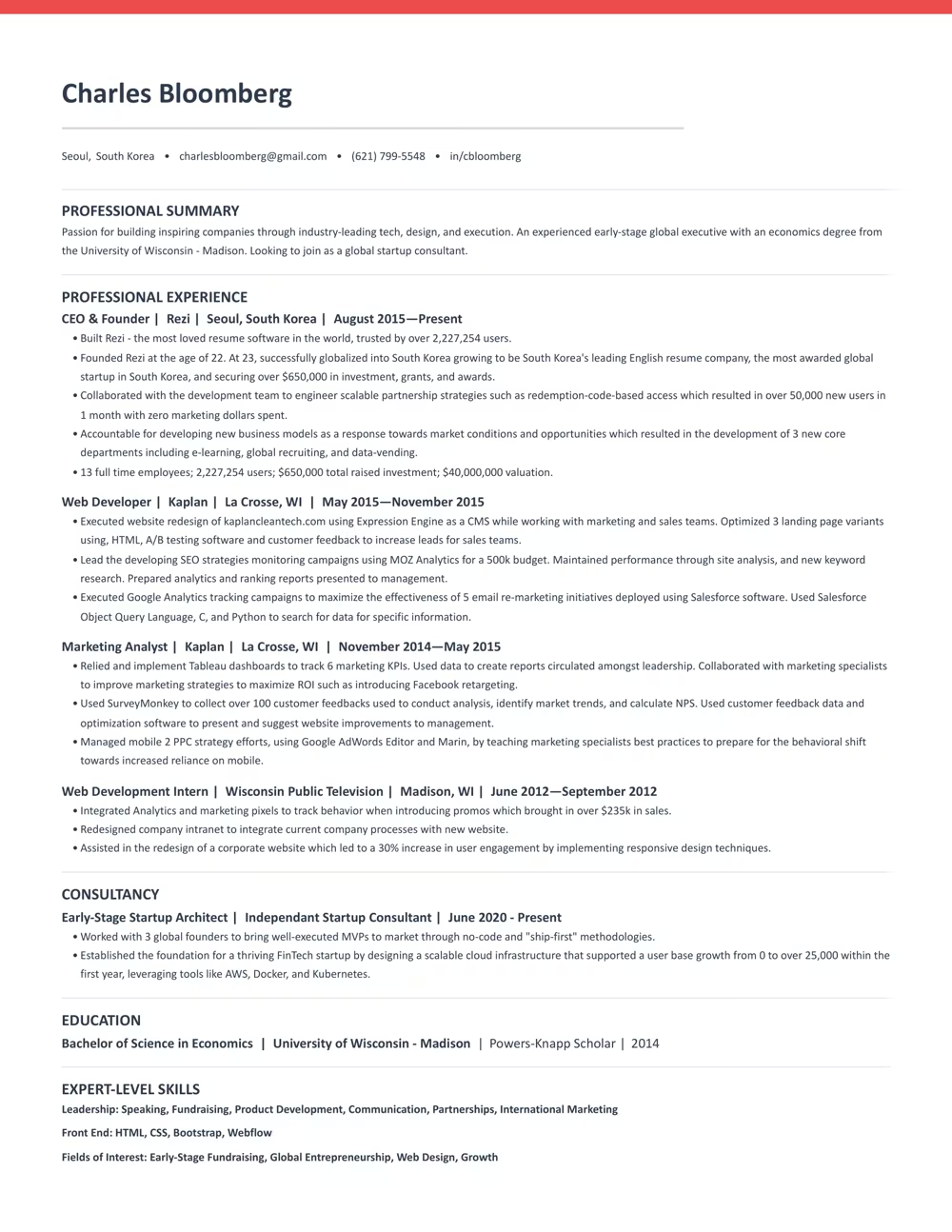
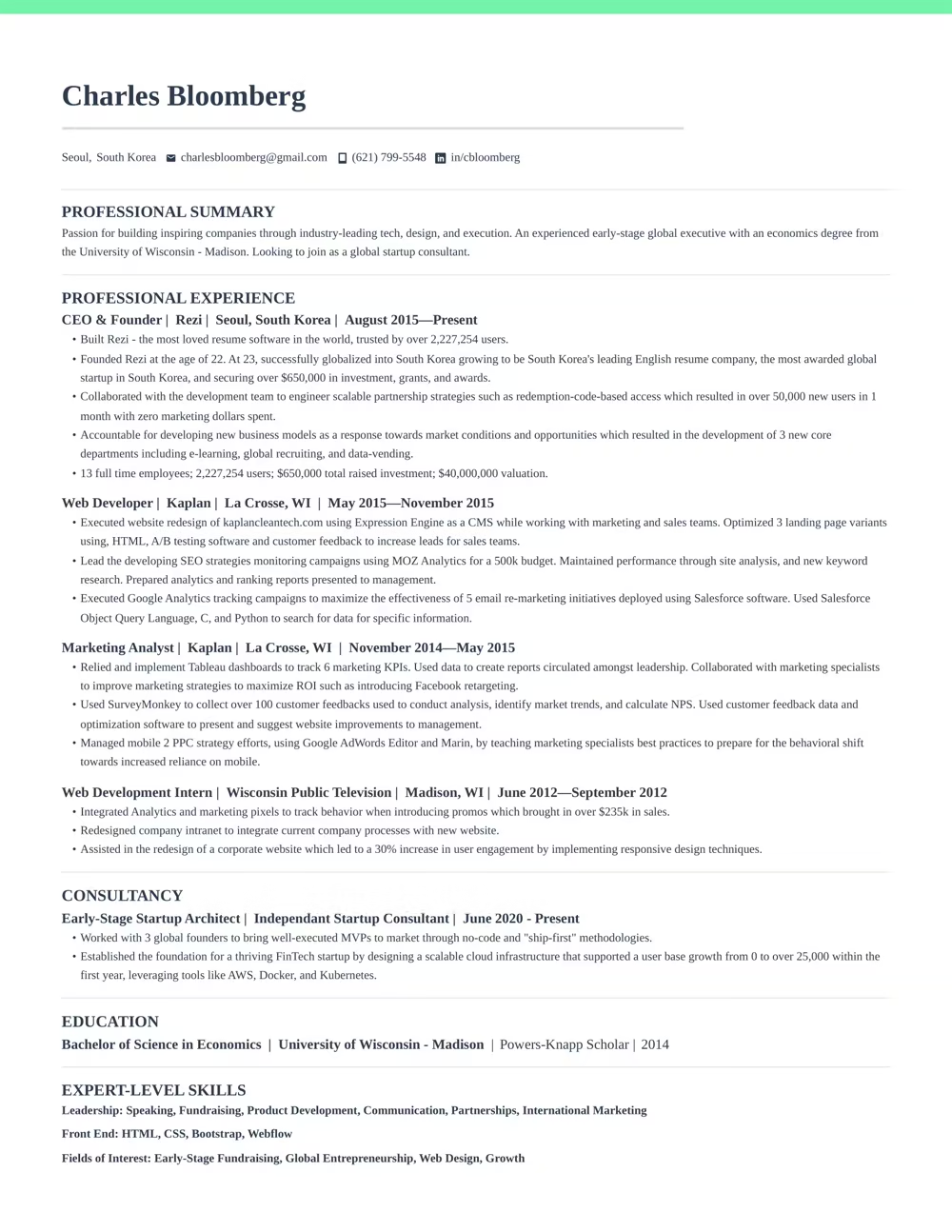
ATS-Friendly resume formats that land jobs
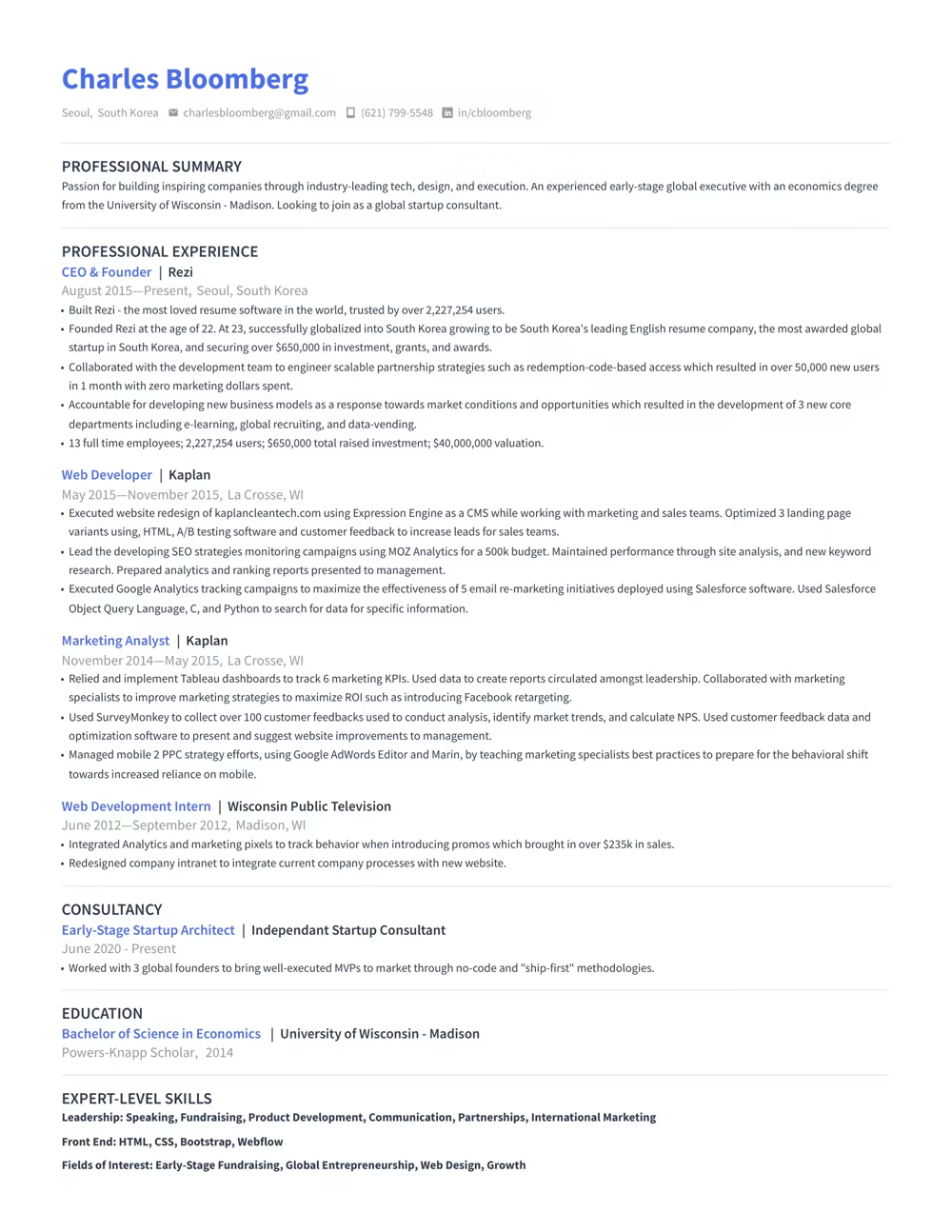
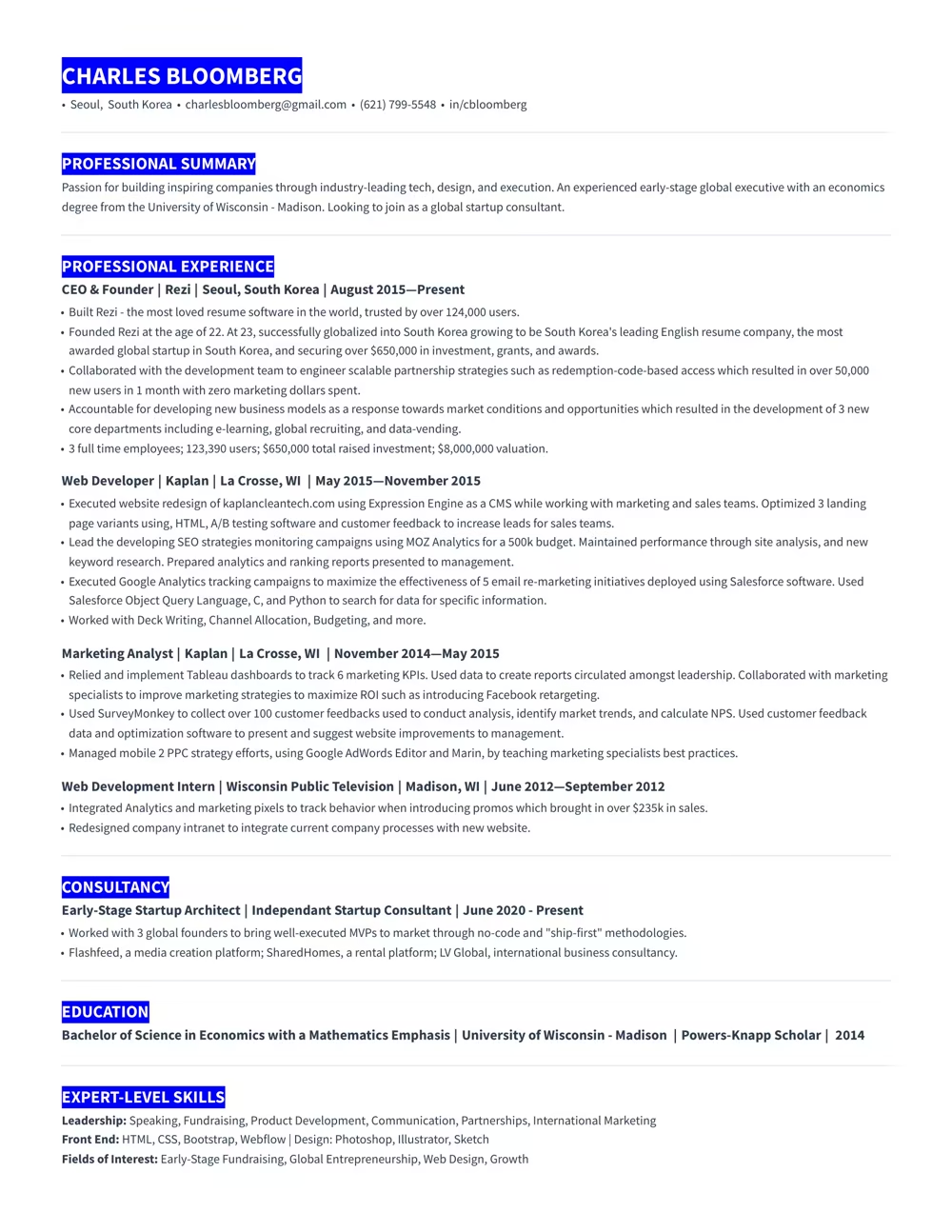
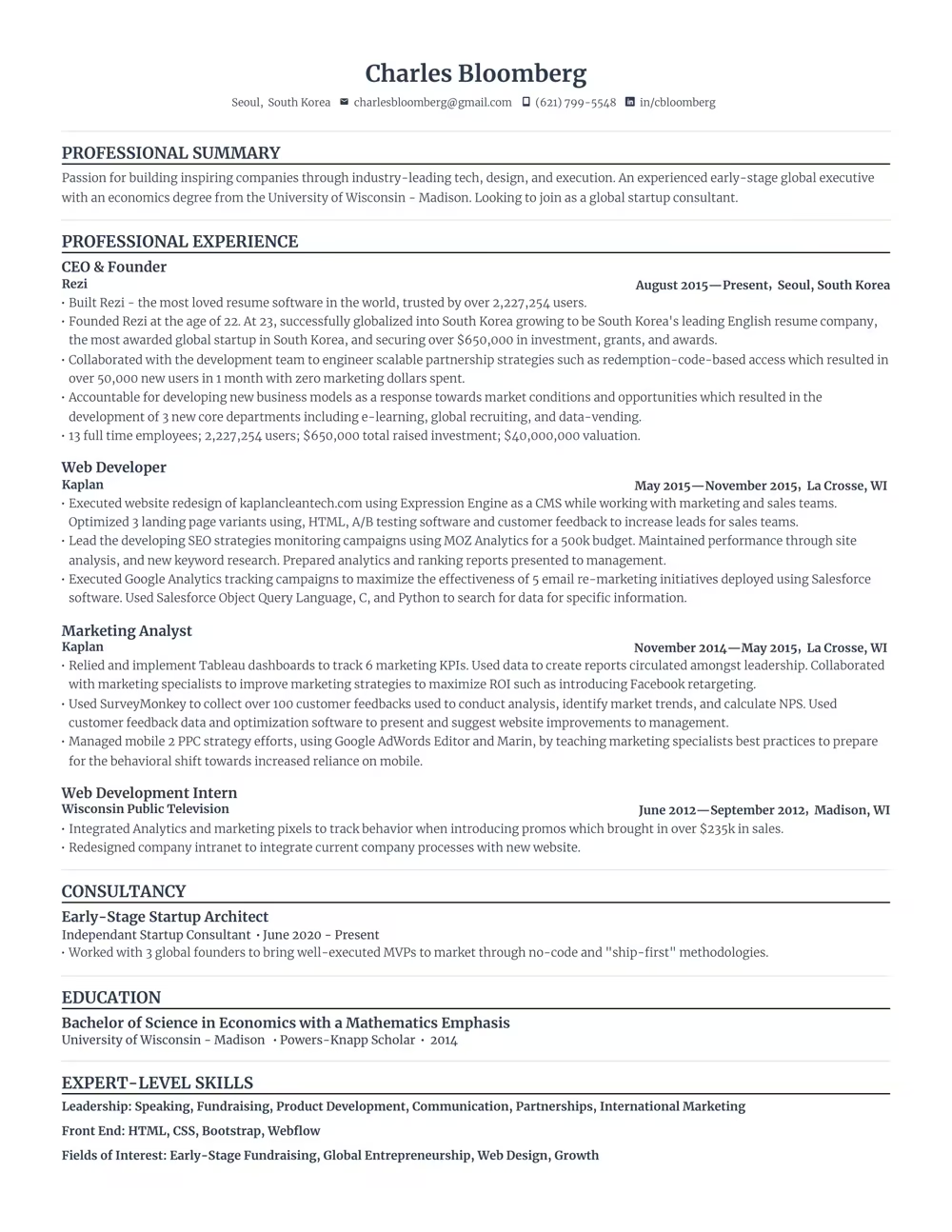
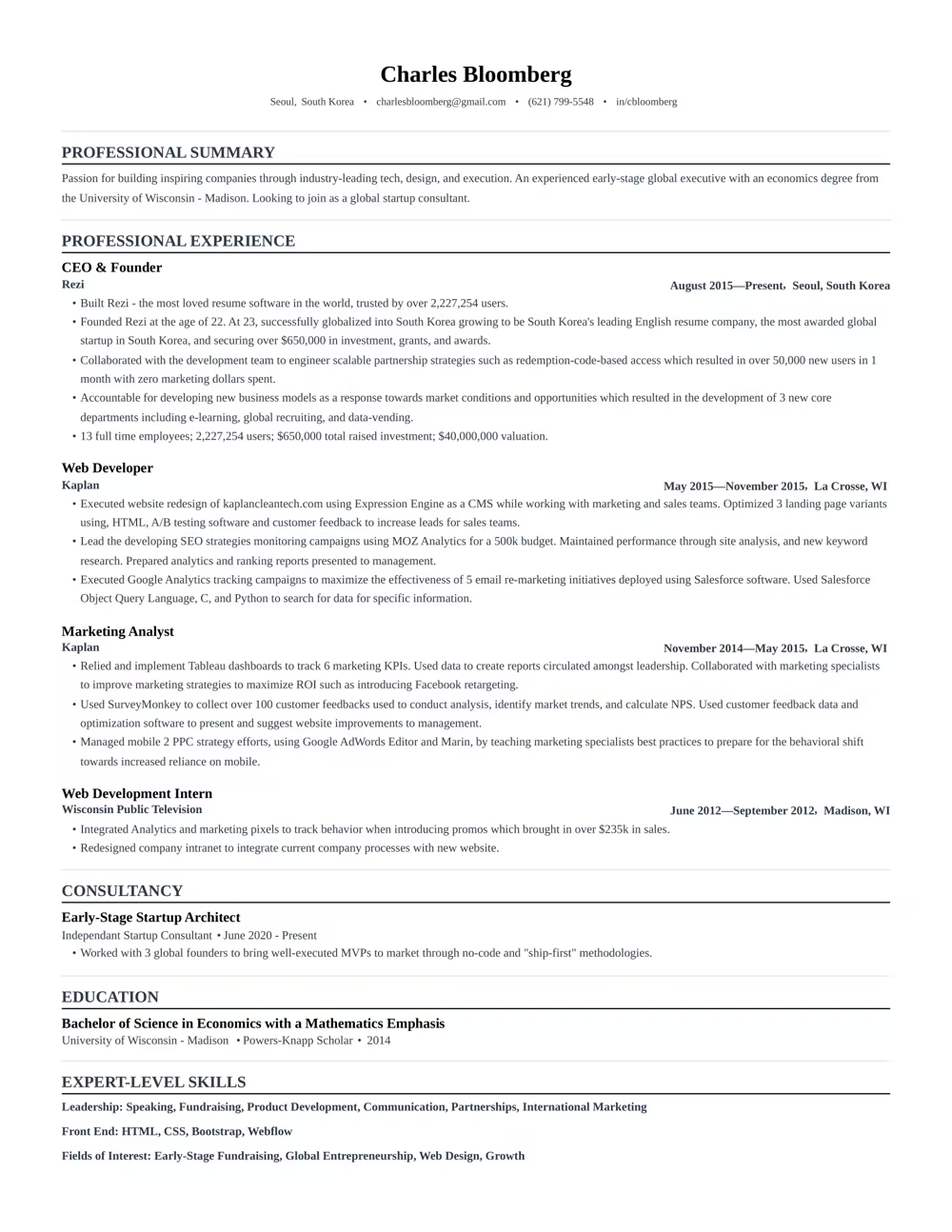
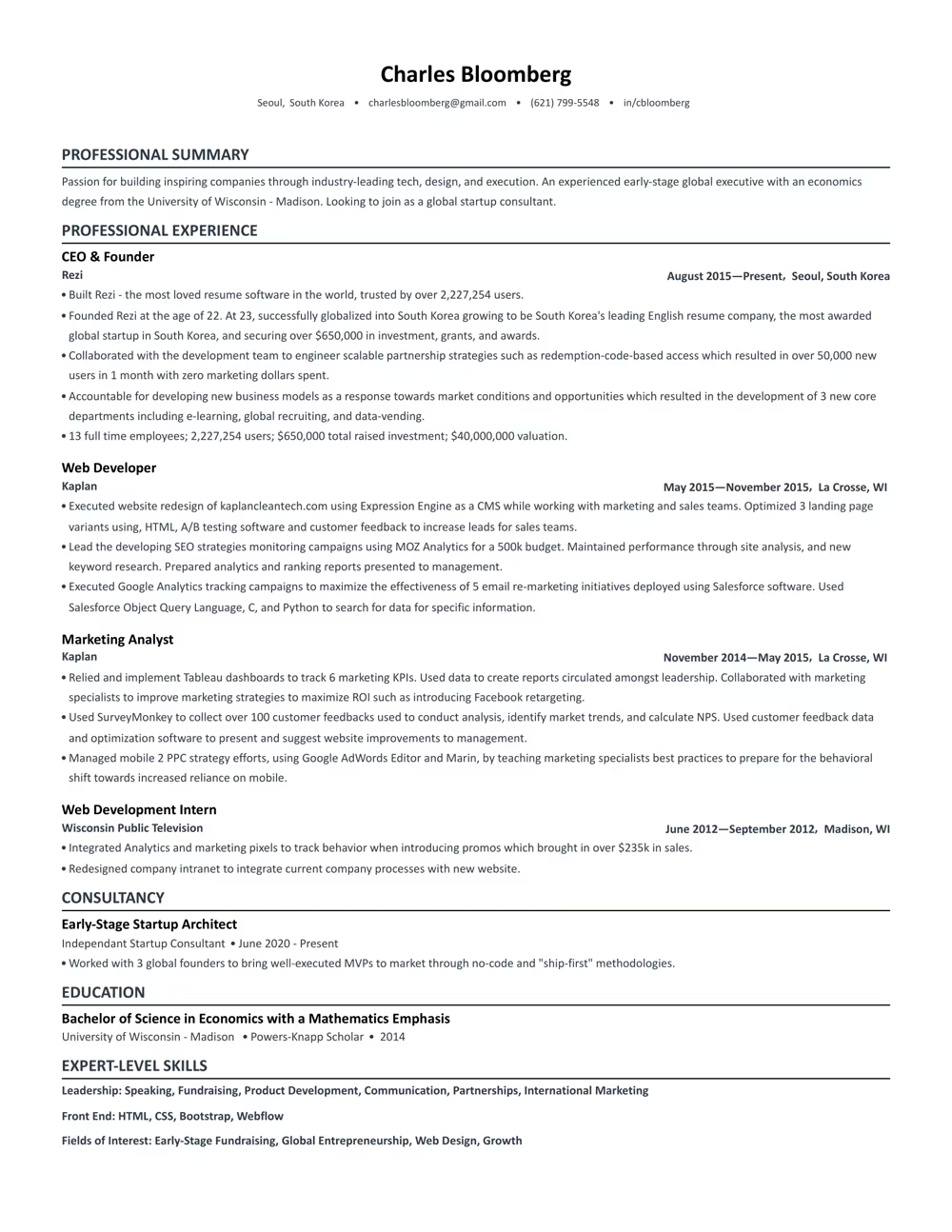
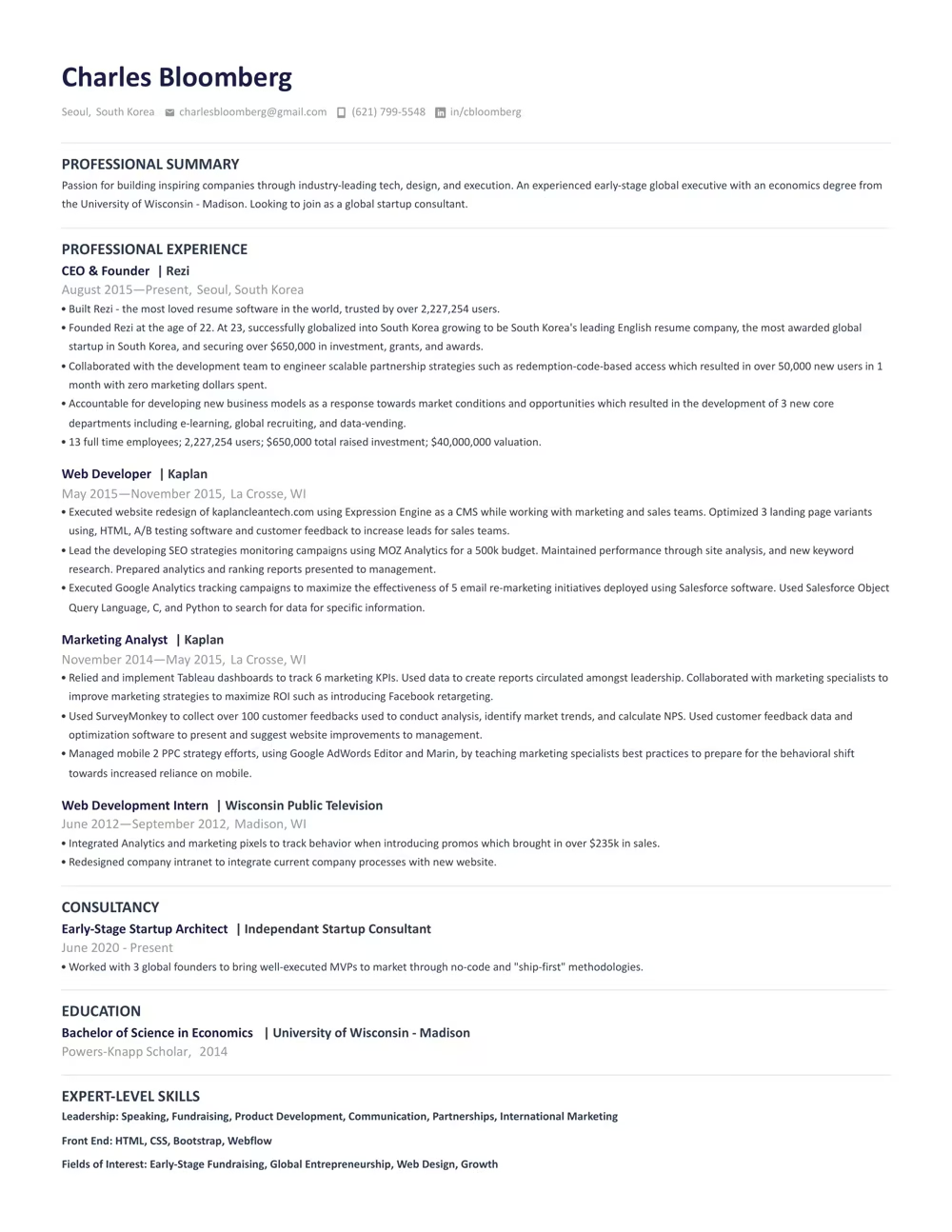
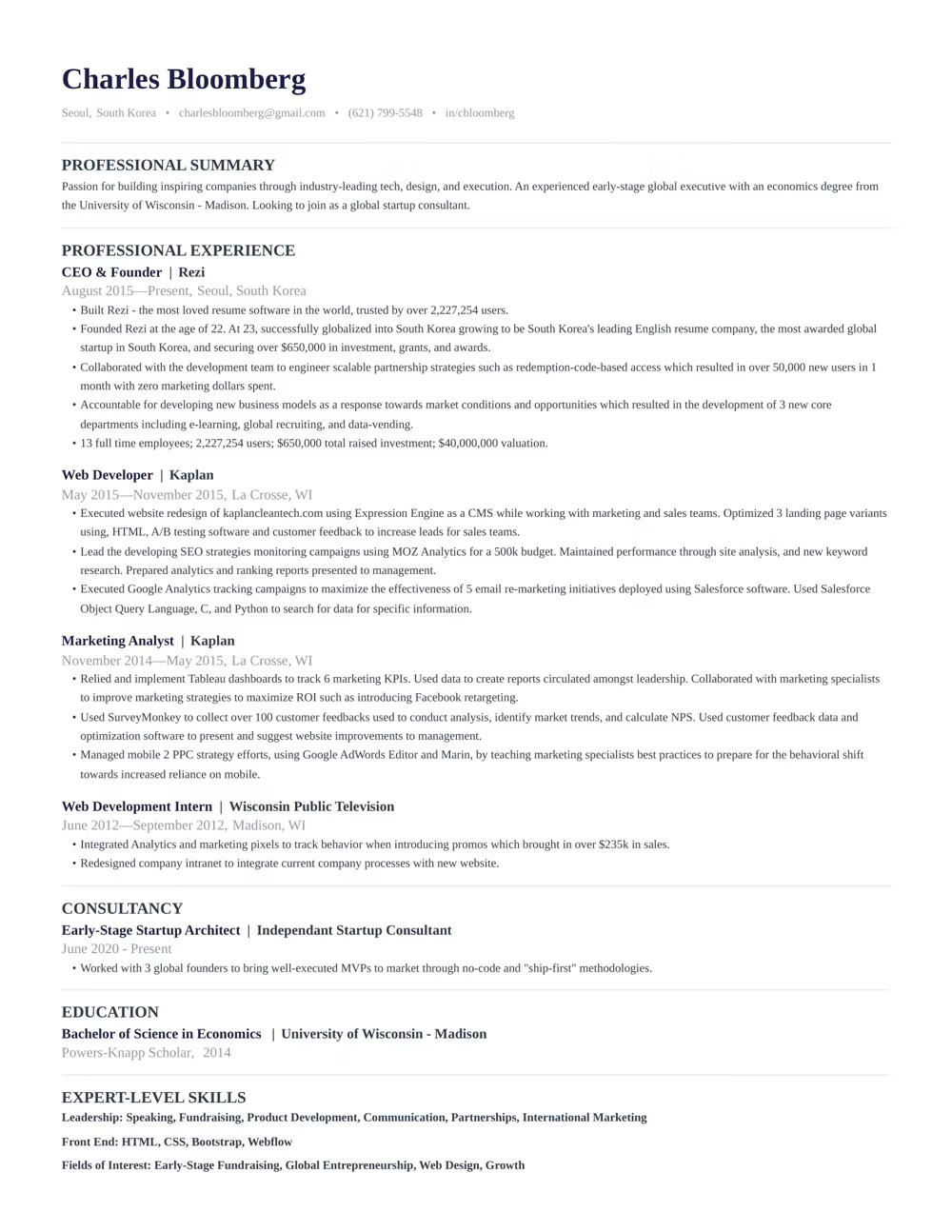
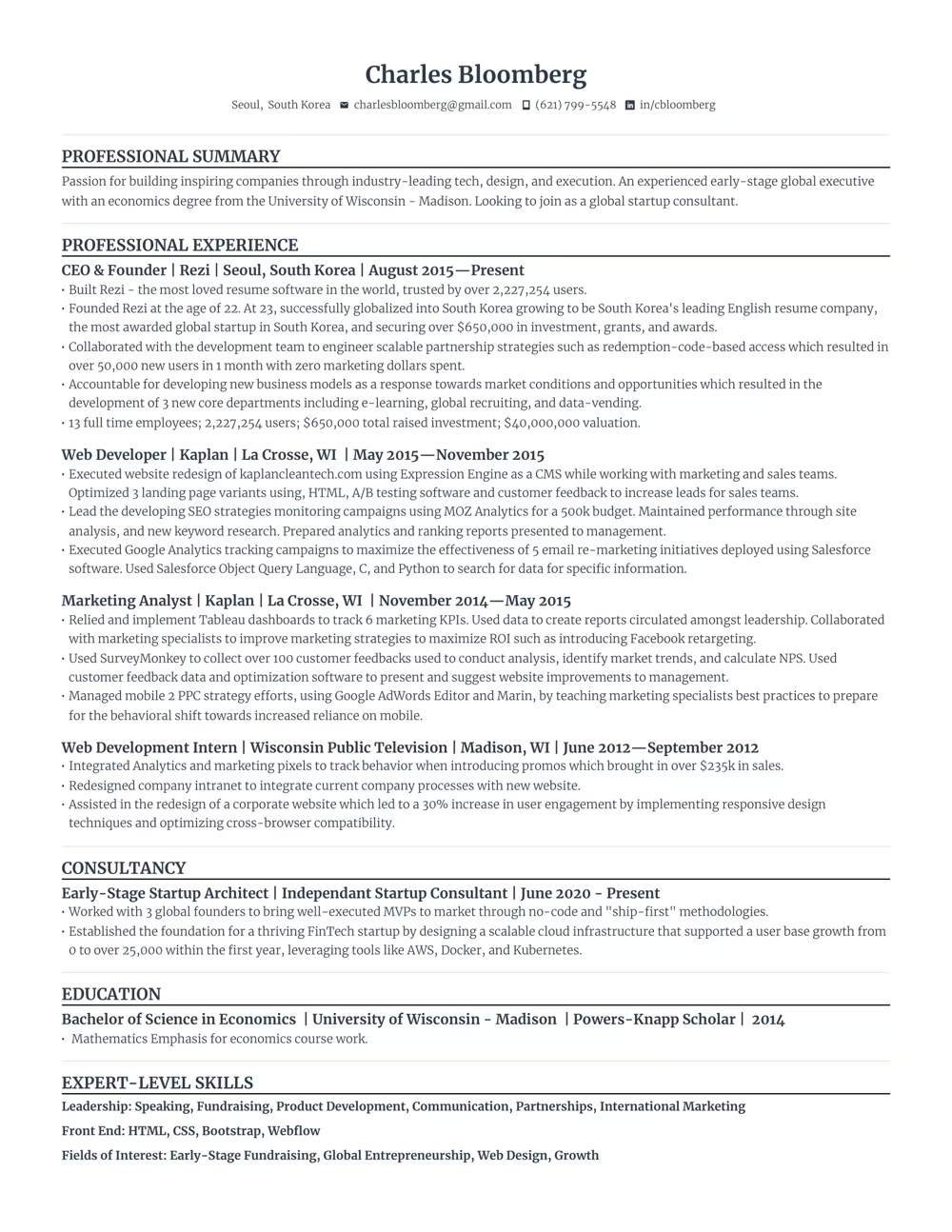
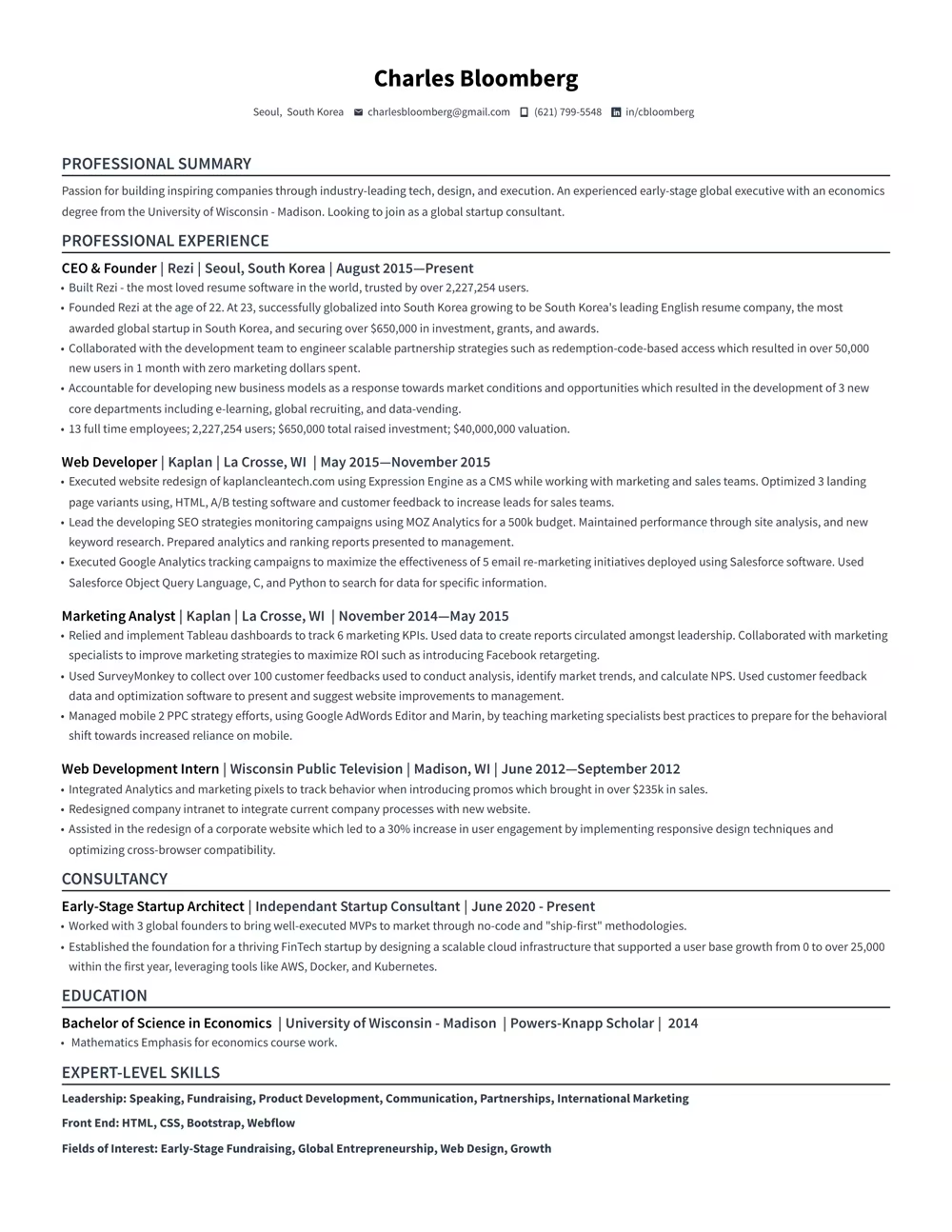
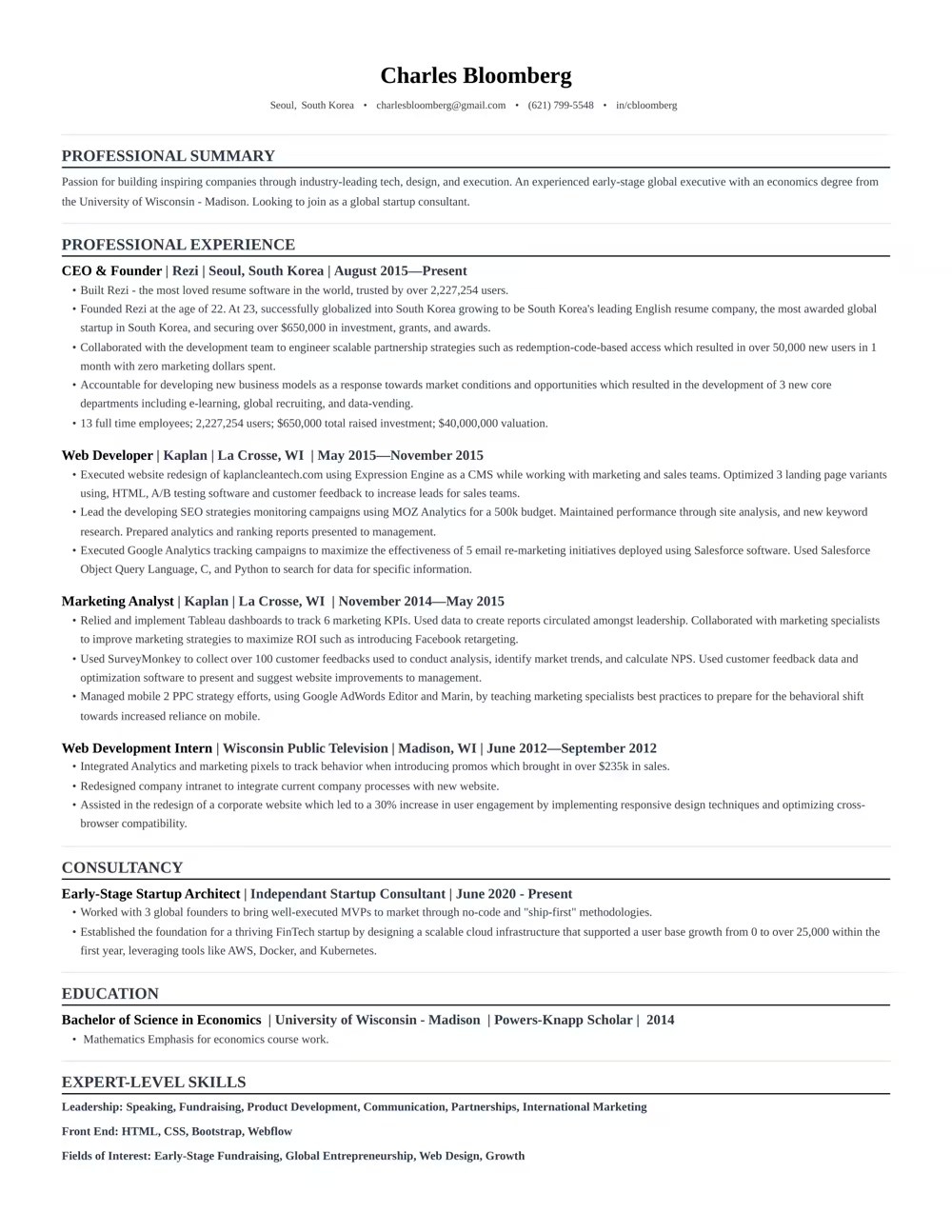
Use a template that guides you. Our ATS-compliant designs are trusted by over 4 million job seekers.




“Rezi is an awesome AI-based resume builder that includes templates to help you design a resume that is sure to check the boxes when it comes to applicant tracking systems. This is a great jumping off point to kickstart a new resume.”

Ashley Stahl
Career Contributor
62.18%
Interview Rate
4,510,834
Total Users
8.23 / 10
Avg. User Review
Wall of Love
Over 4 million users trust Rezi

“Resume Building felt like pulling teeth – until I found Rezi.”
Davis Allen
Software Developer

“I was blown away by Rezi. It streamlined everything...”
Celine Watko

“I needed a resume tool as smart as my work.”
Yosra Naceur
Data Scientist
“A great tool that is very helpful. I found the Rezi system easy to use and very helpful as I was working on getting my resume in shape for job applications.”

Dakota Rubin
United States
Written via

“This is actually one of the first reviews I’ve ever written for a business, and that alone says a lot. I highly recommend Rezi to anyone who’s job searching, it makes the entire process so much easier.”

Yazan Alkhatib
United States
Written via
“Reduced my time per application from 1-2 hours down to 15 minutes.”
Kixxx
Experience with Rezi
“I love how simple and convenient it is to use and been coming back to update it every time I need a fresh resume.”

Zara Wazir
U.A.E.
Written via
Frequently Asked Questions
Your questions, answered.
An AI resume maker helps you build a resume perfectly fit for the job you want. Top-notch AI resume builders are designed to speak the language hiring managers are looking for, increasing your chances of standing out in the crowd. It aligns your skills and experience with the job description effectively.
To get the most out of an AI resume builder, either start from scratch or upload your current resume. Fill in as much detail as possible about your career and skills, and upload the job description you’re targeting. This personalization allows the AI to build a unique and tailored resume that’s bound to catch potential employers' attention.
AI-generated resumes can seem similar if you're not giving personalized inputs or if you're using basic prompts. Provide specific details about your work experience and target the job you’re eyeing. Use specialized AI tools instead of general chatbots to avoid robotic-sounding resumes and to ensure individual creativity.
Employers might think you used AI, but that’s rarely an issue. What they really care about is getting a well-written resume that showcases your skills and experiences accurately. A top-notch resume tailored to their needs will speak volumes more than worrying about AI involvement.
Yes, using AI to optimize your current resume is highly effective. You just need to upload your resume, share details about your career goals and the job you want, and let the AI refine everything to elevate your resume's impact and ATS compatibility.
Rezi uses a tool called the AI Keyword Targeting. This feature scans the job description to identify crucial keywords and naturally incorporates them into your resume, giving it the right focus without keyword stuffing.
The Free plan is $0/month and allows you to create one resume, use limited AI tools (such as Keyword Targeting and Analysis), and download up to three PDFs. You can also create unlimited cover and resignation letters. No card is required to begin.
The Pro plan is $29/month and provides unlimited access to all features, including unlimited resumes, full AI capabilities, unlimited downloads, and one free monthly expert resume review (resumes are reviewed by a person).
The Lifetime plan is a $149 one-time payment. It grants permanent access to all the features of the Pro plan (unlimited resumes, full AI tools, and unlimited downloads), but it does not include the free monthly expert review (which can be purchased for an extra fee).
Rezi offers a 100% money-back guarantee on all paid plans (Pro and Lifetime). If you are unsatisfied, you can request a full refund within 30 days of your purchase.
Yes, you can easily upgrade or downgrade your plan at any time through your Rezi Account Billing dashboard. Prorated credits will apply when switching.
An AI resume maker helps you build a resume perfectly fit for the job you want. Top-notch AI resume builders are designed to speak the language hiring managers are looking for, increasing your chances of standing out in the crowd. It aligns your skills and experience with the job description effectively.
Yes, Rezi Enterprise.