Career Advice
How to Use Rezi for a Career Change Job Application
Discover how to use Rezi for career changers to create standout resumes, tailored cover letters, and practice interviews.

Published on
September 30, 2025
Updated on
March 16, 2026
Using Rezi for a career change can make an overwhelming process feel more manageable. Start with AI Job Search to find genuine opportunities, and use AI Skills Explorer to identify transferable abilities that translate into your new field. AI Keyword Targeting ensures your resume matches job descriptions, while AI Bullet Point Writer reframes past roles into measurable achievements. Our Rezi Score gives real-time feedback, and AI Cover Letter Writer helps you explain your career pivot. Finally, AI Interview lets you practice tough questions, building confidence and credibility.
I still remember how it felt leaving teaching to pursue content writing. It wasn’t just the leap into the unknown; it was the constant second-guessing: Am I doing the right thing? What if I fail? Every rejection felt heavier because I wasn’t just applying for jobs; I was trying to prove that this new path was really possible.
Here’s what I learnt: career changes are tough, but they’re absolutely doable. Yes, you’ll face more “no’s” than someone with experience. Yes, you’ll have to work harder to prove yourself. But the bumps don’t mean you’re on the wrong road — they’re just part of the process.
One thing that can make the journey easier is Rezi. It gives you practical tools to stay organized, highlight your strengths, and share your story to truly click with employers.
Let me explain how. This guide will cover:
- The reality of changing careers in the current job market.
- All the challenges and solutions when switching careers.
- How Rezi’s features can help you along this process.
Want to see for yourself? Check out our free AI Resume Builder. Our advanced technology tailors your job application and gives you expert feedback in minutes.
And check out more advice and tips for switching careers:
How Is Job Searching for Career Changers?
Gone are the days when we measured loyalty by how long you could tolerate staying at a job you no longer enjoyed. The younger generations are setting higher standards, and if those expectations aren’t met, they move on to something better.
According to FlexJobs’ 2025 State of the Workplace Report, nearly 7 out of 10 workers said they’ve either changed careers or seriously thought about it within the last year. Why are they making the leap? More flexibility (hello, remote work), better work-life balance, feeling fulfilled in what they do, and the chance to learn new skills.
But not everyone is jumping ship for the same reasons — or the same industries. A Side Hustle Report found that about half of Americans are considering switching industries altogether, with different generations taking different paths:
- Gen X (57%) is leading the pack, eyeing entrepreneurship and creative work.
- Gen Z (52%) is drawn to healthcare or creative fields instead of the shaky tech industry, which might be a reflection of all the recent tech layoffs.
- Millennials (48%) are big on freelancing, gig work, and starting their own businesses.
- Baby boomers (35%) are leaning toward healthcare careers and even dabbling in freelance or gig-style work.
And switching careers could get easier with the rise of skill-based hiring — putting the focus on what you can do, rather than your education and experience. The 2024-2025 Hiring Benchmark Report found that 68% of hiring professionals are rewriting job descriptions to emphasize skills, with three in four saying emotional intelligence is the most important skill among job seekers.
Employers are clearly open to transferable skills, especially when you show adaptability and continuous learning. That said, the competition can still be stiff depending on the industry you’re aiming for, so the strategy part (networking, upskilling, pushing transferable strengths) matters more than ever.
Rezi Tools That Help You Make a Career Change
Here’s how to use Rezi's resume and job search tools for making a career transition:
- Use our Job Search tool to find real openings from company websites, helping career changers target the right roles.
- Rezi’s AI Skills Explorer uncovers strengths you may have overlooked and shows how past achievements translate into the skills employers want in your new industry.
- Find relevant phrases with AI Keyword Targeting and add missing terms, so your resume experience feels relevant.
- Rezi’s Bullet Point Writer reframes your previous roles into achievement-driven bullets, emphasizing measurable outcomes.
- Discover your Rezi Score based on key factors like content, format, and optimization, giving instant, practical feedback.
- Rezi’s Cover Letter Writer creates a tailored draft that explains your motivation for switching fields and highlights your transferable skills.
- Practice questions with AI Interview, preparing you for common career-change and industry-related questions.
Now, let’s explore how to use these features and why they are ideal for changing careers.
1. Look for new roles you're interested in
The job market can feel like a maze, especially if you’re trying to break into a new field. Rezi Job Search helps you regain your sanity by finding legit roles directly from company sites, not spammy boards. For career changers, this means discovering opportunities where your transferable skills actually get noticed instead of being lost in “ghost job” postings.
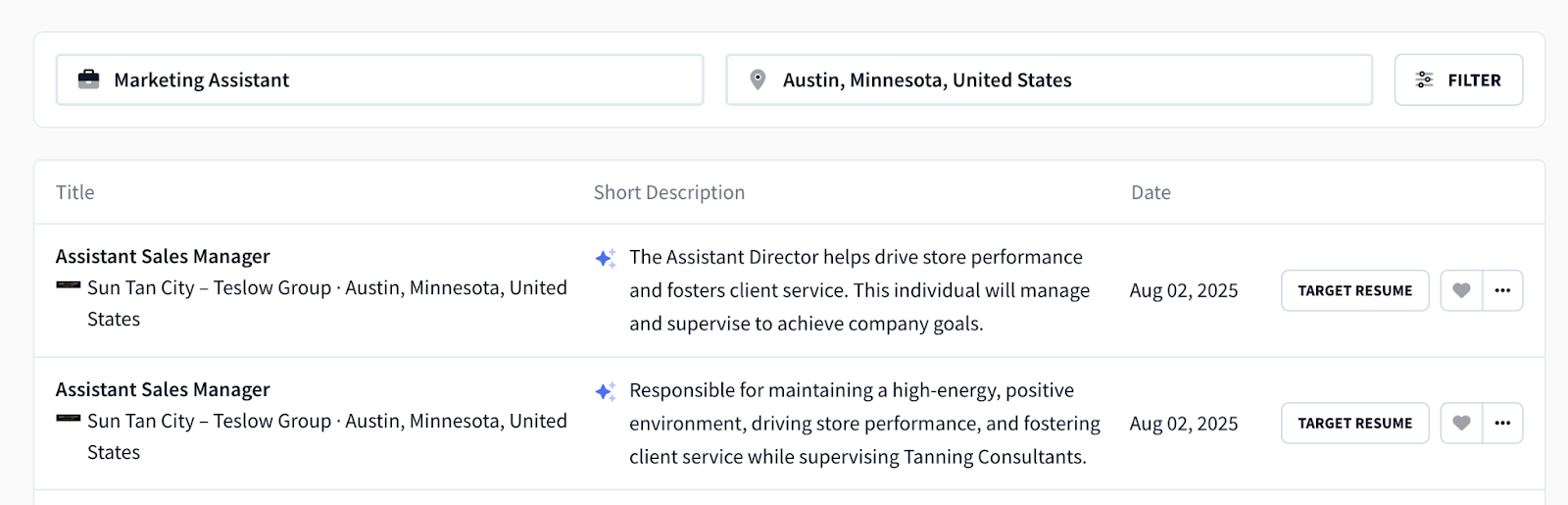
Here’s how to use it when making a career change:
- Filter by role, skills, or remote work to focus on positions that value your background.
- Save and track applications so you don’t lose momentum or forget which jobs you’ve already applied for.
- Consider smaller companies or niche roles as stepping stones into your target field.
- Apply steadily and take your time with applications; volume plus strategy increases your odds of a breakthrough.
2. Identify transferable skills in your new field with AI Skills Explorer
When switching careers, your resume needs to show how your past wins and skills translate into future goals. Rezi’s Skills Explorer provides inspiration and uncovers popular strengths, like leadership, problem-solving, or data analysis. It bridges the gap between what you’ve done before and what employers want now.
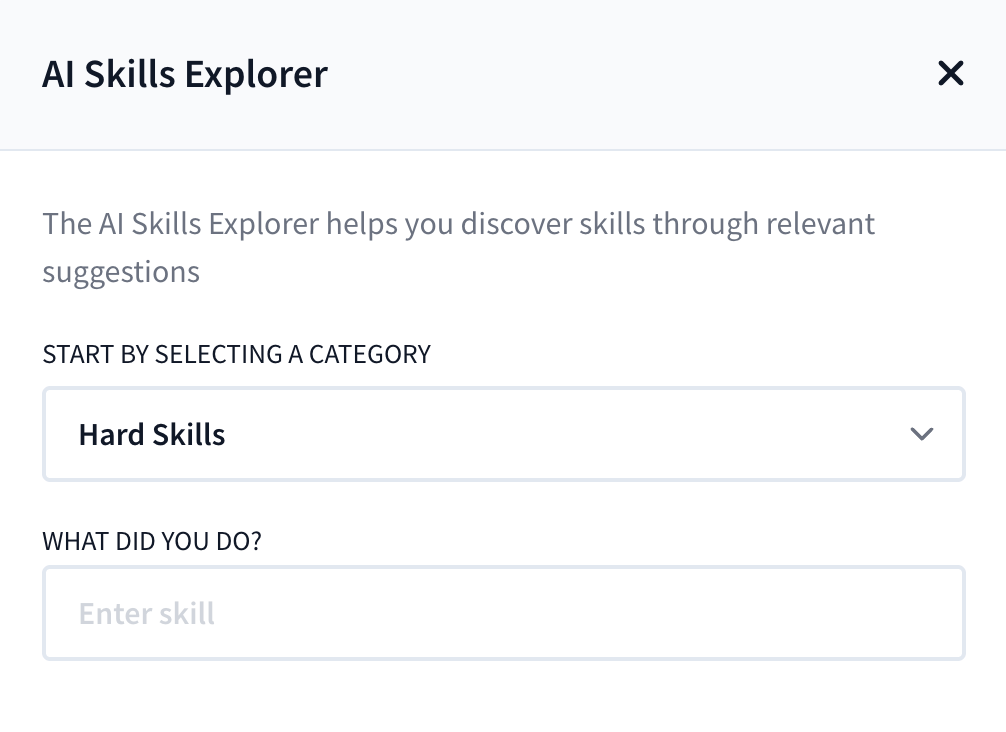
This is how career changers use this tool:
- Enter your existing skills to reveal new ones you can show on your resume.
- Prioritize versatile skills that apply across industries, such as project management, communication, and teamwork.
- Tailor your skills for each job posting so they align with what hiring managers need.
- While your skills section works well as a quick checklist for recruiters, make sure you give concrete examples of how these skills translate to success in your work experience.
3. Customize your career change resume for specific roles using an ATS Keyword Scanner
Don’t let your lack of experience hold you back. You’re in control of the narrative and have the power to frame your resume in a way that speaks directly to the employer. Even if you don’t have all the qualifications, you can use a resume keyword scanner to identify and emphasize the requirements you do meet. Our tool compares your resume to the job ad, so you know exactly which keywords you’re missing.
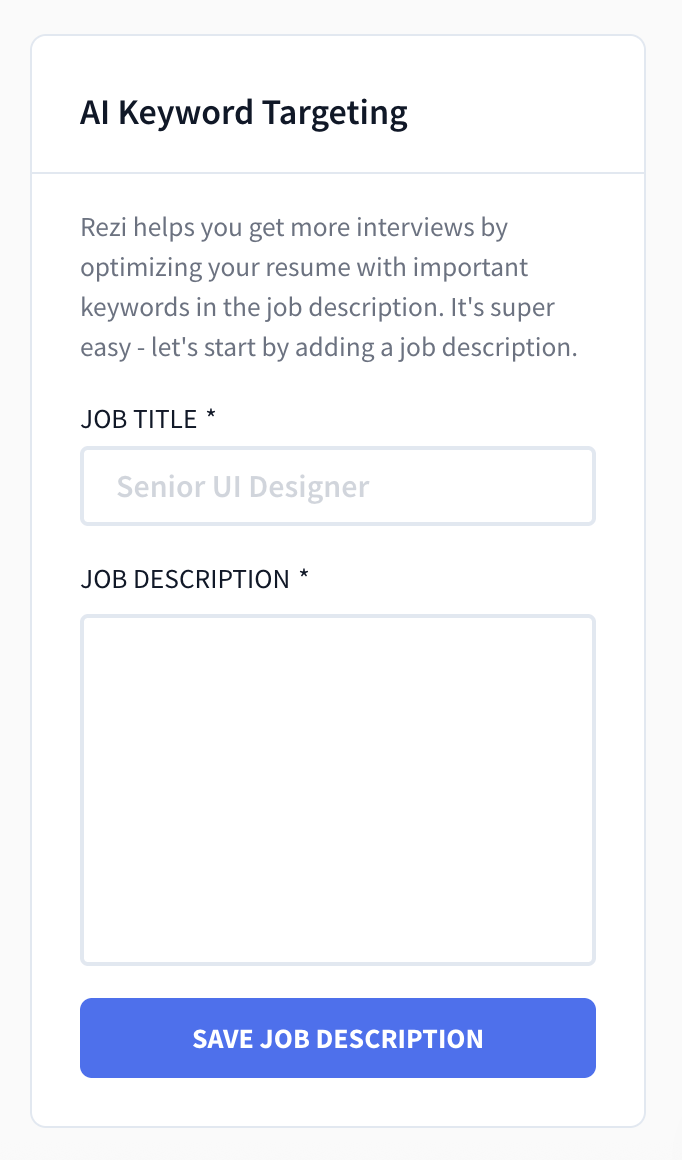
Here’s a summary of how career changers use our keyword scanner for their resume:
- Paste the job description and see which terms you can add to improve your chances of meeting the requirements.
- Blend industry-specific terms with transferable skills and achievements from your old career.
- Update bullet points and skills sections so they naturally include high-priority keywords.
- Focus less on job titles and more on showing how your professional background translates to their needs.
4. Showcase relevant skills and achievements using an AI Resume Writer
One of the hardest parts of building a career-switch resume? Connecting your past to future career goals (and overcoming that frustrating writer’s block). Rezi’s Bullet Point Writer reframes your experiences into outcomes that make sense for your target role. Instead of listing tasks, it creates achievement-driven bullets to highlight skills that carry over.
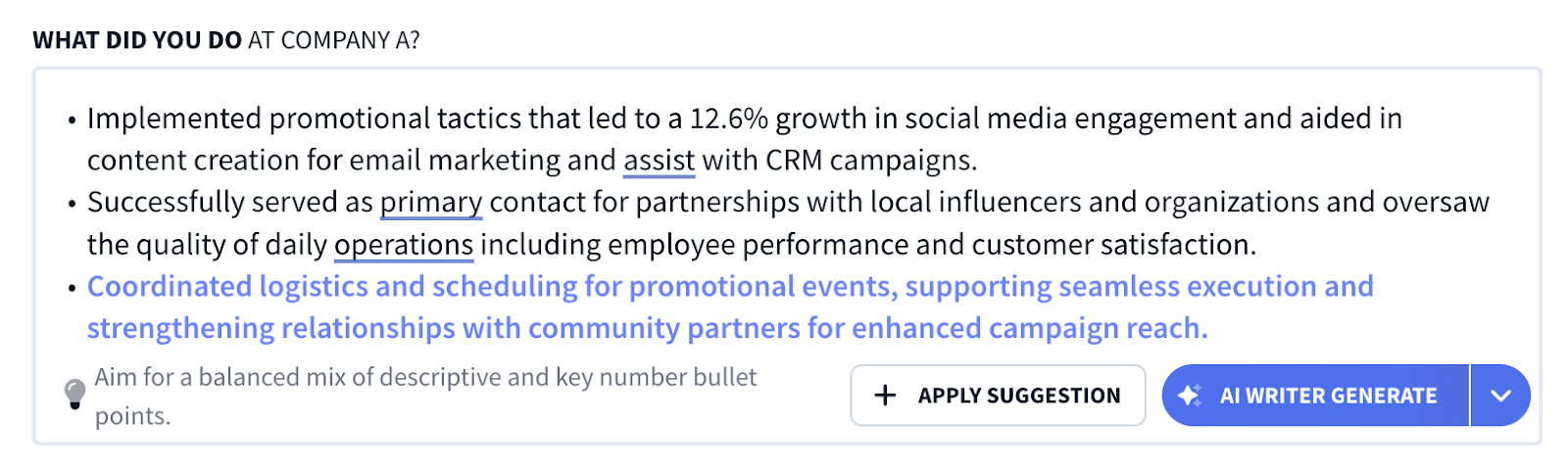
Here’s how to use the feature to help you describe relevant experience and projects:
- Input your role and let AI generate professional, industry-relevant bullet points.
- Don’t just list tasks (this isn’t a job description). Use our tool to focus on professional achievements and examples of making a positive difference.
- Use quantified metrics (numbers, percentages) to highlight impact and add credibility.
- Connect your past roles to your new direction by emphasizing transferable outcomes.
5. Get a detailed Rezi Score report to see if your career change resume is good enough
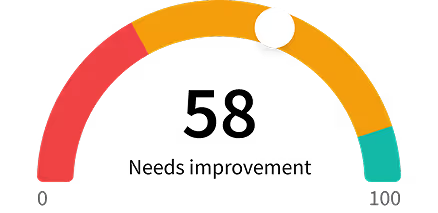
Maybe you haven’t applied for jobs in a while, or the lack of responses is making you seriously question your resume (and your life choices). Rezi Score addresses those concerns with honest feedback. You get a score (1–100) that shows how well your resume compares to hiring best practices.
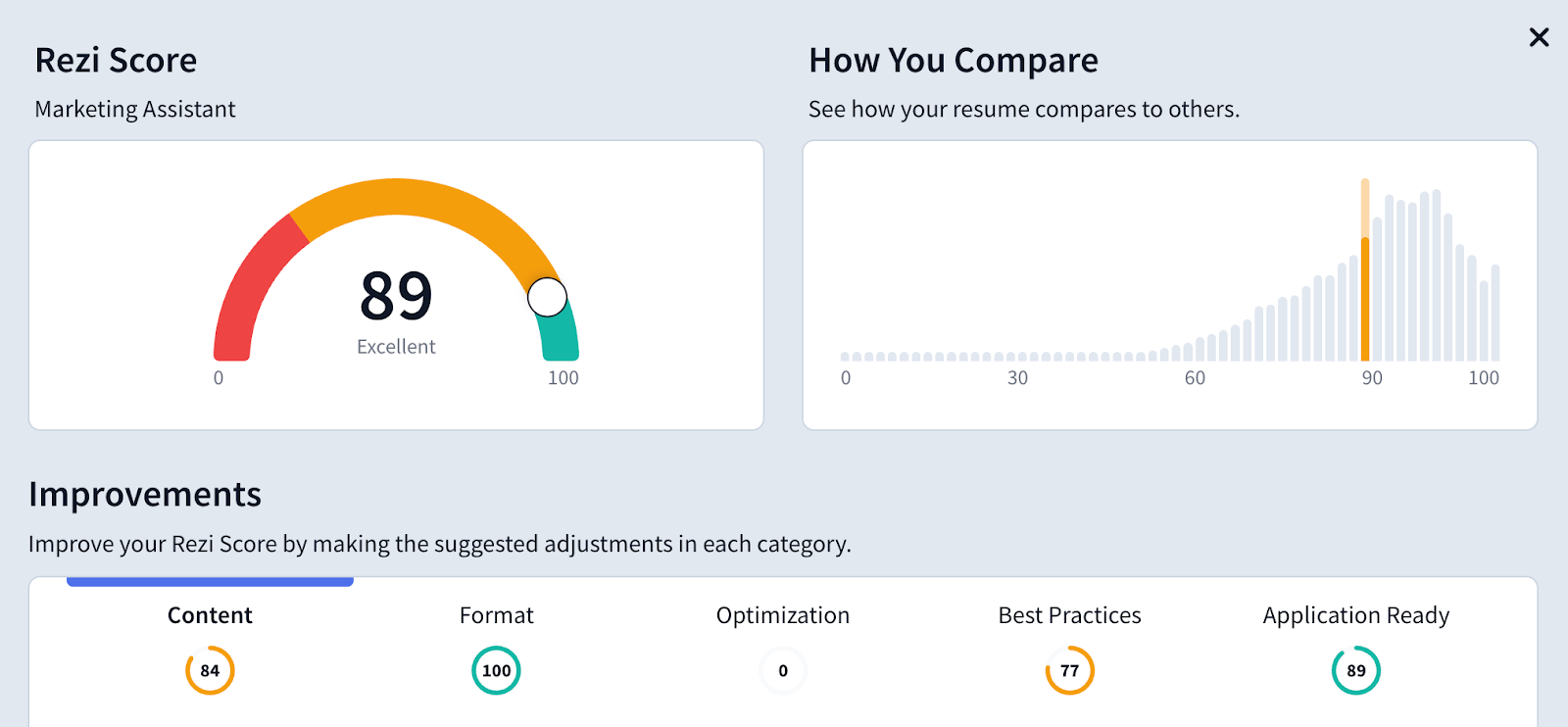
https://app.rezi.ai/dashboard
We suggest career changers to use the Rezi Score like this:
- Check how your resume scores across five different factors: Content, Format, Optimization, Best Practices, and Application Ready.
- Adjust your career change resume based on real-time tips, such as fixing gaps, adding keywords, or fixing formatting errors.
- Aim for higher scores before applying so your resume stands out and shows your potential in the new field you're applying for.
- Use real-time feedback to refine your career-change narrative until it’s application-ready.
6. Explain your career change on a cover letter
Resumes show what you’ve done, but cover letters explain why you’re making the switch. A professional AI Cover Letter Writer helps you build your case by pulling your resume data and framing it into a clear story. If you’re changing careers, it’s the perfect place to address your transition head-on.
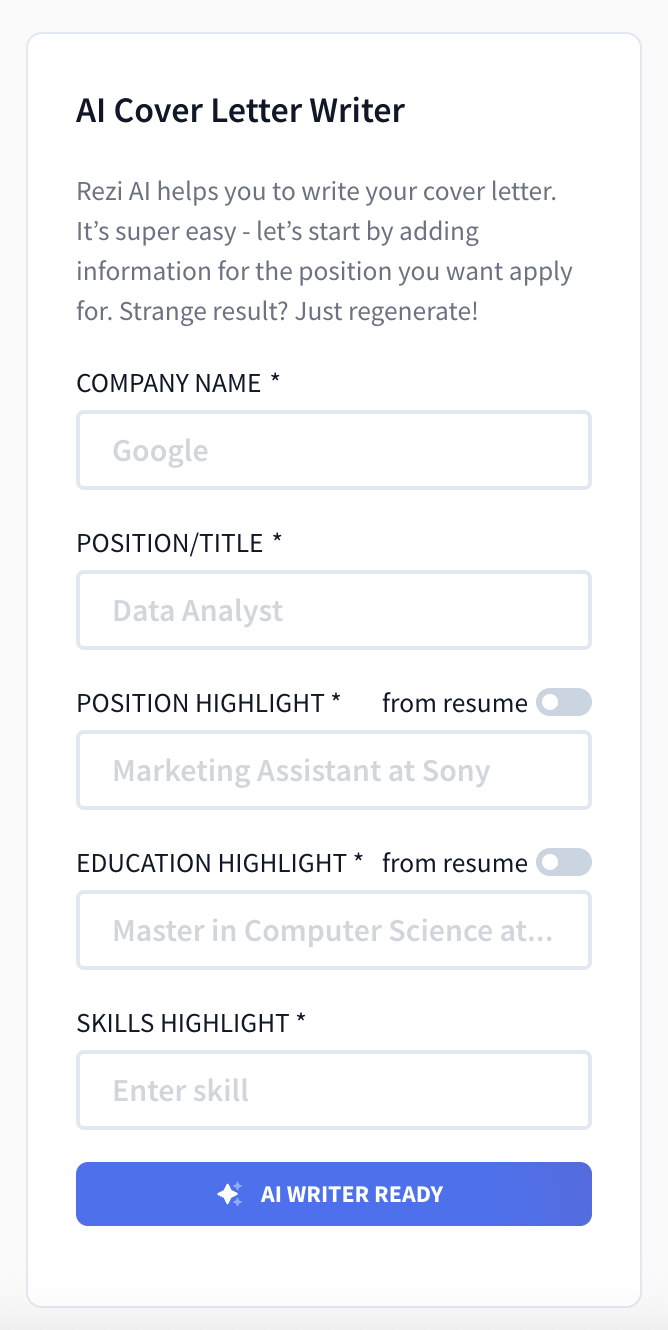
When explaining your career change, you can use the AI cover letter builder to:
- Generate a draft that aligns with your career change resume in minutes by entering your company and job title details.
- Personalize the output to highlight why you’re pivoting and how you’re qualified.
- Emphasize transferable skills, achievements, and passion for the new field.
- Clarify your answer for the big question employers usually have: “Why should we take a chance on you?”
Find out more: How to Write a Cover Letter for a Career Change
7. Try AI Interview to practice tough questions
Interviews can feel extra intimidating as a career changer. You have to both prove yourself as a candidate and give a good reason why you’re venturing into something totally new. Rezi’s AI Interview feature helps by predicting tough questions you’ll face and giving you time to practice.
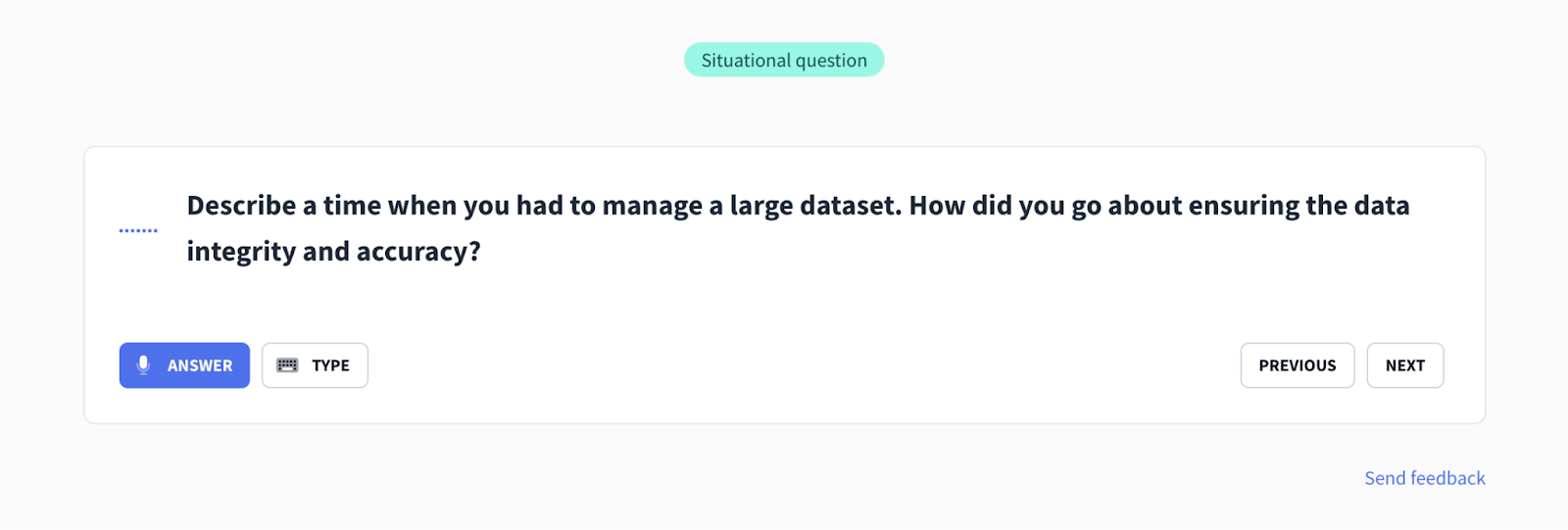
Our AI interview tool helps you sharpen your answers and communicate more clearly. For career changers specifically:
- Use the tool to practice role-specific questions tailored to the job, industry, and your resume.
- Rehearse explaining your career change in a positive, forward-looking way that can add value to a new company.
- Prepare for employer doubts by connecting your past skills and success stories to their needs.
Check out more popular interview questions: Common Interview Questions & Sample Answers
Common Job Search Obstacles When Making a Career Transition
Switching careers isn’t as easy as walking into Miranda Priestly’s office and jetting off to Paris Fashion Week a few months later. Sure, you can get there eventually, but the journey comes with its fair share of twists, turns, and moments of doubt.
One minute you’re imagining all the possibilities, and the next you’re staring at your screen thinking, “Okay… where do I even begin?” Career changers face unique challenges: figuring out direction, managing financial uncertainty, and proving your skills in a completely new field.
You’re not alone in this, and understanding the hurdles is the first step to overcoming them.
Lacking direction
One of the hardest parts of changing careers is knowing where to start. Some get sucked into costly programs without having a solid direction, while others get so overwhelmed that they quit before even getting started. And it’s not through lack of motivation; it’s often just lack of clarity.
If the road ahead seems daunting, don’t be afraid to explore and take small steps. You could take an online course, attend a professional event, or volunteer in a new space. These actions break your usual patterns, expose you to new circles, and gradually build confidence.
Here’s some advice from a career switcher who found their path:
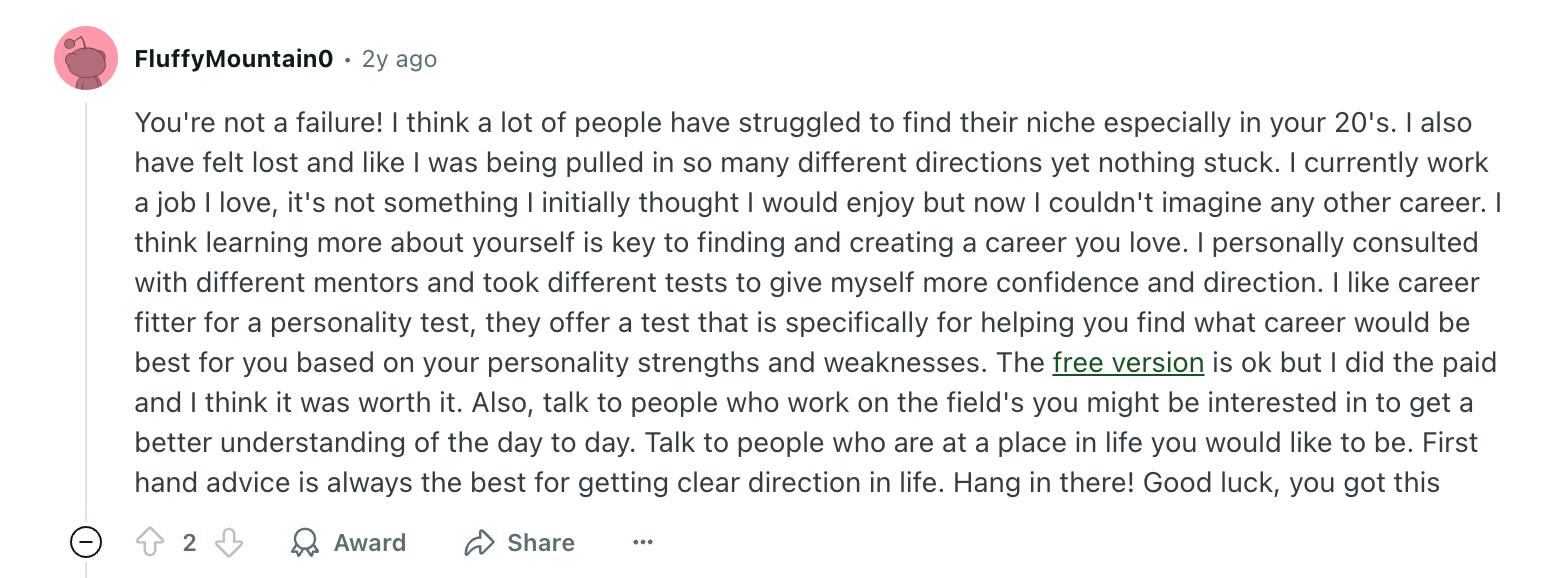
You could also get more insight into your unique work style: MBTI at Work
Facing rejection
Rejection is inevitable when you’re starting fresh, but that doesn’t make it any easier. For someone who’s been established in a career for years, getting turned down for junior-level roles can sting, and it’s not long before the dreaded imposter syndrome creeps in.
Just remember: rejection isn’t proof you’re unqualified; it’s simply part of the process. Every “no” teaches you what you need to do to get closer to that “yes”. You might need to invest in upskilling, grow your network, return to school, or simply update your resume. Job hunting is full of rejections, so you may as well reframe them as opportunities to build resilience and grow.
Here’s some solid advice on dealing with job rejections from people who’ve been there:
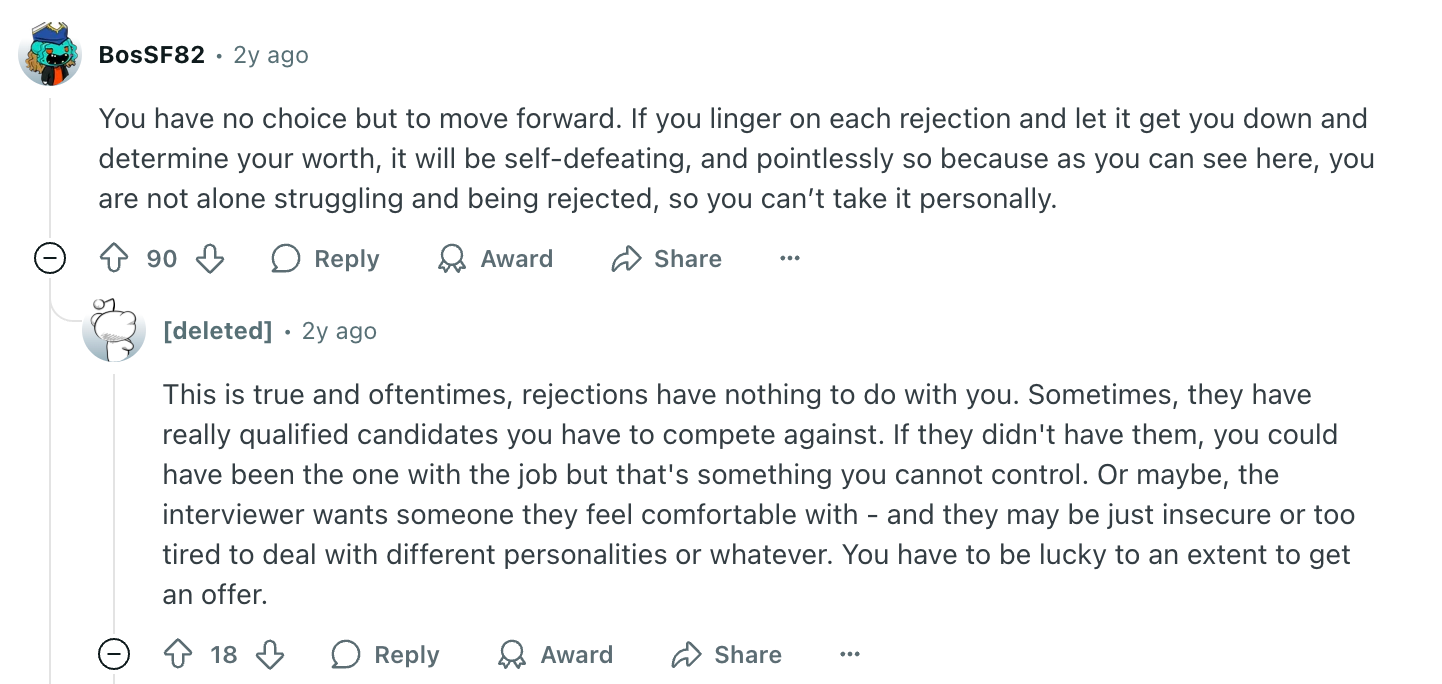
Financial uncertainty
Money is often the biggest roadblock for career changers. If you’ve built up a salary in your current role, starting over at entry level in a new field can feel like a step back. And having family responsibilities and bills to pay doesn’t exactly ease the stress.
Planning ahead will help ease those stresses and give you a clearer picture of what you’re walking toward. Research average starting salaries, figure out what kind of pay cut you can realistically manage, and build a budget. Exploring a new field part-time, through side projects or freelancing, can also help you test the waters without sacrificing stability.
Proving your transferable skills
One of your biggest assets in a career shift is the set of transferable skills you already bring with you. Communication, problem-solving, and leadership don’t suddenly vanish because you’re changing industries. Still, many career changers worry these skills won’t “count” in a new context, or that they’ll seem outdated.
Simply saying you’re a good communicator won’t make you stand out. Instead, you have to reframe your experiences to highlight the value they bring to your target field. Give examples of how your communication skills helped you deliver impactful presentations or negotiate an important deal. Success stories translate across any industry and prove you can deliver results.
Here’s what someone who’s made the switch said about transferable skills:
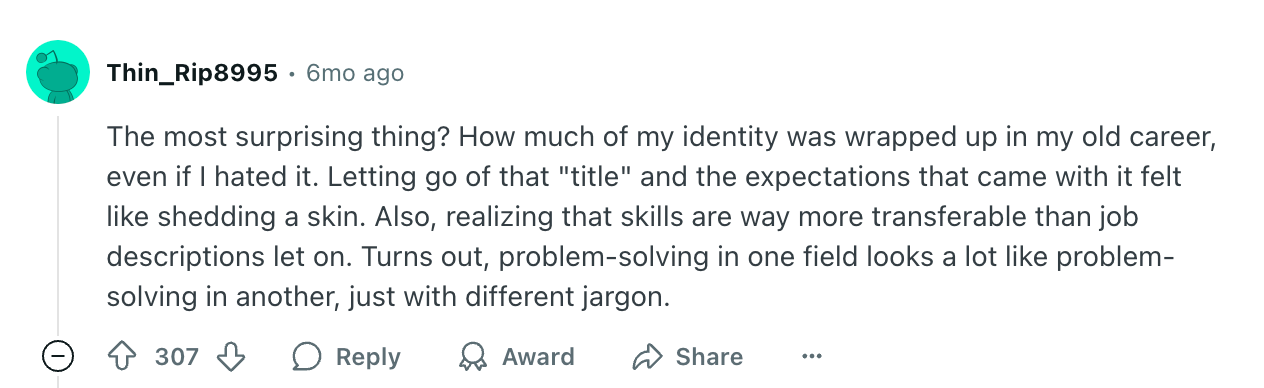
Take a look at Sarah’s story for more inspiration: Career Story from Teacher to Content Writer
Establishing a professional network
As someone who got my last three jobs through referrals, I know how beneficial it is to make connections with the right people. But finding that network in a new industry is like trying to join an established friendship group at a new school — how do you even approach?
The good news is we’re not back at school, and it’s not as daunting as you think. Start by reaching out to professionals you admire, attending industry events, contacting old colleagues, or joining relevant online groups. Even small conversations can open unexpected doors. Over time, these connections create the support system you’ll need as you transition.
Summary
Here’s an overview of how Rezi can help you through your career change:
- Rezi’s AI Job Search helps you find real job openings directly from company websites, making it easier to find relevant roles where your transferable skills can get noticed.
- With AI Skills Explorer, you can identify in-demand strengths and show how your leadership, problem-solving, and communication skills translate into success.
- AI Keyword Targeting lets you compare your resume to job descriptions, ensuring you include the right terms to pass ATS scans and show relevance.
- The AI Bullet Point Writer transforms past roles into achievement-focused bullet points, helping you highlight quantifiable results and transferable outcomes.
- Rezi Score gives honest, real-time feedback on content, formatting, and optimization, letting you refine your resume so it meets best practices.
- Using AI Cover Letter Writer, you can create your story explaining your career change while emphasizing transferable skills, accomplishments, and enthusiasm.
- AI Interview provides tailored practice questions, helping you prepare for career-change discussions and confidently connect your experiences to the employer’s needs.
- Combining Rezi’s AI-driven guidance with small steps like networking, volunteering, or side projects allows you to test new fields and build credibility.
FAQ
What to write on a resume when changing careers?
When switching fields, your resume should highlight transferable skills instead of focusing only on past job titles. Start by adding a strong resume summary at the top that explains your new direction and connects it to your experience. Tailor every resume section to the role you’re targeting, showing how your background is an asset, not a detour.
Most importantly, focus on achievements that show measurable impact, such as increasing sales, exceeding expectations, or leading a team. Your goal is to make it easy for employers to see how your background and successes can bring value in a new role.
How to explain a career change in an interview?
In an interview, focus on the “why” and “how” of your transition. Share what motivated the shift and keep it positive, such as growth opportunities, work-life balance, or genuine interest. Show you’ve done your homework about the industry and demonstrate how your past experiences add value.
Employers mainly want reassurance that you’re committed and prepared, so frame your change as a strategic step forward, not a random leap. Keep it confident and future-focused.
Check out this popular interview technique: STAR Method Interview Guide
What is an example of a career change statement?
A strong career change statement or resume summary should connect your past skills and experience to your new direction, so the hiring manager doesn’t have to guess why you’d be a fit. Here’s an example:
“After several years of managing teams in education, I’m excited to transition into project management. The organizational skills, leadership, and problem-solving I developed in the classroom translate directly to coordinating projects, meeting deadlines, and working with diverse stakeholders.
How do you explain your lack of experience?
Shift the spotlight from what you don’t have to what you do bring. Talk about transferable skills, training, certifications, or personal projects that bridge the gap. Emphasize your adaptability, willingness to learn, and examples of picking up new skills quickly in past roles. Employers often value potential and motivation just as much as direct experience, so focus on proving you can get up to speed fast and add value right away.
When are you too old to switch careers?
The idea that there’s a cutoff age to switch jobs is outdated. People are changing careers at 30, 40, 50, even 60, and thriving. I’m not saying it’s easy (and yes, age discrimination does exist), but it’s certainly achievable with the right strategy. Lean on your transferable skills, highlight your adaptability, and show you’re current with industry tools or resume certifications. If anything, your experience is an advantage; you just need to frame it as relevant to where you’re headed next.

Upload or drop your resume to get started
Upload your resume to get started
Score my resume

Lauren Bedford is a seasoned writer with a track record of helping thousands of readers find practical solutions over the past five years. She's tackled a range of topics, always striving to simplify complex jargon. At Rezi, Lauren crafts genuine and actionable content that guides readers in creating standout resumes to land their dream jobs.