Career Advice
How to Become a Web Developer (Step-by-Step Guide)
Learn how to become a web developer step-by-step. Discover education options, skills, and the steps to start your career in website development.
Published on
February 19, 2026
Updated on
March 27, 2026
Here’s how to become a web developer: start by learning website development fundamentals, then build small projects. Next, create a portfolio website, learn Git and GitHub, then understand how to deploy sites. After, apply for internships, freelance gigs, or junior roles. Lastly, keep leveling up your skills. Anyone can get started, and you don’t necessarily need a degree to become a professional website developer.
My first “website” was a Frankenstein mashup of plugins, copy-pasted CSS, and blind faith.
It took a while, but customizing a website became addictive once I figured my way around the fundamentals of a website.
Now, you don’t need a degree or a decade of experience to build a website, nor do you need these to break into web development. You can start from scratch, build real skills, and land your first role as a web developer.
In this guide, I’ll walk you through:
- What web developers actually do
- The skills you need to get hired (even without experience)
- A step-by-step roadmap to becoming a web developer
- How long it takes
- What you can expect to earn
- Tips to stand out when you’re brand-new
If you want to skip past and get right into creating a professional resume that gets you web developer interviews, use our AI resume builder. You can get started for free.
What Are the Requirements to Become a Web Developer?
Unlike other regulated careers (like law or accounting), web development is much more flexible. You don’t always need a formal college degree, nor do you need to pass any licensing exams to break into web development.
What employers mainly look for:
- Project portfolio
- Clean, understandable code
- Problem-solving skills
- Ability to learn fast
- Communication skills
- Experience with Git
- Familiarity with core tools and frameworks
In other words, your experience and portfolio are the most important factors.
What Does a Web Developer Do?
A web developer builds websites and web applications: everything from personal blogs to ecommerce stores, dashboards, apps, and platforms that run entire companies.
These are the main areas a web developer could work on:
- Front-end. This refers to what users see and interact with such as layouts, buttons, animations, navigation, and responsiveness. Think: turning a design into actual code using HTML, CSS, and JavaScript.
- Back-end. This is what goes on behind-the-scenes, such as databases, APIs, server logic, and user authentication. This involves languages like Python, Node.js/JavaScript, Ruby, PHP, Java, or C#.
If you need career tools to help you break into specific fields, check out these guides:
- Rezi for Tech Jobs
- Rezi for Engineering Jobs
- Rezi for Marketing Jobs
- Rezi for Project Management Jobs
- Rezi for a Career Change Job Application
How to Become a Web Developer
Here’s how to become a web developer:
- Learn the basics: HTML, CSS, JavaScrit.
- Build real projects (even small ones count).
- Create a portfolio website.
- Learn Git and GitHub.
- Understand how to deploy websites.
- Apply for internships, freelance clients, or junior roles.
- Keep leveling up your skills.
One of the most common questions beginners have is “Do I need to pay for a bootcamp?”
And honestly, no. There are web developers who started entirely with free YouTube tutorials and consistent practice.
Here was one Reddit user’s advice for beginners that want to get into web development:

With that in mind, you don’t need fancy tools or expensive courses to start. Anyone can learn web development, even if you’re a high school graduate.
Below, we’ll dive into each step in more detail.
1. Start with the fundamentals
Every website developer, even the advanced ones, rely on the same three building blocks:
- HTML (structure)
- CSS (styling)
- JavaScript (functionality)
This is your foundation, the bread and butter of web development.
If coding feels intimidating, trust me: HTML, CSS, and JavaScript are way more approachable than they look from the outside. HTML is just structure, CSS is the paint and decor, and JavaScript is the electricity that makes everything work.
However, avoid falling into the trap of spending all your time binge-watching tutorials. Try to build something small after every lesson. A simple “About Me” page or a product landing page will teach you a lot about the process.
Related articles:
- Best Programming Skills to Put on a Resume
- Computer Skills for a Resume
- Best Technical Skills to Include on a Resume
2. Build small, real projects (this Is where the learning actually happens)
Your experience and projects on a resume are what get your foot in the door.
You don’t need to create the next Facebook. Start small. Here are some examples of projects you can start working on:
- Personal website
- Landing page for a product (real or fake)
- Notes app
- Blogging website
The point isn’t perfection, it’s completion.
Finished projects teach discipline, build confidence, and show employers (and yourself) that you can deliver something that works. And yes, the first few will look rough, but every project upgrades your skills a little more.
Employers care more about what you’ve built than where you studied. Your experience really counts, so once you’ve got the fundamentals down, get right into building your first few projects as soon as you can.
3. Create a portfolio website
Think of this as your digital handshake. It’s where you show off who you are, what you can do, and how you think.
Your portfolio can include the following:
- A friendly intro section (don’t be afraid to show your personality)
- 3–5 projects you built, even small ones
- Case studies explaining your process
- Links to GitHub
- A way to contact you
Case studies are where you shine. Don’t just say, “I built a to-do app.” Tell the story: what problem you solved, what you learned, what broke (and how you fixed it).
4. Learn Git and GitHub
Git is your version control system, the tool that keeps your projects from turning into a chaotic pile of “final_final_reallyfinal.html” files.
As a web developer, you’ll use Git regularly to track changes, experiment safely, and roll back mistakes without nuking your project. It’s effectively an “undo” button.
GitHub is where your code actually lives. Think of it as the public portfolio for your actual work and not just screenshots. Recruiters and developers may check it to see how you structure projects, how often you code, and whether you understand real workflow basics.
Even simple things like writing clear commit messages (“fixed mobile nav bug” instead of “stuff works now maybe”) show professionalism.
At minimum, learn how to:
- Initialize a repo
- Create branches for new features
- Commit changes regularly
- Merge branches without wrecking everything
- Push your code to GitHub
If you’re working on front-end apps, you’ll use Git to version React components or CSS changes. If you’re doing full-stack work, it helps you manage backend logic, API updates, and database scripts.
5. Understand how to deploy websites
Deploying a site sounds way more dramatic than it actually is. All it means is turning your project from “a folder on your laptop” into a real website that anyone can visit.
Platforms like Vercel and GitHub Pages let you deploy for free, and usually with just a few clicks. It’s oddly satisfying the first time you do it. You push your code, hit deploy, wait for a few seconds, and suddenly your project exists for people to see.
Learning deployment makes the following clear:
- You understand the full development cycle
- You can work like an actual developer
- You can ship finished products (which employers love)
Plus, it’s cool to just send someone a link and say, “Look, I made this.”
6. Apply for internships, freelance gigs, or junior roles
Start by targeting roles that align with what you can do and what you want to do. For example, simple landing pages, basic front-end fixes, theme customization, small JavaScript features, or maintaining existing websites. Businesses of all sizes need help with these tasks, even if they aren’t advertising senior-level development.
Your early options might look like:
- Freelancing for local businesses
- Helping friends or creators build online portfolios
- Applying to junior developer roles
- Taking part-time contract gigs
- Joining internships or coding apprenticeships
Every project you complete, paid or unpaid, becomes proof of your skills. It demonstrates reliability, consistency, and the ability to deliver finished work.
When you start putting together your resume, some web developers face a specific challenge: you've probably built a lot, but fitting projects, skills, tools, and any work experience onto a clean one-page resume is harder than it sounds.
If this is you, just import your resume into Rezi and use the auto-adjust feature to automatically optimize the layout. It helps you fit your web developer experience and projects neatly into each page. And if you want to confirm it’s ready to send, our ATS resume checker report will tell you.

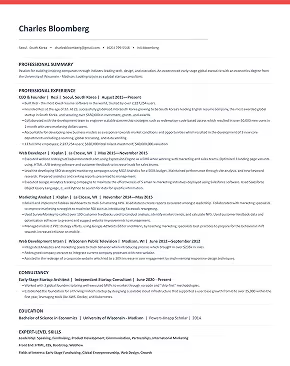
If you need inspiration for your resume, check out: Web Developer Resume Example
Relevant guides:
- How to Get a New Job Fast
- How to Write a Good Resume
- How to Write a Resume With No Professional Experience
- How to Write a Resume for a Career Change
- How to Include Freelance Experience on a Resume
7. Keep leveling up your skills
Web development is one of those careers where the learning never stops. And that’s one of the things that makes it exciting.
Once you’ve mastered the basics and built a few projects, you’ll start noticing areas you want to grow into. Let that curiosity lead the way.
If you’re drawn to front-end work, this might mean learning React, understanding accessibility, digging into responsive design, or improving your UI/UX instincts. If back-end work interests you, you may explore Node.js, databases, authentication, security fundamentals, or building APIs. Full-stack developers often mix both paths and grow gradually over time.
As your confidence grows, start improving your workflow too: version control habits, cleaner code organization, writing readable commits, documenting projects, and testing your code. These “little” things make you feel more like a professional developer than any single course ever will.
And remember, you don’t need to learn everything at once. Pick one new skill, build one project with it, and move on to the next. Slow, steady upgrades compound, and before you realize it, you’ll look back and see how far you’ve come.
You might also be interested in:
- The Best Skills for a Resume
- How to Show Communication Skills on a Resume
- Top Soft Skills to Put on a Resume
- Leadership Skills for a Resume
Can You Become a Web Developer With No Experience?
Absolutely, and most website developers start with zero experience. Web development is one of the career paths you can break into even without formal work experience.
You do not need:
- A computer science degree
- Formal tech experience
- Years of coding
- Advanced math skills
What you do need is:
- Curiosity and wanting to understand how things work
- Consistency and showing up regularly to practice
- A clear portfolio that serves as proof of your skills
If you can build a handful of simple, functioning websites or apps, you already have enough to begin applying for junior roles or freelance gigs. Your projects become the proof that you can learn, solve problems, and deliver results.
How Long Does It Take to Become a Web Developer?
The timeline varies based on how much time you put in and how you choose to learn, but here’s a breakdown of what people may experience:
- 3–6 months. If you study consistently on evenings or weekends, you can learn the basics and start taking on small freelance tasks such as simple landing pages, bug fixes, website updates, theme customization, and basic front-end work.
- 6–12 months. With a solid portfolio of projects and a stronger understanding of website development, you’ll be ready to apply for junior web developer roles or more substantial freelance work. Many people land their first tech job during this stage.
- 12–18 months. By this point, you’ve likely built multiple web apps, explored frameworks (like React or Node.js), and gained confidence working on both front-end and back-end components. This is where full-stack opportunities may open up.
The most important part is consistent practice and finishing real projects.
How Much Do Web Developers Make?
According to the U.S. Bureau of Labor Statistics, the median pay for web developers in 2024 was $95,380 per year.
However, web developer salaries vary depending on experience, location, specialization, and whether you freelance or work full-time. Freelancers can sometimes out-earn salaried developers once they build a solid client base. Meanwhile, full-time roles offer stability, benefits, and clear career paths.
Summary
Here’s a quick recap of how to become a web developer:
- Start with the basics: HTML, CSS, JavaScript.
- Build real projects: even tiny ones help you learn.
- Pick a direction: front-end, back-end, or full-stack.
- Learn Git and GitHub: essential for all developers.
- Deploy your work: put projects online where people can see them.
- Create a portfolio website: show off what you’ve built.
- Apply for internships, freelance gigs, or junior roles.
- Keep leveling up: frameworks, APIs, databases, and best practices.
Web development is one of the most flexible, creative, and accessible careers out there. You don’t need a special background to get started, just a willingness to learn and the drive to finish what you build. Every project moves you one step closer to the job you want.
FAQs
Do I need a degree to become a web developer?
No, not at all. There are many developers that are completely self-taught. Employers care far more about your experience, portfolio, GitHub activity, and your ability to solve real problems. A degree can help in some cases, but it’s absolutely not a requirement. If you can build functional projects, you’re already in the game.
How many projects should I have before applying for web developer jobs?
Aim for 3–5 solid projects that clearly show your skills. For instance, a clean landing page, a simple JavaScript app, a small API, or a React project is enough. What matters most is that each one is complete, deployed online, and documented well in your portfolio.
Is web development too competitive now?
No, companies still hire developers constantly, and the web keeps growing. Yes, entry-level roles can feel competitive, but it’s certainly possible to break into the web development field. A strong portfolio and consistent applications can put you ahead of a huge portion of applicants.
Can I learn web development while working a full-time job?
Absolutely. Plenty of developers learned on nights and weekends. With consistent practice — even just 1–2 focused hours a day — you can make steady progress. The key is momentum: build one small thing at a time, commit your code, deploy it, and move forward.

Upload or drop your resume to get started
Upload your resume to get started
Score my resume

Astley Cervania is a career writer and editor who has been sharing resume and job search insights for 5+ years. He shapes the direction of the Rezi blog, providing practical answers for important career-related questions and helping hundreds of thousands of people navigate the job market and build resumes that land interviews.