Career Advice
How to Become a Software Developer (Even With No College Degree)
Learn how to become a software developer step-by-step. Discover education options, skills, and the steps to start your career in software development.
Published on
January 20, 2026
Updated on
March 26, 2026
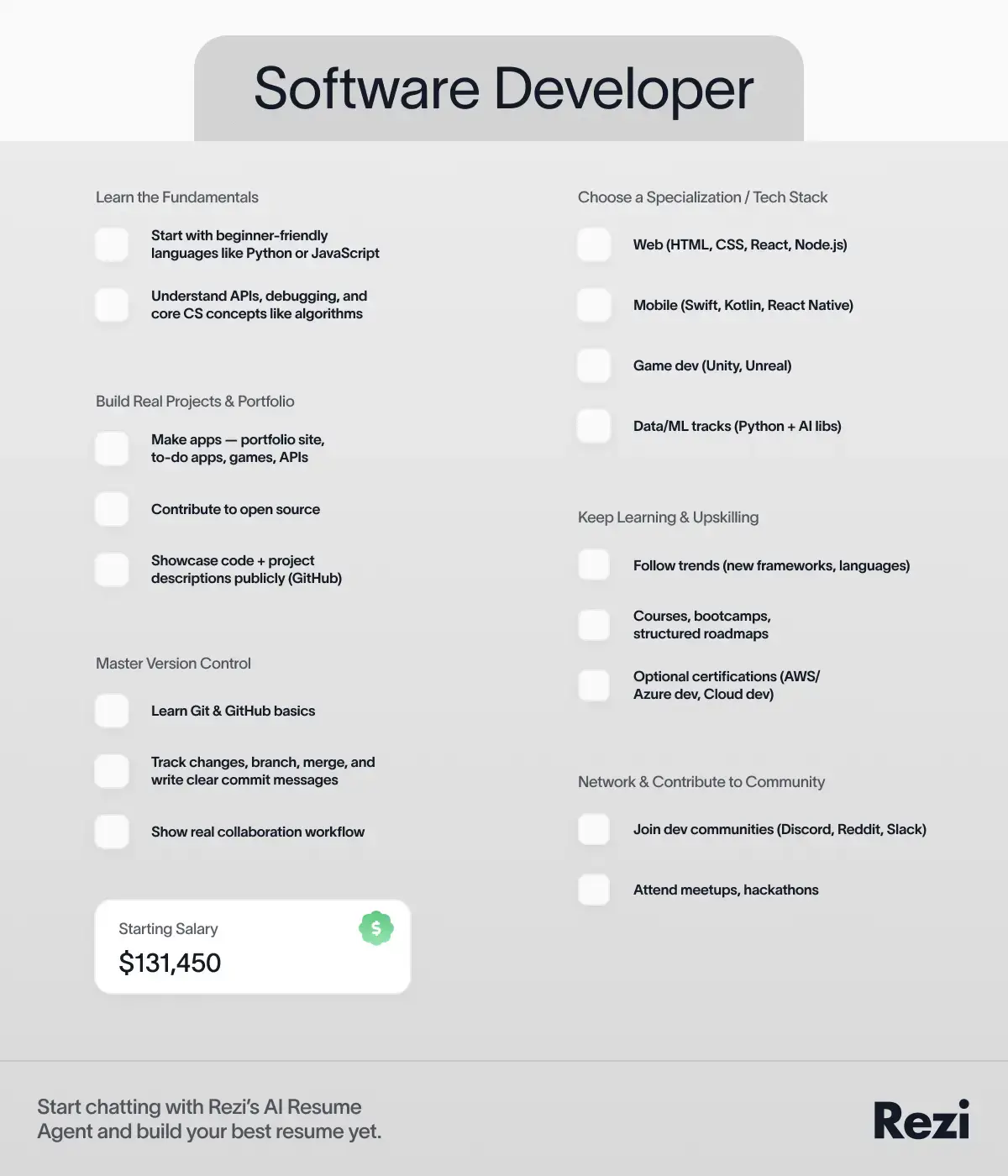
To become a software developer, start by learning the fundamentals of coding. Next, choose your specialization or tech stack. Build real projects and a portfolio, understand version control, and always continue educating yourself. Network and contribute to open source, and then apply for internships or entry-level positions.
Many people online are discussing whether learning to code is still worth it, considering AI tools like Claude Code make the entire process simpler. It’s now possible to write applications through prompts, and vibe coding is even turning people with non-technical backgrounds into builders.
The tools have changed, and the bar has gotten higher than what it was a few years ago.
However, the need for people who understand how software actually works hasn't gone away. The payoff is still strong for those with software development expertise.
In this guide, I'll cover how to become a software developer, including the skills and education paths that matter, tips for your portfolio, and what you can expect in terms of salary and timeline.
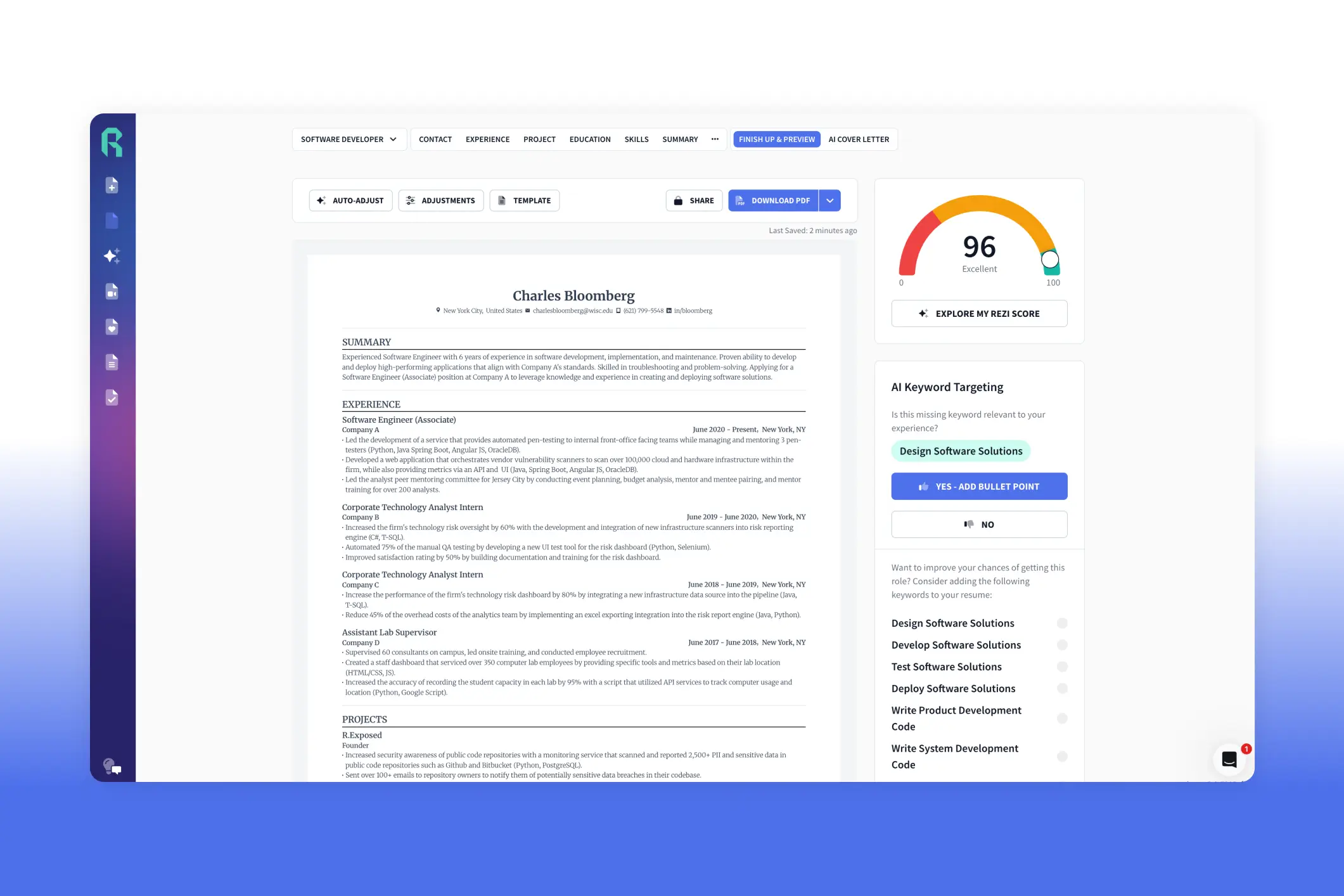
If you need help building a software developer resume, you can get started from scratch or improve your own with Rezi AI Resume Builder.
The Core Responsibilities of a Software Developer
In short: software developers take an idea and turn it into functioning code.
A software developer creates the tools and applications that make our digital lives work, everything from your phone’s weather app to the checkout system at your favorite store.
These are the main types of developers:
- Front-end developers focus on what users see (the website, the app interface).
- Back-end developers handle what happens behind the scenes (databases, servers, APIs).
- Full-stack developers do both front-end and back-end development.
Here’s what typical daily tasks could look like for a software developer:
- Writing and debugging code.
- Collaborating with designers and product managers.
- Testing and optimizing applications.
- Using version control tools like GitHub.
- Continuously learning new technologies.
If you’re detail-oriented, love solving problems, and enjoy creating things from scratch, this could just be the right job for you.
How to Become a Software Developer
Here’s how to become a software developer:
- Learn the fundamentals of coding.
- Choose your specialization or tech stack.
- Build real projects and a portfolio.
- Understand version control.
- Continue to educate yourself.
- Network and contribute to open source.
- Apply for internships or entry-level roles.
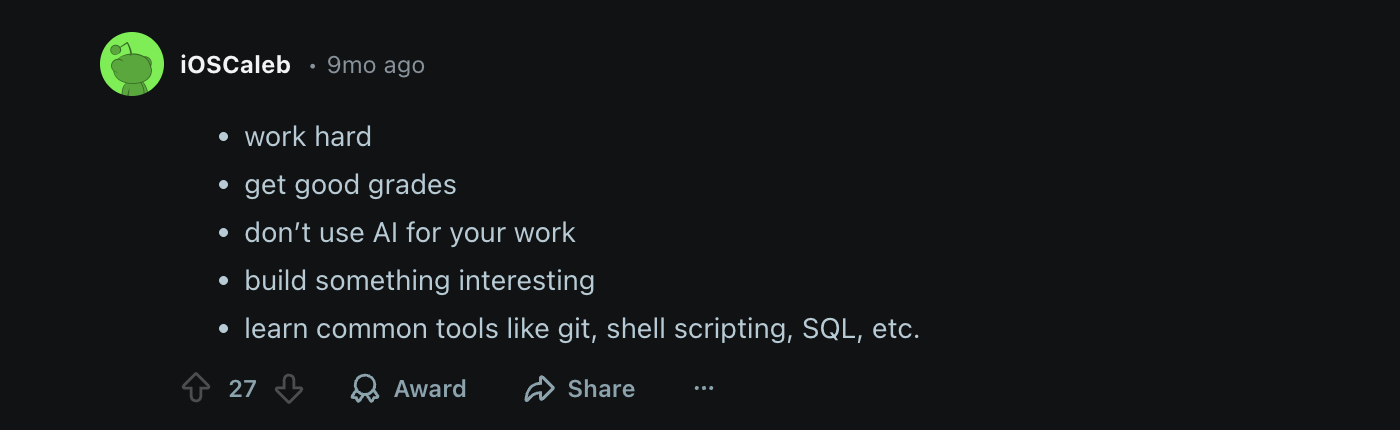
It’s doable to become a software developer, even without a degree. And if you’re currently in university or college, my advice aligns with what many experienced developers on Reddit often say about breaking into tech right after graduation:
Also, a quick word about AI tools — they’re amazing for learning and productivity, but don’t overly rely on them to do the thinking for you. As a software developer, you need to understand how and why your code works, debug issues on your own, and make decisions about structure and logic. Relying on AI alone may produce code that works, but not code that’s robust, scalable, or thoughtfully engineered.
Now, let’s dive into each step in more detail below.
1. Learn the fundamentals of coding
You can’t skip the basics. Start with programming languages like Python or JavaScript — they’re both widely used and have tons of free learning resources.
Online platforms like freeCodeCamp, Codecademy, and Coursera can help you get started.
Here’s a solid starting point:
- HTML, CSS, JavaScript (for web dev)
- Python or Java (for general-purpose or backend development)
- SQL (for databases)
You’ll also want to understand core computer science concepts:
- Data structures and algorithms
- APIs (how apps talk to each other)
- Object-oriented programming
Related guides:
- Computer Skills for Your Resume
- Programming Skills to Put on a Resume
- Technical Skills to Show on a Resume
- AI Skills to Add to Your Resume
- The Best High-Income Skills to Learn
2. Choose your specialization or tech stack
Here are a few common paths to consider doubling down on:
- Web Developer – Build websites and web apps (HTML, CSS, React, Node.js).
- Mobile Developer – Create apps for iOS or Android (Swift, Kotlin, React Native).
- Game Developer – Build games using Unity or Unreal Engine (C#, C++).
- Data Engineer or Machine Learning Developer – Work with data pipelines and AI (Python, TensorFlow).
You don’t have to pick one right away. Explore different areas to see what excites you and which area you want to focus more on.
Once you have an idea, you can follow a structured learning roadmap for your target role by exploring the specific skills and technologies used in that specialization.
3. Build real projects and a portfolio
You’ll learn faster by building things. Here are a few ideas in terms of what you could start building:
- A personal website.
- A to-do list app.
- A chatbot or weather app.
Afterward, push yourself further:
- Contribute to open-source projects on GitHub.
- Clone existing apps (like Twitter or Spotify) to understand how they work.
- Showcase everything on a personal portfolio site.
Employers tend to care more about what you can build than where you studied. So, focus on building something interesting and sharing your process.
Related articles:
- How to Write a Resume Header
- How to Create a Good LinkedIn Profile
- How to List Projects on a Resume
- How to Describe Your Work Experience on a Resume
- How to Put Freelance Experience on a Resume
- How to Describe Remote Work On a Resume
4. Understand version control
Git and GitHub are must-know tools. They let you track changes to your code, collaborate with others, and show employers that you understand real-world workflows.
Learn how to:
- Commit and push code.
- Branch and merge changes.
- Write clear commit messages.
5. Continue to educate yourself
The tech world evolves constantly. Whether or not you pursue formal education, continuous learning is part of the job. With that in mind, many employers today value skills over credentials but if you’re eyeing roles at big tech companies, a degree can help.
Here are potential paths to consider:
- Computer Science Degree: Great for theory and job stability, but not mandatory.
- Coding Bootcamps: Fast-tracked, project-focused, and perfect if you’re career-switching.
- Self-Taught: Totally doable if you’re disciplined and build a strong portfolio.
Certifications can also boost your knowledge and resume, especially early on. Examples of some popular ones include:
- Google Professional Cloud Developer
- AWS Certified Developer – Associate
- Microsoft Certified: Azure Developer Associate
- Meta Front-End Developer (Coursera)
Although these certifications aren’t always required, they can still signal credibility and initiative.
Learn more:
- Top Skills to Put on a Resume
- How to List Certifications on Your Resume
- How to List Education on a Resume
6. Network and contribute to open source
Don’t underestimate the power of connections in tech. Networking can open doors that traditional job applications can’t.
Here’s where you could start:
- Attend local coding meetups or tech conferences.
- Join online communities. Discord servers, Reddit forums, and Slack groups are great for beginners.
- Contribute to open-source projects on GitHub. Doing things like fixing documentation or small bugs helps you learn and gain visibility.
- Follow developers and tech influencers on platforms like X (Twitter) or LinkedIn to stay up to date.
These connections can lead to mentorship and collaboration opportunities, and yes, real job offers.
7. Apply for internships or entry-level jobs
When you’re ready to job hunt, focus on getting that first foot in the door, even if it’s a junior or freelance role.
Make sure you:
- Have a solid GitHub profile and/or portfolio site.
- Tailor your resume to highlight projects and skills.
- Practice technical interviews (Rezi AI Interview can help with this).
Rezi AI Interview Practice lets you simulate real interview scenarios for software developer roles. You can practice answering both technical and behavioral questions, get feedback tailored to your responses, and build familiarity with the format before the real thing. If you haven't been through a formal technical interview before, I highly suggest practicing with this tool as much as you can.
Getting your first job might take persistence, but once you’re in, growth can happen quickly. Every project you touch will make you a stronger developer.
If you’re curious about how to use the best career tools for landing your target role, check out these guides:
- Rezi for Jobs in the Tech Industry
- Rezi for Engineering Jobs
- Rezi for Marketing Jobs
- Rezi for Project Management Jobs
- Rezi for Career Changers
Sample Timeline to Becoming a Software Developer
This really depends on your path:
- Bootcamp: 3–6 months (intensive).
- Self-taught: 6–18 months (depends on consistency).
- Bachelor’s degree: 4 years.
If you can dedicate consistent time to learning, it’s doable to land your first junior dev role in under a year.
How Much Can Software Developers Get Paid?
The median pay for software developers was $131,450 per year in 2024, according to the U.S. Bureau of Labor Statistics (BLS). However, salaries can also vary depending on your experience, location, and specialization.
Side Note: a bonus perk of being a software developer is that many of these roles allow you to work remotely.
Summary
Here’s a quick recap of how to become a software developer:
- Learn the fundamentals. Start with beginner-friendly languages like Python or JavaScript and master the basics of programming and computer science.
- Pick a specialization. Explore different paths like web, mobile, game, or data development to find what excites you.
- Build real projects. Create apps, contribute to open-source, and showcase your work in a professional portfolio.
- Understand version control. Learn Git and GitHub to manage code and collaborate effectively.
- Continue to educate yourself. Whether through a degree, coding bootcamp, or self-learning, keep upskilling and earning certifications.
- Network and contribute. Engage with developer communities, attend meetups, and connect online to build relationships and opportunities.
- Apply for jobs. Polish your resume, practice interviews, and apply for junior or internship roles to kickstart your career.
Every bug you fix, project you build, and skill you learn moves you closer to your first job in tech. Stay curious, keep coding, and don’t stop learning.
FAQs
Do I need a degree to become a software developer?
A degree helps, but it’s not always required. Many developers are self-taught or come from coding bootcamps. What matters most is your portfolio, problem-solving skills, and ability to show you can build and ship real projects.
What is the best programming language to start with?
If you’re new, start with Python for general-purpose programming or JavaScript for web development. Not only are they essential, but they’re often in high demand and have huge learning communities. Once you’re comfortable, you can branch out to languages like Java, C#, or Go depending on your goals.
Is software development hard to learn?
It can be challenging at first, but it’s very learnable with the right approach. Start small, focus on practical projects, and don’t be afraid to make mistakes. The more you practice, the more fluent you become.

Upload or drop your resume to get started
Upload your resume to get started
Score my resume

Astley Cervania is a career writer and editor who has been sharing resume and job search insights for 5+ years. He shapes the direction of the Rezi blog, providing practical answers for important career-related questions and helping hundreds of thousands of people navigate the job market and build resumes that land interviews.