
Career Advice
How to Use Rezi for Laid-off Workers (Tips & What to Do Next)
Laid off? Learn how to use Rezi to update your resume, target jobs, write cover letters, and prepare for interviews with less stress.

Published on
February 23, 2026
Updated on
February 23, 2026
If you’ve been laid off, Rezi is a resume builder with career tools that can help you get back on track. Start by using AI Job Search to find open roles and see which keywords to include in your resume. Update your resume, including the experience section with clear, results-focused bullets. Create a tailored summary and make sure your skills match the job. Check your resume strength with the Rezi Score, generate cover letters, get expert feedback from AI Resume Agent, and practice interviews. Keep explanations brief when addressing the layoff and focus on your skills and growth.
I’ve been there. It sucks.
Unfortunately, there’s nothing anyone can say that makes it feel better when it first happens.
“It’s their loss.” “Better things are coming.” “It wasn’t meant to be.” “Do you really want to be on a sinking ship anyway?”
Even with supportive friends and family, none of that really helps in the moment.
So let yourself feel it. Cry. Vent. Sleep. Go for a walk to clear your head. Whatever you need to do to process it.
And when you start to feel a little better — when you’re ready to be proactive and take that first step forward — we’re here to help.
The job search takes time and can feel heavy, but you don’t have to figure it out alone.
These guides can also help you navigate what comes next:
What Job Search Obstacles Do Laid-off Workers Face?
Laid-off workers often face a mix of emotional and financial challenges all at once. From uncertainty and loss of confidence to explaining a layoff, updating skills, and trying to stand out in a crowded job market, it can feel overwhelming.
Where do the challenges end, you may ask?
If it’s any consolation, layoffs aren’t an anomaly right now, and you’re not the only one.
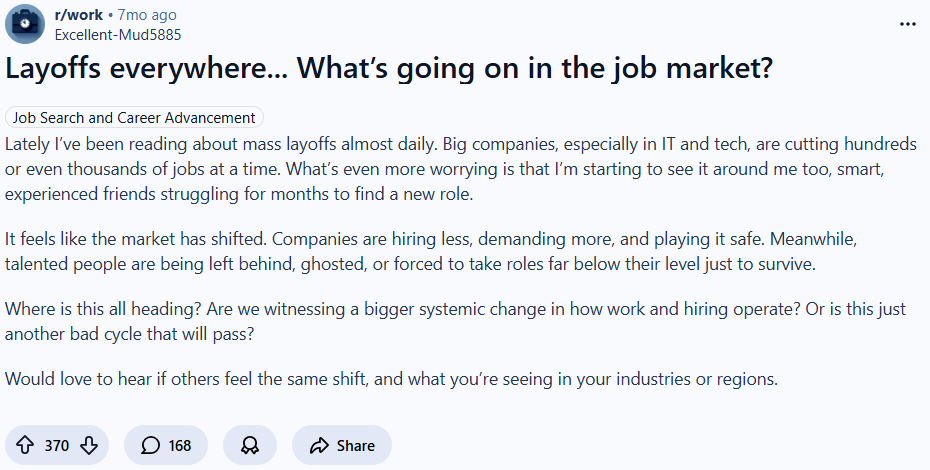
According to Challenger, January 2026 alone saw 108,435 job cuts in the US, the highest January total since 2009. While that’s unsettling, it helps explain why so many people are in the same position.
Related articles:
- Will Tech Layoffs Ever Stop?
- Company Layoffs in 2025
- How AI Is Changing the Job Market
- What Fiverr’s CEO Said About the Job Market
- Why the Job Market Is Bad
- Here’s Why People Are Leaving the UK
- How AI Is Affecting White-Collar Jobs
Uncertainty
It can hit you like a ton of bricks. Like a breakup you never saw coming (or maybe you saw the signs and chose to ignore them). It disrupts your routine, confidence, and career direction.
Your future plans suddenly feel shaky; maybe you had a five-year plan and pictured yourself growing within the company. It’s a knock to even the most self-assured people, so it’s hard to immediately feel motivated about next steps.
That said, motivation does come back, even if it doesn’t feel that way yet.
Explaining a layoff to employers
You might worry about how your job loss will be perceived by family, friends, and, more importantly, future employers. You don’t want it to reflect poorly on you.
But if your role ended for reasons outside your performance, it’s not on you.
Gathering your work achievements
More often than not, it’s easy to lose track of everything you accomplished at work since you’re running on autopilot.
Now’s the time to give it some thought.
Go through relevant reports to find the numbers and document what you’re able to (as long as it doesn’t go against what’s stated in your employment contract). Think about what changed from your contributions.
Ask yourself things like:
- Did you help save time, money, or resources?
- Did you introduce a new process or tool that improved how work got done?
- Did you train or mentor others?
- How many projects were you handling in a typical week or month?
Get more ideas: Achievements to Put on a Resume.
Standing out in a competitive market
In the current age of AI, the job market is competitive. (Learn more: The Crisis of Entry-Level Labor)
But standing out isn’t impossible. You need to make your application the best it can be, which means targeting your resume to the role and optimizing for ATS.
Keeping skills and keywords aligned
You might need new job search strategies, or you may need to refresh your resume. Review job descriptions in your field to spot new or emerging skills. And if you notice gaps, it’s time to brush up.
If you already have those skills, make sure they’re front and center on your resume (I’ll help with that shortly).
Read more about How to Use Resume Keywords to Beat the ATS.
Financial pressure
Losing a job is stressful. Period.
You’ve got bills, and you might be financially responsible not just for yourself but for others. This would make it so much harder to focus and think clearly when job searching.
I know how traumatic it can feel. It’s difficult to process.
Try not to be too hard on yourself and give yourself room to breathe. Talk to a friend, get some fresh air, or do something you enjoy. Your mental health matters. Protect it. This is much more productive than forcing yourself to search for new jobs immediately.
If you need income quickly, these guides might help:
The pressure to move fast
It can feel like the clock starts ticking immediately, like every day you don’t apply or update your resume is a wasted one.
There’s pressure to do everything at once and get back to normal as quickly as possible.
But rushing leads to unfocused applications and more frustration when responses don’t come.
Try pacing yourself. Set aside specific days for resume updates, LinkedIn tweaks, online courses, and applications. If you accomplish one meaningful thing in a day, that’s progress.
Rebuilding interview confidence
After a layoff, it’s normal to feel less confident talking about your value in interviews. Preparation makes all the difference. When your examples and achievements are clear in your mind, it’s much easier to speak with confidence.
These interview guides might be helpful:
How Laid-off Workers Can Use Rezi for Job Searching
These are the ways laid-off workers can use Rezi for their job search:
- Find jobs relevant to your background and manage applications in one place using Rezi Job Search.
- Target your resume quickly with AI Keyword Targeting, showing you exactly which keywords matter for each role.
- Strengthen your resume sentences with the AI Bullet Point Writer so they highlight your most impressive achievements.
- Write a targeted summary using the AI Resume Summary Generator that clearly shows why you’re a strong fit.
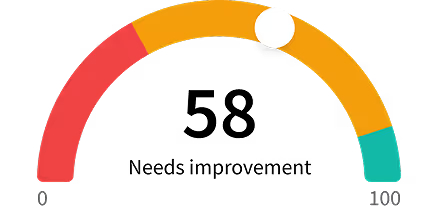
- See how ready your resume really is with a clear Rezi Score and specific feedback you can work with.
- Create personalized cover letters in minutes with the AI Cover Letter Writer.
- Get quick guidance from the AI Resume Agent on resume improvements, salary ranges, or career pivots.
- Practice interviews with confidence using AI Interview Practice, which gives realistic questions and feedback.
Time is of the essence, and Rezi is built to help you find your next job in the most efficient way possible.
1. Update your work experience with clear achievements
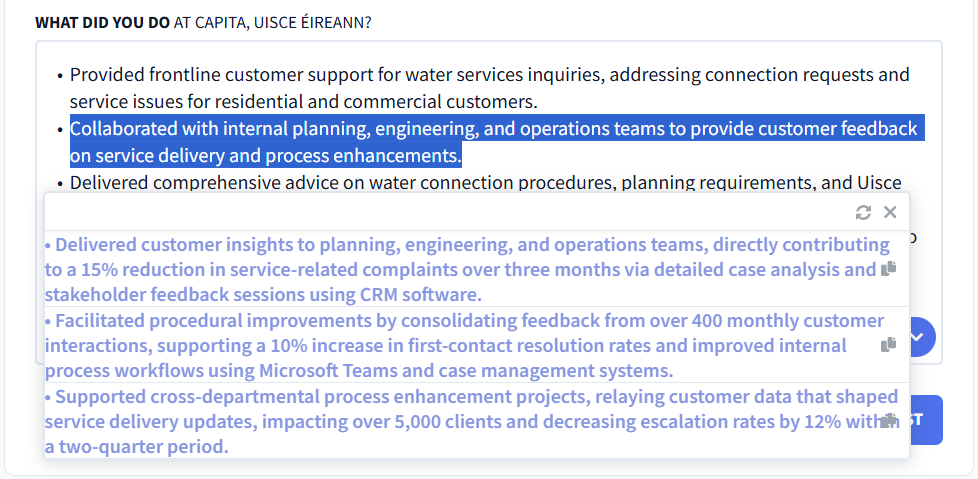
You can refine your resume sentences using an AI Bullet Point Editor, which offers content suggestions and you can use it to emphasize your achievements.
When you’re laid off, this feature can be helpful because:
- You can update bullet points and even use AI to double down on measurable achievements.
- Improve existing bullets by removing filler and adding clearer results.
Related guides:
- How to Write a Perfect Resume Work Experience Section
- STAR Method for a Resume
- 700+ Best Action Verbs to Put on a Resume
2. Find new roles in your field faster with Rezi Job Search
Job boards like LinkedIn and Indeed have a lot of outdated, ghost job listings and “easy apply” options that never seem to take you anywhere.
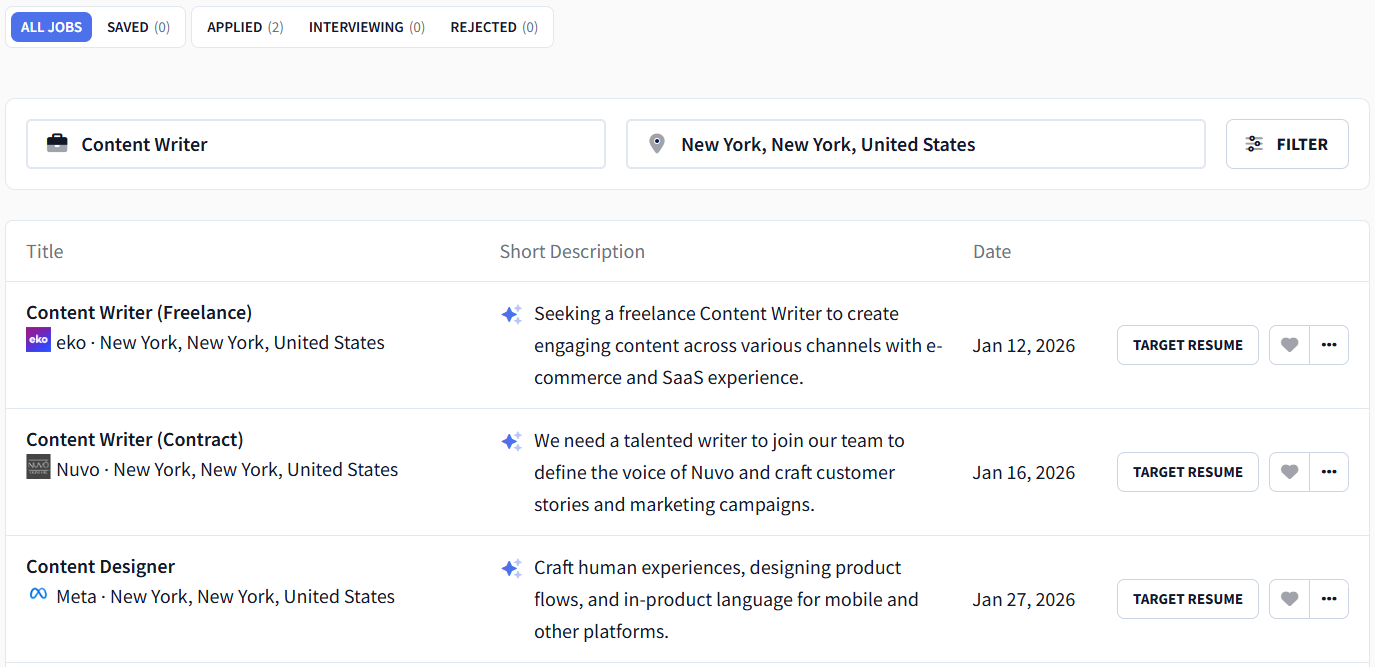
With Rezi Job Search, you can find job openings for your position. This feature was also built with laid-off workers in mind because we want it to be easy for them to find relevant jobs in their field or industry. You can even press “Target Resume” for assistance in customizing your resume for the job posting.
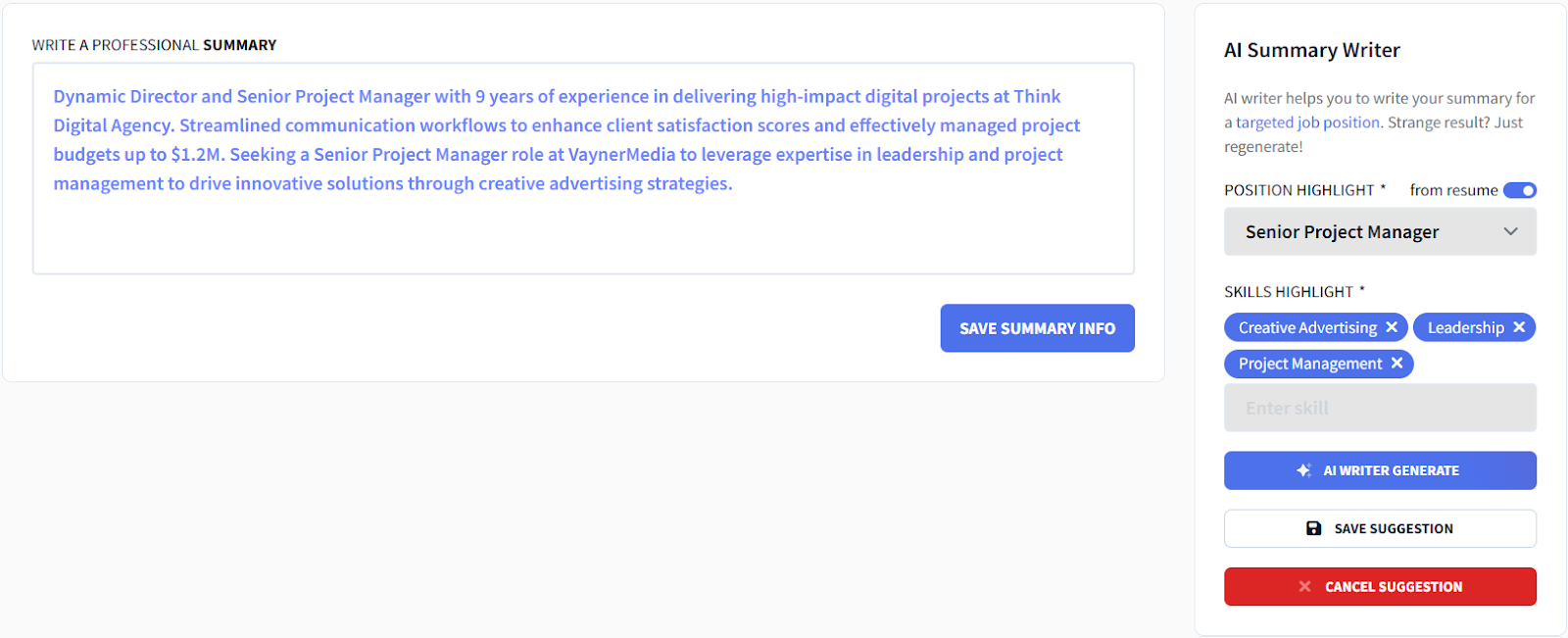
3. Write a targeted summary with the AI Resume Summary Generator
The summary can be one of the hardest sections of a resume to get right. You’re expected to sell yourself, align it with the role, and keep it under two or three sentences.
For laid-off workers, you can use this feature to highlight any new strengths that you might have gained from your most recent job. Think about key skills before you were let go, or any moments where you received praise. All of this helps with making your resume summary stronger.
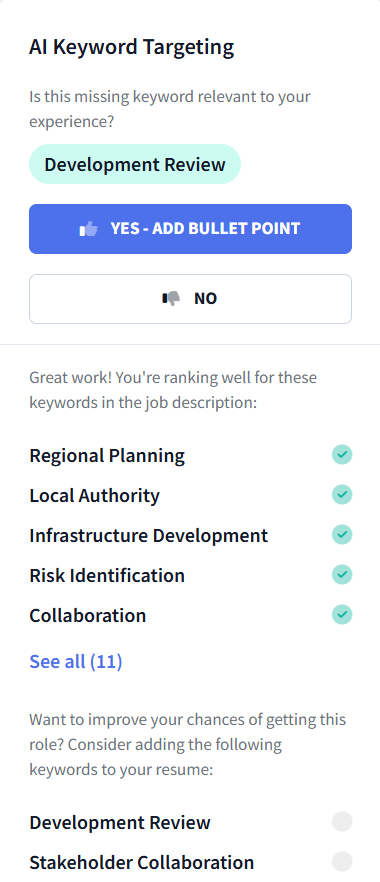
4. Match your skills to job postings with AI Keyword Targeting
With the volume of applications companies receive, most rely on ATS to filter resumes. Hiring teams set the skills and requirements they want, and the system scans resumes for matching keywords.
Use a resume keyword scanner to tailor your resume. It can flag the words or phrases missing from your resume. You can also use it to generate a bullet point for including the missing keyword, which can be especially useful if you haven’t added your previous role in the experience section in full detail yet.
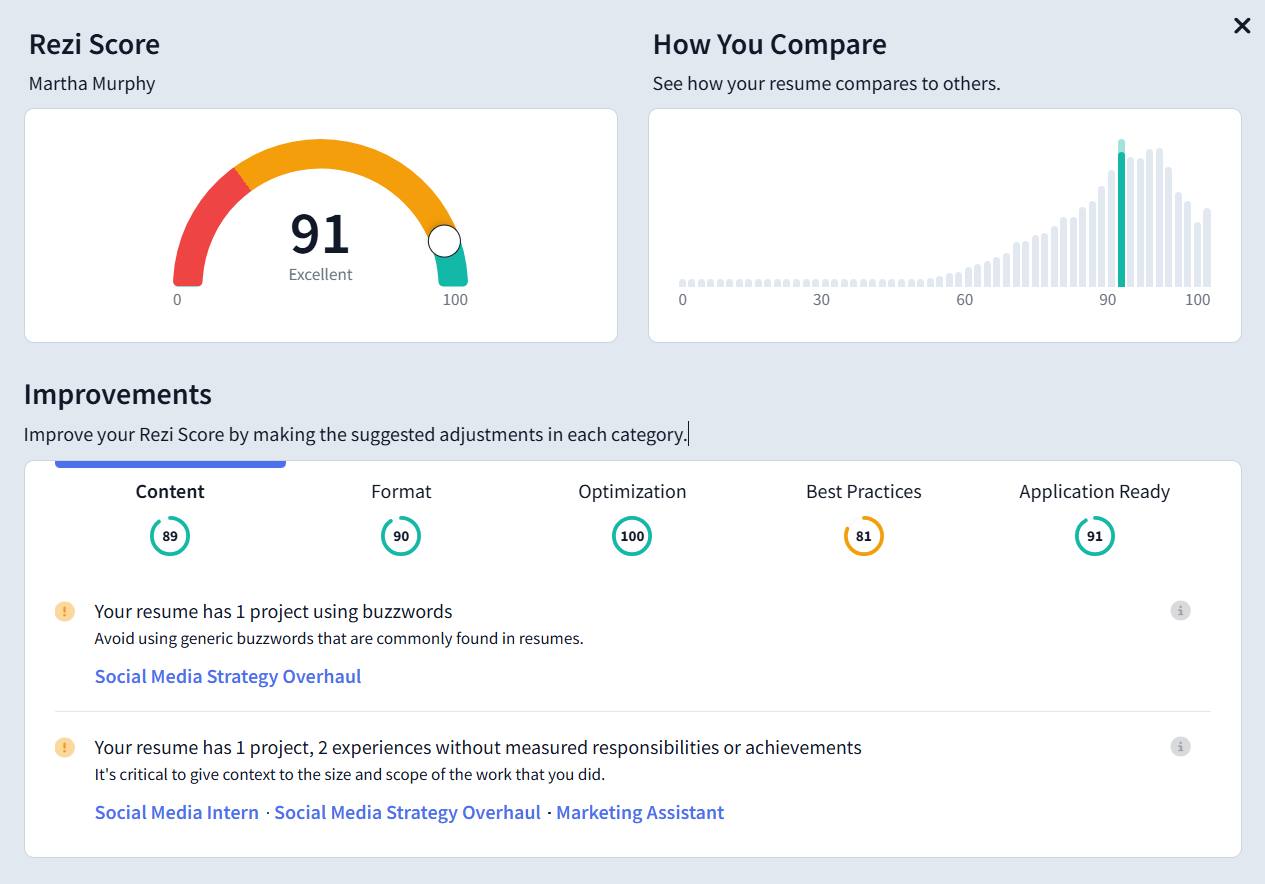
5. Check resume strength with the Rezi Score
It helps to have a non-judgmental second set of eyes while you build your resume. The Real-Time Content Analysis points out mistakes and improvement areas as you go, and that feedback is linked to your Rezi Score.
How the Rezi Score helps laid-off workers:
- Score your resume from 1 to 100 and pinpoints exactly where changes are needed, down to a specific role or bullet point, so you’re not guessing.
- Reinforce resume best practices, like keeping it to one page for junior roles, using 3–6 bullets per job, and spelling out full months.
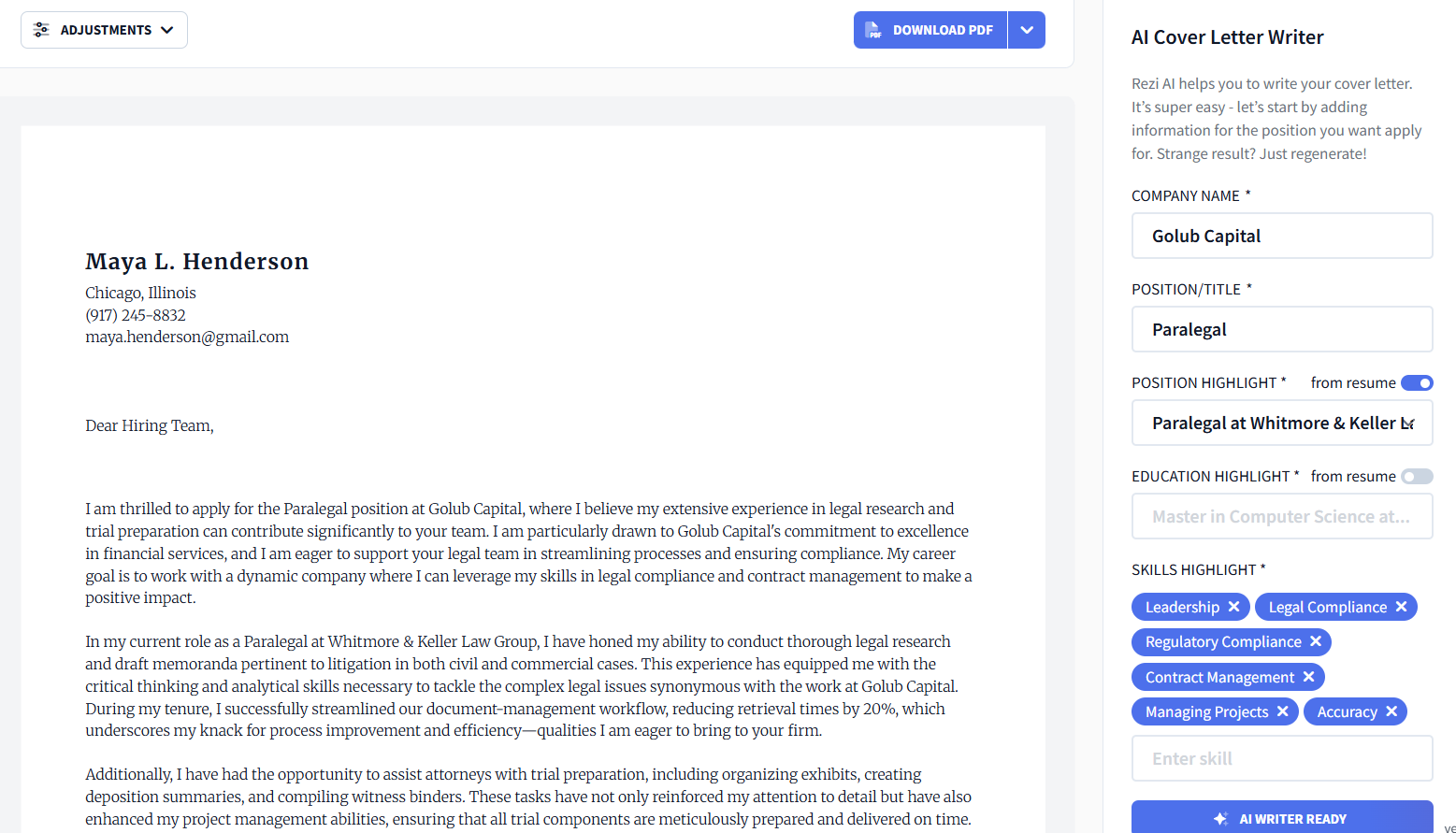
6. Write personalized cover letters with the AI Cover Letter Writer
I mean, who actually enjoys writing a cover letter?
And when you’ve just been laid off, you’ve already had to go through a lot. Not just emotionally, but also because you’ve had to update your resume and some of you may have had to look back through a bunch of reports or documents while you still have access so that you can mention any key projects or accomplishments.
But with our cover letter builder, you can automatically generate a full cover letter that matches your resume.
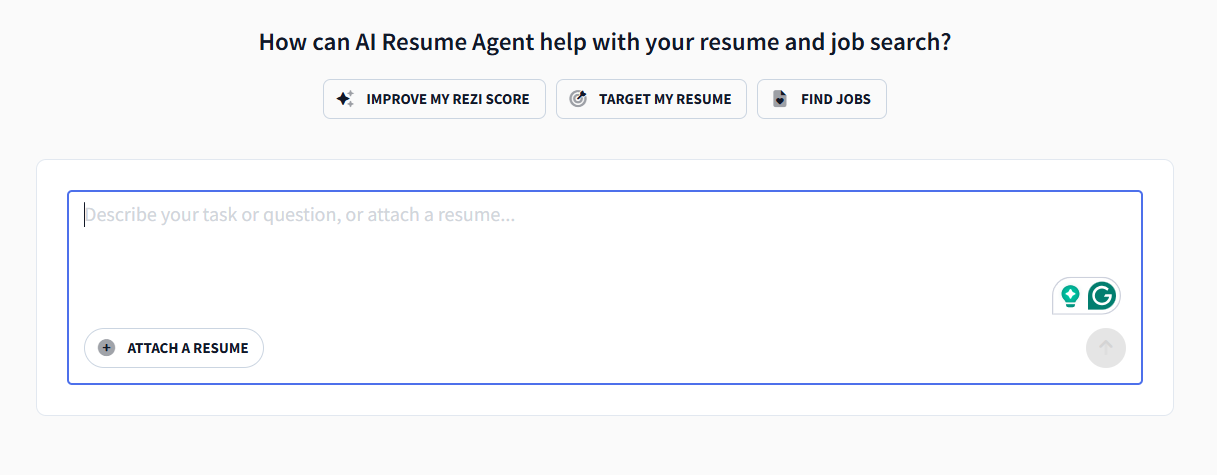
7. Get a final resume review using Rezi AI Agent
It’s common to start doubting yourself after some bad news. If you need a second opinion or guidance on your skills and job search, our AI agent can provide direction.
Here’s how:
- Reviews your resume and answers questions on the spot, so you can make updates quickly and move forward.
- Offers guidance on salary ranges based on your experience, role, and market data.
- Suggests high-demand roles that match your background and skills if you’re considering a career change.
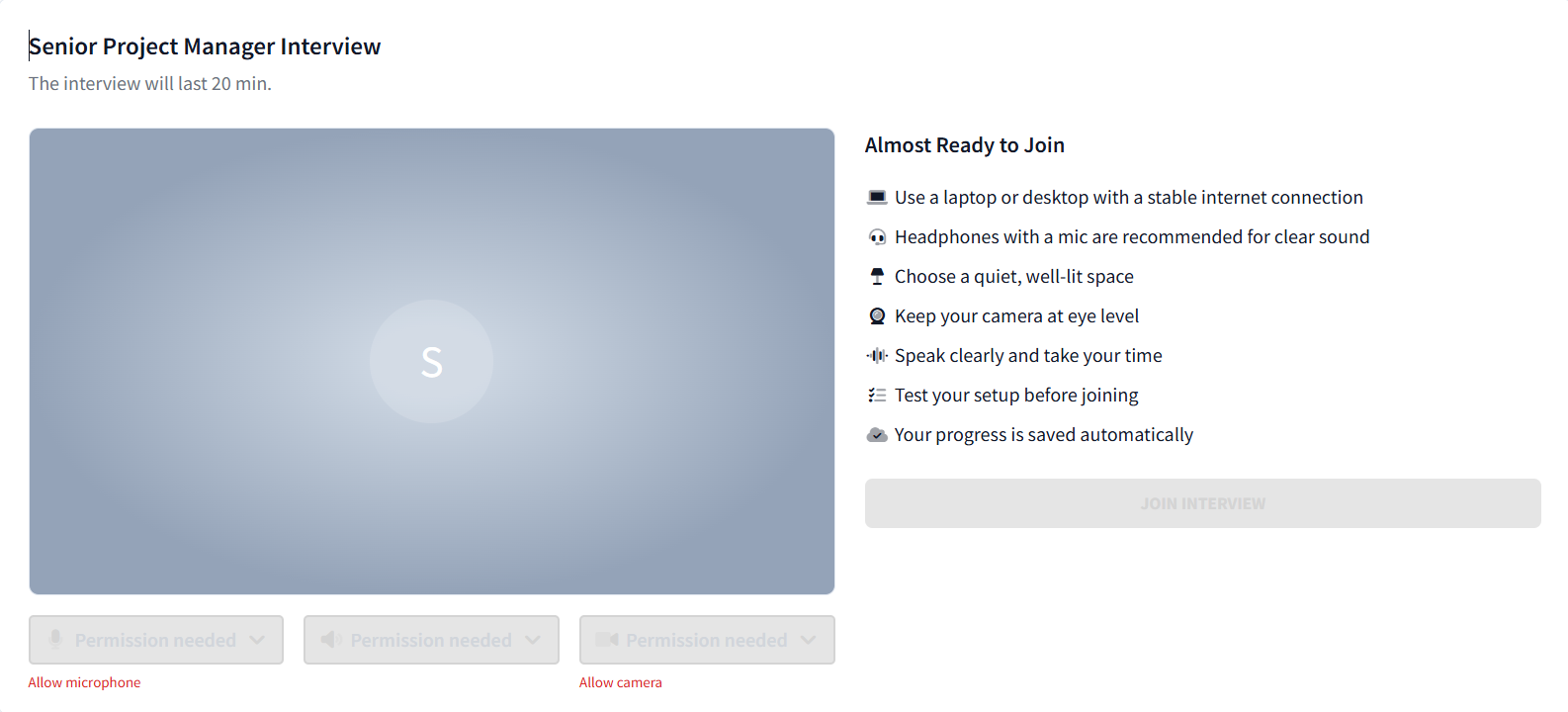
8. Prepare for interviews with AI Interview Practice
The last thing you want to do in an interview is freeze or stumble through your answers. This could also happen when you forget a few things from your most recent role. Or, it can be frustrating if you can’t recall details, and that’s why preparation is so important.
An AI interview tool works well for job seekers who have been laid off because it can generate role-specific interview questions. It’ll then provide feedback on your answers, including examples of strong responses.
What to Put on a Job Application When Laid Off?
You don’t necessarily need to talk about a layoff on your resume or cover letter.
If it comes up in an interview, be honest, keep it brief, and then shift the conversation to what you’ve learned and what you bring to the role now. And definitely don’t use it as an opportunity to vent about the company.
You can simply say your role was impacted by company-wide layoffs or eliminated due to restructuring. Layoffs are common right now, so this won’t surprise most recruiters.
This hiring manager often asks candidates in interviews why they left their previous role:
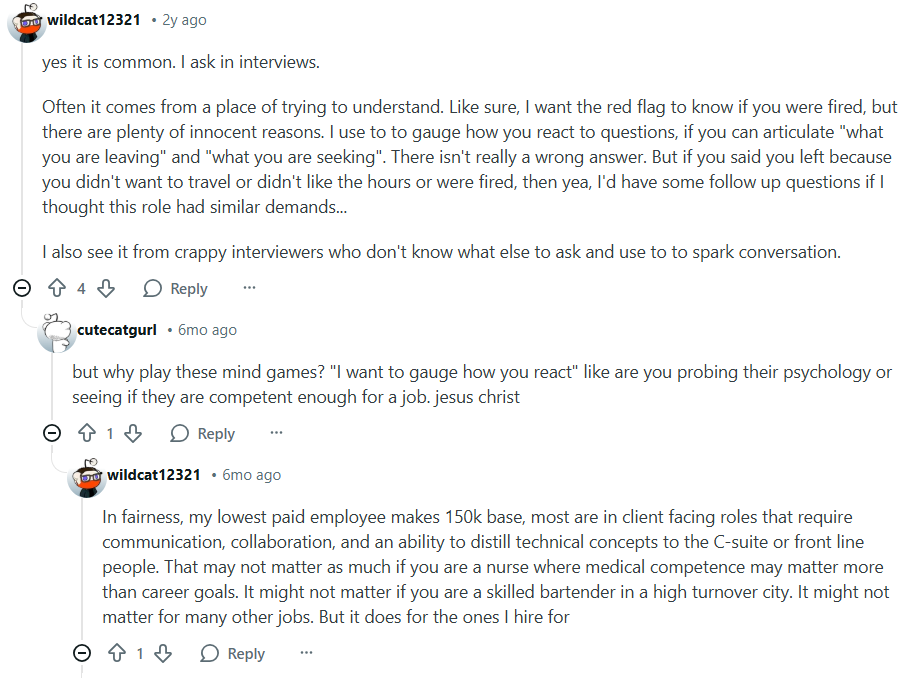
Here’s a simple script you can follow when addressing a layoff:
“My position was eliminated as part of a company-wide reduction. Since then, I’ve used this time to deepen my experience in [skill/software], completed a [course name], and I’m excited to bring those skills to a new team.”
Final Thoughts
This layoff is just a blip on your career path; it’s not a reflection of your ability or potential. The challenges you’re facing are common, especially right now.
Competition is fierce, but the key is to apply strategically, not everywhere. Using Rezi along the way helps you save time, reduce stress, and get back to regular paychecks faster.
FAQ
What companies laid off workers in 2025?
In 2025, big names like Amazon, Microsoft, Google, Salesforce, Intel, Meta, and HP let employees go (TechCrunch). Layoffs were often tied to AI investments, rising operational costs, or company restructuring.
What happens when workers are laid off?
A layoff means the role is eliminated for business reasons, not performance issues. Employers typically end your employment on a set date, revoke system access, and provide formal notice in a meeting and a written letter. Many offer severance, which can include a lump sum or continued benefits, and you’re usually eligible for unemployment benefits.
Who usually goes first in layoffs?
There’s no strict rule, but there are patterns. Contractors, temps, and non-permanent staff often go first since it’s easier legally and operationally. Middle-management or less-essential leadership roles can also be cut early, as they tend to be on higher salaries. Occasionally, employees with lower performance records are more at risk, though it really depends on the company and situation.
Are you paid during a layoff?
Once your employment ends, your regular paycheck stops. Some companies offer severance — usually a one-time or short-term payment — to help bridge the gap while you look for your next role.
What are signs a layoff is coming?
Layoffs often show up in subtle ways: budget freezes, hiring pauses, travel and training cuts, or projects quietly delayed, merged, or canceled. Employees sometimes just get a gut feeling that changes are coming, like animals sensing a storm.
Read more: What Are the Signs You’re Getting Fired?

Upload or drop your resume to get started
Upload your resume to get started
Score my resume

Sarah Coghlan is a writer and editor passionate about making resume and career advice clear and accessible to all. Based in Barcelona, her goal is to help job seekers create standout resumes and navigate the job search process with confidence and ease.