
Resume
What a Canadian Resume Format Looks Like and How to Write It
Learn how to create a standout Canadian resume with tips on format, language, content, and key differences from US resumes for success.
Published on
December 10, 2024
Updated on
August 8, 2025
A Canadian resume should be one or two pages, tailored to the job, and written in British English. Use a clean, reverse-chronological format with clear headings and no photos. Start with your name and contact info, followed by a focused summary/objective, relevant work experience, education, and key skills. Include extras like languages or volunteer work if they support the role. Format it simply (Arial or Calibri, 10–12pt), use bullet points, and save it as a PDF. Customize each resume with keywords from the job posting to boost your chances with applicant tracking systems.
Thinking about applying for a job in Canada? You’re not alone — more and more people are making the move to the Great White North, especially with the way things are right now.
And trust me, I’m no stranger to moving abroad. It’s exciting, but it also comes with a lot to figure out. New culture, new weather (hello, snow), a different currency, and even a different kind of English. With everything on your plate, let us make one thing easier: your resume and the whole job application process.
So whether you’re already in Canada or just planning your next step, we’ve got you covered. You’ll learn:
- What a Canadian resume looks like (and how it differs from a US one).
- Tips and examples for building yours.
- What to expect from the Canadian hiring process.
If you’d rather skip the DIY route, put your info into our AI Resume Builder and check “write resume” off your to-do list.
For more help, check out these detailed guides:
- How to Use ChatGPT to Craft Your Resume
- Build Your Resume Using Your LinkedIn Profile
- ATS-Friendly Resume Examples for Inspiration
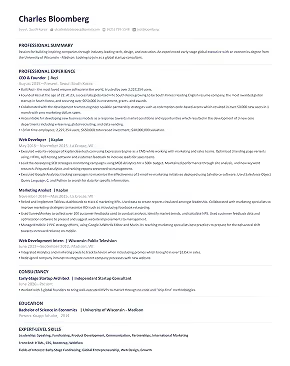
The Ideal Canadian Resume Example
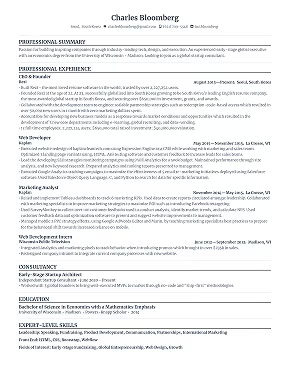
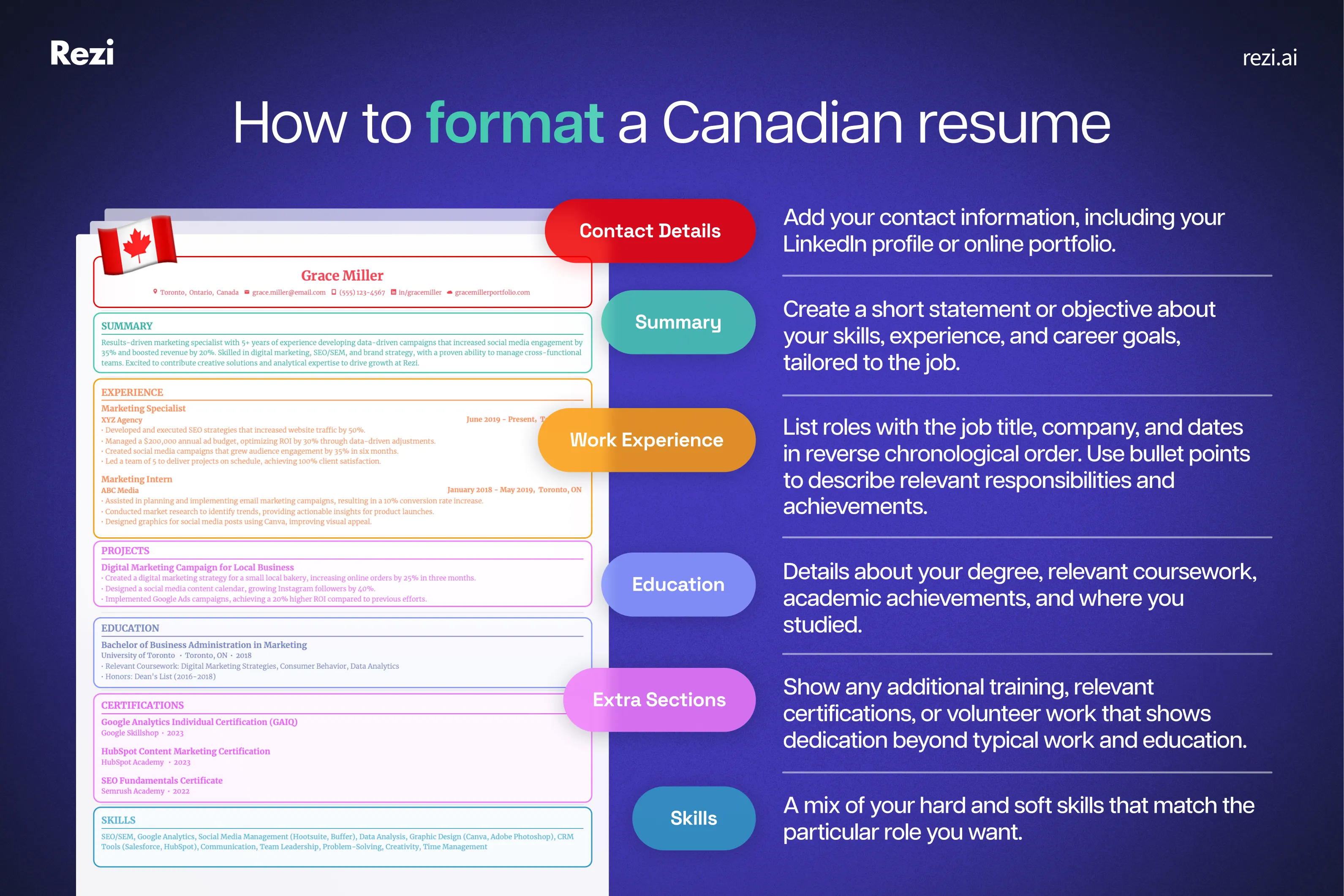
Here’s an example of a well-rounded Canadian resume, with helpful notes to show you what each section should look like. Whether you’re updating your resume or starting from scratch, these tips will help you showcase all the important stuff.
How is a Canadian Resume Different From a US Resume?
Here’s how Canadian resumes are different from the US:
- Canadians use British English spellings like “favourite” and “colour.”
- In bilingual areas, resumes may need to be in French, with language skills noted.
- Date format in Canada is YYYY-MM-DD, unlike the US MM/DD/YYYY.
- Use metric units (kilograms, kilometres) for measurements.
- In Canada, resumes are concise, and CVs are longer and more detailed. Except in Quebec, where the terms overlap.
- One and two-page resumes work for both Canadian and US resumes.
Canada and the US might be next-door neighbors, but they have their differences. Canada has Thanksgiving in October, the US in November. Tim Hortons reigns supreme in Canada, while Starbucks dominates in the US. Just like these cultural quirks, Canadian resumes have their own unique twists you’ll want to know before you hit “submit” on that job application.
Here are the key differences between Canadian and US resumes:
Language and spelling
Canadians use British English spellings, so make sure to write “favourite” instead of “favorite,” “centre” instead of “center,” and “colour” instead of “color.” Run your resume through Grammarly to check you’re using the right spelling.
In bilingual regions, like Quebec, your resume might need to be in French, so it’s important to match your resume’s language to the job listing. And mention your proficiency in both languages. (Read more about How to List Language Skills on Your Resume.)
Date format
Canada uses the YYYY-MM-DD format, while the US uses MM/DD/YYYY, so keep that in mind when listing dates.
Measurements
Canadians use the metric system. If you mention distances or weights, convert them to kilometres, kilograms, or litres. For example, “managed the logistics for over 50,000kg of goods over 200km.”
Resume length
Canadian resumes are generally two pages long when you’re an experienced professional, but one-page resumes also work. However, stick to one page if you’re just out of school, starting your career, or making a significant career change.
Resume vs. CV
In most of Canada, a resume is a concise, tailored document (one to two pages) showcasing your relevant skills and experience, just like in the US. A senior or academic CV, on the other hand, is longer and includes a full work history, publications, and more. In Quebec, however, “resume” and “CV” are used interchangeably.
To learn more about the differences, check out our guide on CV vs Resume.
What to Include on a Canadian Resume
This is what you need to include on a Canadian resume:
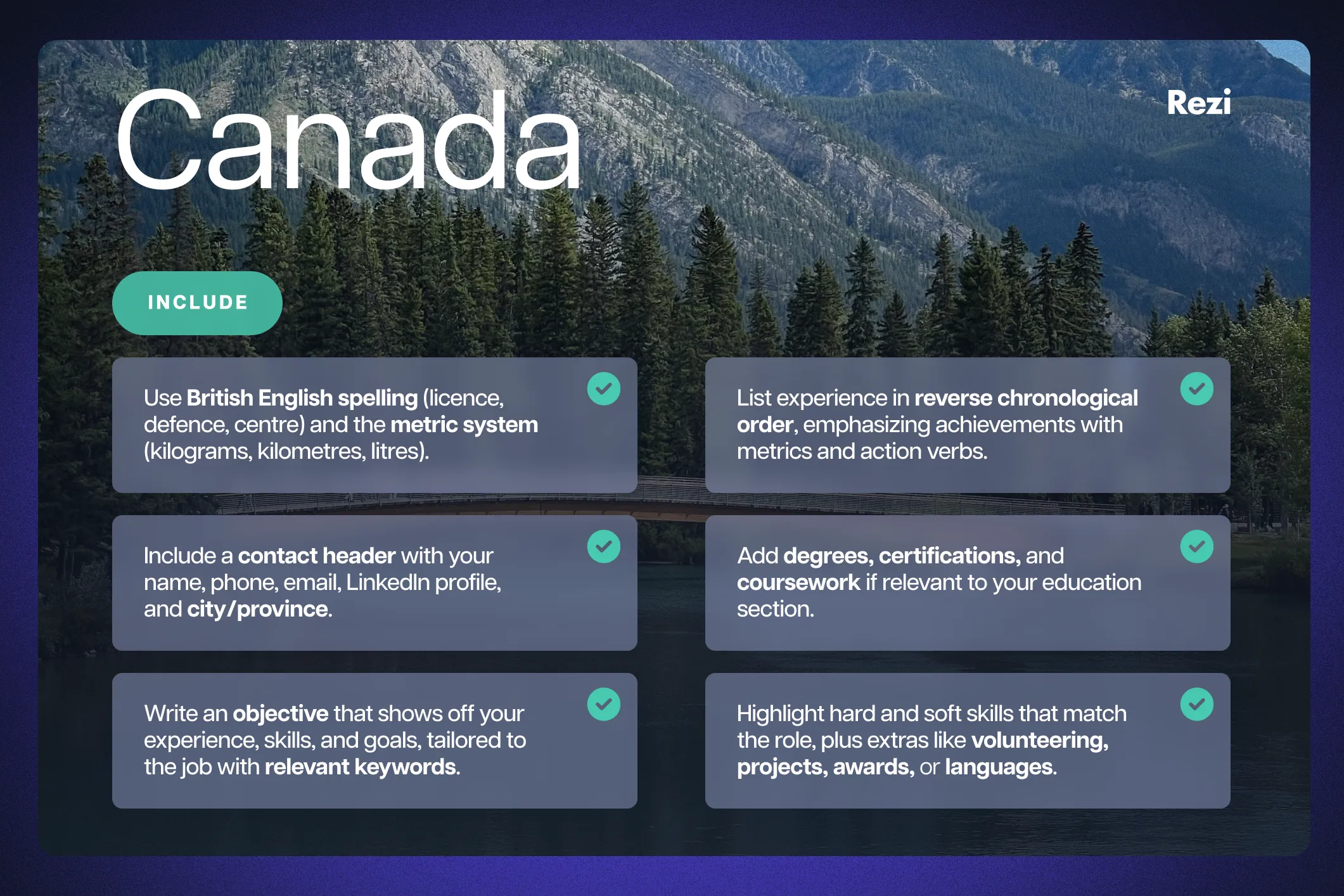
- Stick to British spelling and metric measurements.
- Add your name, city/province, phone, email, and LinkedIn.
- Start with a focused summary or objective tailored to the job posting.
- Outline your work history in reverse, emphasizing impact and results.
- Include your education, certifications, and any relevant coursework.
- List skills that fit the role, and extras like languages, awards, or volunteer work.
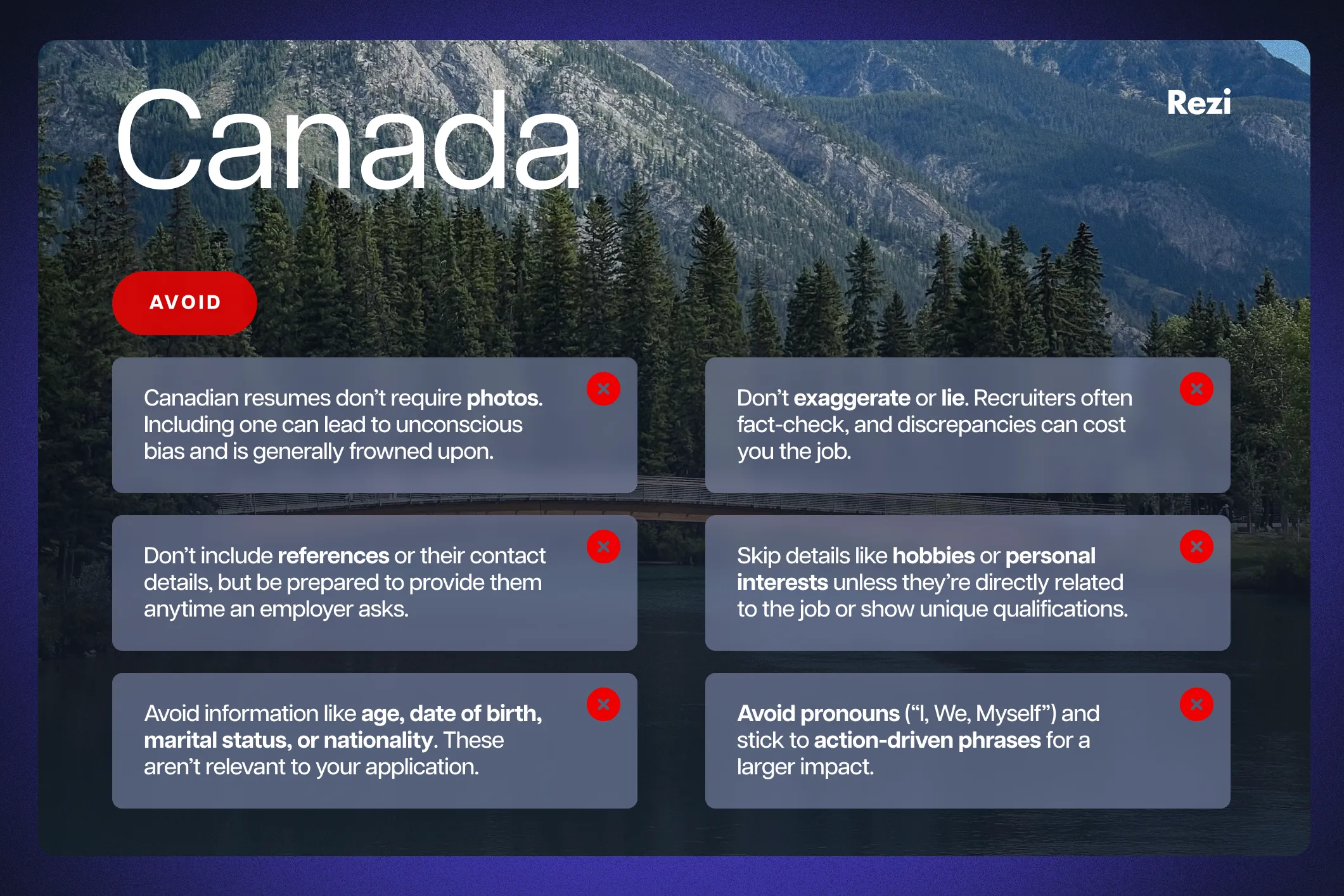
- Leave out your photo, personal details, and references.
- Use action verbs and skip any “I” statements.
- Only include hobbies if they relate to the role or help fill a gap.
When putting together your Canadian resume, start with the standard sections: a header, summary or objective, work experience, education, and skills. Include your contact info, along with key projects, tasks, and achievements that show you’re qualified for the role.
Beyond structure, there are a few key resume norms in Canada that can impact how your application is received.
Here’s what to include and leave out of your Canadian resume:
How to Format a Canadian Resume
Here’s how to format a Canadian resume:
- Go with a reverse-chronological order, starting with your latest role.
- Stick to one page if you’re just starting out or two if you’re experienced.
- Pick easy-to-read fonts like Calibri or Arial (10–12pt for body text, 14–16pt for headings).
- Set margins to around one inch and use single or 1.15 line spacing.
- Make your name and section titles stand out with bold text.
- Use a pop of color, but skip any over-the-top designs.
- Save it as a PDF (unless told otherwise).
When applying for jobs in Canada, your resume’s presentation is just as important as its content. Think of it like dressing up for an interview: neat, professional, and nothing too crazy. You wouldn’t show up in a sequined cape just to stand out, right? (I hope not.) Same goes for your resume. A sharp, well-formatted layout gives you a much better shot at getting the interview.
- Use a reverse-chronological layout, starting with your most recent experience. It’s the easiest format for Applicant Tracking Systems (ATS) and keeps things clear for recruiters.
- Keep it brief and to the point. One page resume for new grads or entry-level candidates, and a two-page resume for seasoned professionals. If you’re short on experience, put your education section before your work history.
- Choose a professional font like Arial or Calibri in 10–12 pt for body text and 14–16 for headings.
- Go with single or 1.15 spacing and one-inch margins on all sides.
- Use bold text for section headings like “Experience,” “Education,” and “Skills.”
- Keep the design simple — a subtle pop of color in your headings is fine, but avoid flashy elements that might distract from your content.
- Save and send your resume as a PDF (unless the job ad says otherwise) to preserve formatting.
A neat format isn’t just about aesthetics — it’s about making your qualifications shine. To learn more, check out our guide on The Best Resume Format.
Don’t want to stress about formatting? Jonah felt the same and liked how Rezi made the whole process effortless:
How to Create a Canadian Resume Step-by-Step
This is how to make a Canadian resume:
- Start with a header: name, city/province, phone, email, LinkedIn, and any relevant links.
- Add a short summary or objective tailored to the job, using keywords from the posting.
- List work experience with action verbs, achievements, and numbers.
- Include your education, graduation date, and any honors or key coursework.
- Highlight hard and soft skills that match the role.
- Add extras like volunteering, awards, projects, or languages.
- Customize your resume for each job to match the employer’s needs.
Feeling overwhelmed about writing a Canadian resume? Totally fair, but the good news is that it’s not all that different from a US resume. Once you know the basics, it’s much easier to pull together.
Let’s go through exactly how to build a Canadian resume that’s clear, tailored, and ready to impress hiring managers.
1. Start with a header
Your resume header provides key details about who you are and how to reach you. Keep it clear, professional, and tailored to Canadian standards.
- Put your full name in a larger font (20–24 pt).
- List your phone number (with country code if needed), professional email, and LinkedIn profile (don’t have one yet? Check out How to Make a Good LinkedIn Profile).
- Include your city, province, and postal code (or state if you’re outside Canada).
- Link to any portfolios, personal websites, or relevant social media, like a GitHub for developers or a coffee-themed Instagram for baristas.
2. Write a professional summary or objective
Your resume summary or objective is your chance to grab the hiring manager’s attention and make them want to keep reading.
In two or three sentences, talk about your experience, skills, and career goals. Use keywords from the job description to align with what the employer’s looking for, and make sure your resume’s tailored for every application to show why you’re the perfect fit.
Go for a resume summary if you’re an experienced professional:
- Highlight your professional title and years of experience.
- Emphasize key achievements with measurable results, like “increased sales by 25%” or “managed a team of 15 to exceed project deadlines.”
- Include a few skills relevant to the role.
Here’s an example of a Canadian resume summary:
Experienced marketing specialist with over six years in digital strategy and campaign management. Proven ability to boost ROI by 40% through innovative, data-driven solutions. Eager to join [Company Name] to drive impactful marketing initiatives while relocating to Canada for long-term growth.
If you’re new or switching fields, write a resume objective:
- Focus on your enthusiasm to learn and contribute.
- Showcase transferable skills like communication, teamwork, or problem-solving, even if they’re from other fields.
- Mention relevant education or certifications.
Here’s an example of a Canadian resume objective:
Motivated IT professional with a passion for system optimization and cybersecurity. Seeking to leverage problem-solving skills and network administration knowledge to contribute to [Company Name]’s commitment to cutting-edge technology. Excited to relocate to Canada and collaborate with a forward-thinking team.
Need a hand? Our AI Resume Summary Generator lets you pick a role, choose skills you want to spotlight, and instantly creates a draft you can edit to make your own.
Here’s the AI Summary Generator doing its thing:

3. Outline your work experience
This section is where you prove your value with clear, results-driven descriptions of your work experience.
- List your job history in reverse chronological order, including the title, company, location, and dates.
- Focus on achievements on your resume, not just duties and responsibilities. Use action verbs like “coordinated,” “managed,” or “developed.”
- Add numbers to outcomes and tasks to make your impact clear, like “increased sales by 30%” or “managed a team of 4.”
- If you don’t have formal experience, spotlight transferable skills like communication, leadership, or problem-solving from internships or volunteer work.
Here’s an example of a work history for a Canadian resume:
Marketing Coordinator
ABC Marketing Solutions | London, UK
March 2021–Present
• Led a team of 5 to develop and execute digital marketing campaigns, increasing website traffic by 40% over 6 months.
• Managed social media accounts, growing Instagram followers by 25% and boosting engagement rates by 15%.
• Developed content strategies for clients in various industries, tailoring messaging to target audiences and achieving a 20% increase in conversions.
• Analyzed market trends and customer data to optimize campaign effectiveness, contributing to a 30% ROI increase in the first quarter.
Customer Service Manager
Global Retail Co. | New York, USA
June 2018–February 2021
• Supervised a team of 12 customer service agents, improving team efficiency and reducing response times by 35%.
• Trained new hires in customer service protocols, resulting in a 95% employee retention rate.
• Developed training materials and customer service strategies that led to a 10% increase in customer satisfaction scores.
• Handled escalated customer complaints and ensured resolution, leading to a 15% improvement in customer loyalty.
Junior Project Manager
Tech Innovations Ltd. | Sydney, Australia
August 2016–May 2018
• Coordinated cross-functional teams of 6-8 members to deliver projects on time and within budget.
• Managed project timelines, ensuring 100% of projects were delivered on schedule.
• Created project documentation and reports, improving team communication and reducing project misunderstandings by 20%.
• Conducted weekly project reviews, identifying risks early and proposing solutions to mitigate potential delays.
If you need help writing bullet points, use our AI Bullet Point Writer. It can generate tailored sentences based on your field, job description, and target role.
Alternatively, for help fine-tuning your bullet points, check out the AI Bullet Point Editor. You can highlight any sentence (even if it’s incomplete) and get up to three refined suggestions.
4. Add your educational qualifications
Showcase your education in a way that supports your career goals.
- Start with your most recent degree or qualification, listing the degree or certification, institution, location, and graduation date (or expected date if you’re still studying).
- Leave out high school education if you have a university degree or higher.
- Add your GPA if it’s 3.5+ and you’ve graduated within the last two years.
- If you’re a recent grad, showcase relevant coursework on your resume. For example, include the title of your classes, such as “Consumer Behavior” or “Digital Marketing Strategies” when applying for a marketing job.
- Highlight any honors or awards on your resume, like Dean’s List.
- Mention job-specific certifications. For example, “First Aid and CPR Certification” or “Infection Control Practices” for a healthcare job application. (Learn about How to Put Certifications on Your Resume.)
- Summarize practical experience gained through your education. Show how you’ve applied your skills, e.g., “Developed a marketing plan that increased social media engagement by 25%.”
Here’s a sample education section for a Canadian resume:
Bachelor of Science in Civil Engineering
University of Texas at Austin, Austin, TX | Graduated May 2023
• Relevant coursework: Structural Analysis and Design, Surveying and Mapping, Construction Project Management
• Honors: Dean’s List (Fall 2022, Spring 2023)
• Capstone Project: Designed a sustainable stormwater management system for a local community, reducing runoff by 30%.
Certifications
• AutoCAD Certified Professional
Autodesk | Completed July 2022
• OSHA 30-Hour Construction Safety and Health Certification
Occupational Safety and Health Administration (OSHA) | Completed January 2023
For more detailed guidance, read How to List Your Education Section.
5. List your hard and soft skills
Your skills section should show off both your technical expertise and people skills. Align them with the job description to appeal to hiring managers and ATS.
Don’t just list the skills — back them up with examples in your experience section. If you say you’re great at teamwork, detail a project where you worked with others to achieve a goal.
Hard skills are the technical abilities you’ve learned through education, training, or hands-on experience.
Examples of hard skills for Canadian resumes:
- Data analysis
- Programming languages (Python, Java, C++)
- Web development (HTML, CSS, JavaScript)
- Microsoft Office Suite (Excel, Word, PowerPoint)
- Project management (Agile, Scrum)
- CAD Software (AutoCAD, SolidWorks)
- Social media management (Hootsuite, Sprout Social)
- Technical writing
- Accounting software (QuickBooks, SAP)
- SEO/SEM
- Database management (SQL, Oracle)
- Graphic design software (Photoshop, Illustrator)
- Languages (French, Spanish)
- Process automation
Soft skills reflect your ability to interact with others and handle various situations.
Examples of soft skills for Canadian resumes:
- Communication
- Teamwork
- Problem-solving
- Adaptability
- Time management
- Attention to detail
- Leadership skills
- Critical thinking
- Work ethic
- Conflict resolution
- Self-motivation
- Creativity
- Customer service
- Negotiation
- Organization
For more help with your skills, check out The Best Skills to Put on a Resume.
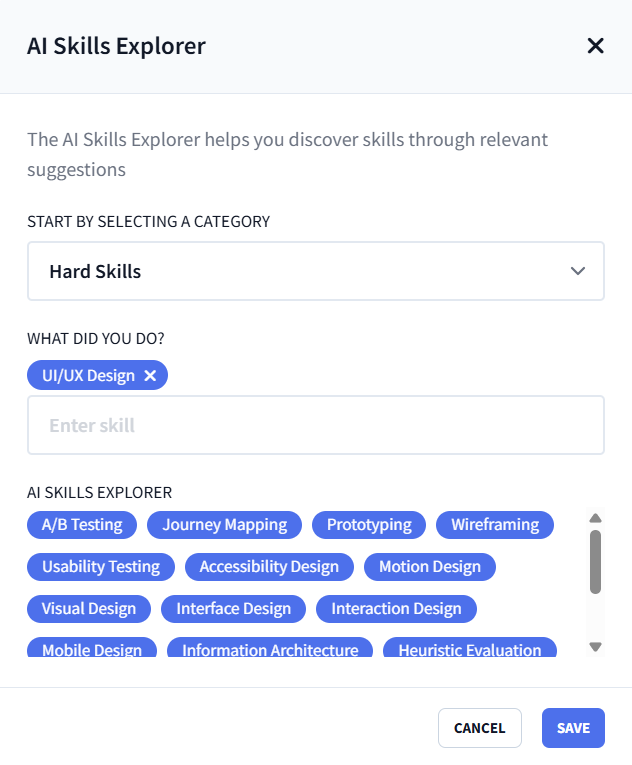
Not sure what to include? Try our AI Skills Explorer. Choose a category (like hard, soft, or technical), enter one skill you have, and get suggestions to round out your list.
The AI Skills Explorer recommends these related skills to UI/UX Design:
6. Finishing touches
These little extras might seem unnecessary, but they can really make you stand out, especially if you’re newer to the workforce. When my friend was applying for his first job with not much experience, he added some volunteer work. Turns out, that was the thing that got him the interview (not the job, but hey, it was a starting point).
Here are a few optional resume sections worth adding if they apply to you:
- Volunteer work. Include any relevant volunteering, like working at a hospital if you’re applying for a healthcare role.
- Publications. Add any articles, reports, or research you’ve published.
- Extracurricular activities. If you’re light on experience, mention activities like student council, organizing events, or leading a sports team to show leadership and teamwork.
- Languages. Being bilingual is a big plus, especially if you speak French. List your languages and proficiency level (native, fluent, intermediate, basic).
- Awards and honors. Mention accolades like “Employee of the Month” or a scholarship.
- Personal projects. Talk about if you’ve created a blog, an app, or a creative project, as it shows initiative and passion.
For more resume help, check out How to Write a Resume Guaranteed to Win a Job Interview.
7. Tailor your resume to the job description
Customizing your resume to match the job description demonstrates that you’re not just qualified, but you’re exactly what the company is looking for.
- Study the job posting. Look closely at the skills, qualifications, and keywords they highlight.
- Speak their language. Many Canadian companies use ATS to screen resumes, so including keywords from the job description helps your resume get noticed.
- Adjust your achievements. Focus on accomplishments that align with the role. For example, if the job calls for project management skills, describe when you successfully led a project and delivered results.
- Keep the format consistent. Your content should change for each application, but the structure and style of your resume can stay the same.
Struggling to find the right keywords for your resume? The Rezi AI Keyword Targeting tool makes it simple. Just paste the job description, and it’ll automatically generate a list of essential keywords, plus give you bullets including those keywords.
Celine found that using Rezi made everything so much easier:
Canadian Resume Templates to Help You Land a Job
These resume templates are designed to impress Canadian employers — they’re polished, professional, and easy to customize. Pick the one that fits your style or browse our full library of ATS-friendly resume templates if you want even more options.
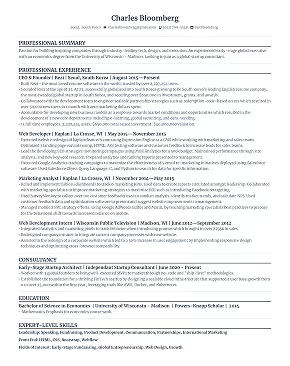
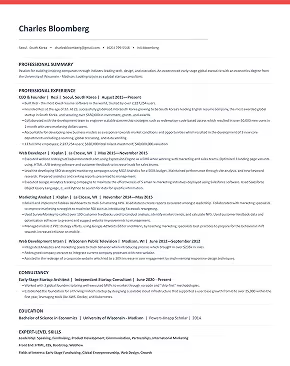
Standard Canadian Resume Template
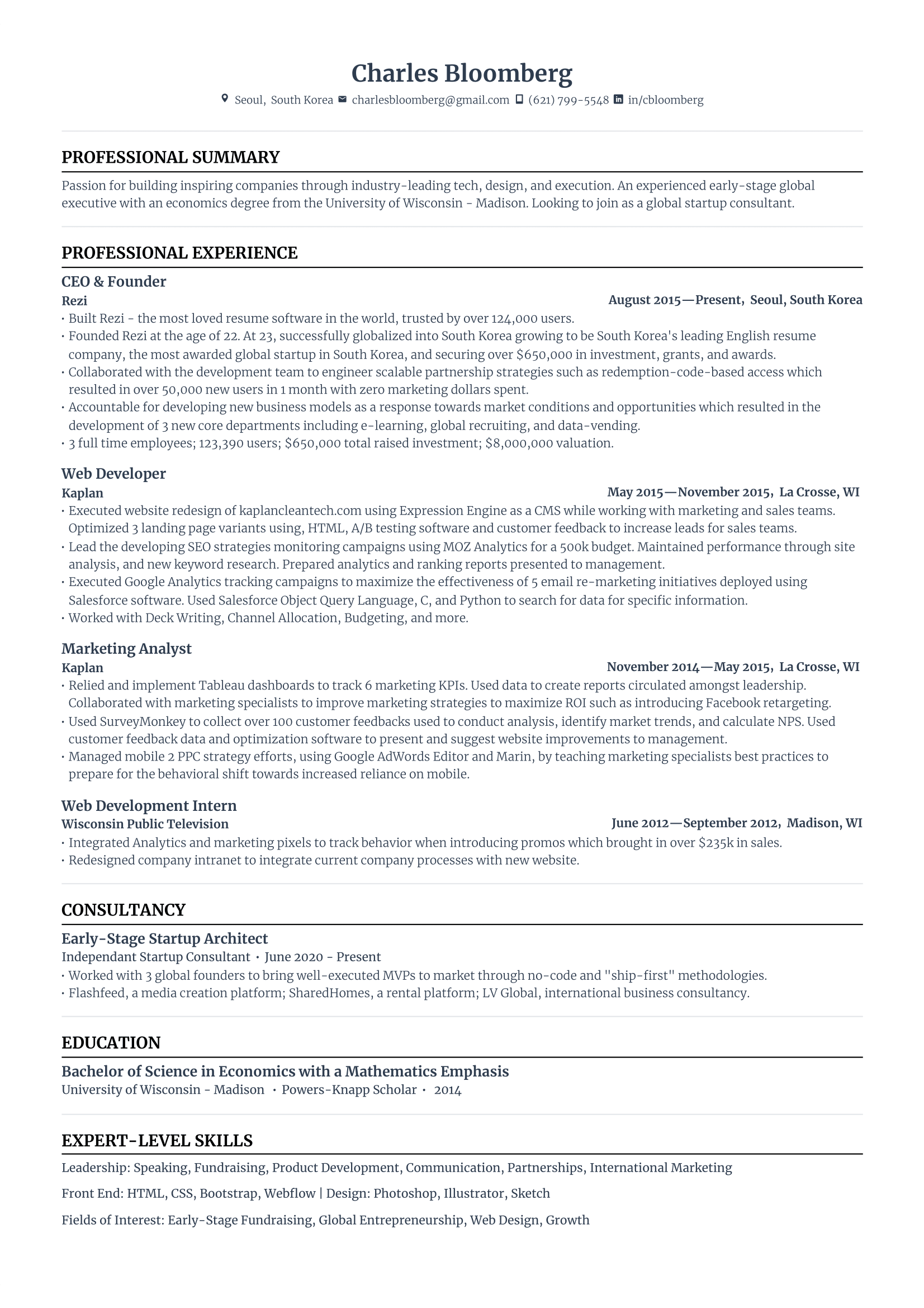
Compact Canadian Resume Template
-1.png)
Still on the fence about trying our templates?
Don’t just take it from us, here’s what Luke had to say about his experience using Rezi:
What to Expect in the Canadian Hiring Process
Here’s what to expect in the Canadian hiring process:
- Start your job search on LinkedIn, Indeed, company “Careers” pages, and give our AI Job Search tool a go. And don’t forget how instrumental networking is.
- Tailor each application with keywords from the job post and a cover letter that shows how you’ll bring value.
- Get ready for interviews (phone, Zoom, or in person) that mix technical and behavioral questions. Share real examples and ask thoughtful questions.
- Line up 2–3 references and make sure they’re ready to vouch for you.
- Review the job offer carefully and don’t be afraid to negotiate pay, perks, or responsibilities.
- Be prepared for permits and background checks, especially if you’re applying from abroad.
- Once hired, you’ll likely go through onboarding and a probation period to make sure it’s a mutual fit.
Once you’ve perfected your resume and double-checked that you’re actually allowed to work in Canada (if not, a quick visit to Canadian Immigration and Citizenship is a good idea), it’s time for the super fun part: getting a job.
Is the hiring process wildly different from your country’s? Maybe, maybe not. But either way, I’ve broken it down so you can feel prepared and confident.
Here’s a quick guide to how hiring usually works in Canada:
Job search and application
Finding the right job can feel overwhelming, especially with crowded job boards and ghost listings. I’ve definitely had days where it felt like I was sending resumes into the void.
Start by focusing on roles that match your skills and interests. Job seekers in Canada often use platforms like Indeed or LinkedIn, but don’t overlook company “Careers” pages — that’s often where the real, up-to-date postings live. Networking also goes a long way in Canada. A quick chat with someone in your industry can open doors you didn’t even know were there.
When you apply, tailor your resume with keywords from the job description and write a cover letter that shows you understand the company’s challenges and how you can help solve them.
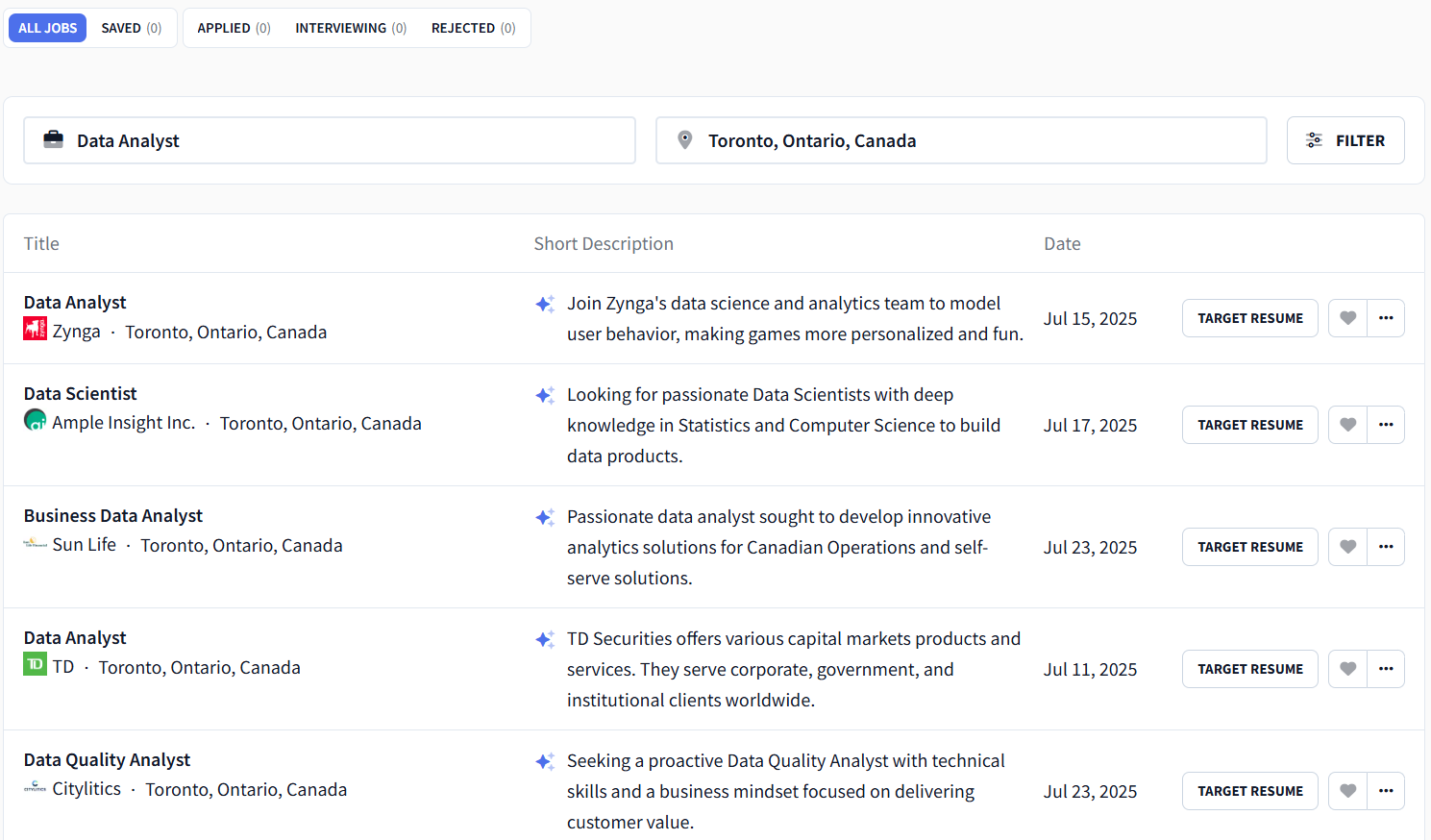
Want to skip the endless scrolling? Try the AI Job Search. Just enter your job title and location, and it’ll give you real postings, with the date and links to apply straight from the source.
Here’s what the AI Job Search looks like for data analyst roles in Toronto:
The screening phase
Once you’ve submitted your application, it goes through an initial screening. Many companies use ATS to filter resumes, so it’s important to highlight the right keywords.
Your application will only reach the hands of hiring managers if it successfully passes through the ATS.
Interviews: time to shine
Getting an interview is a win; it means your resume did its job (woo). In Canada, interviews might be over the phone, on Zoom, or in person, and they usually mix technical and behavioral interview questions to see how you’ll fit both the role and the team.
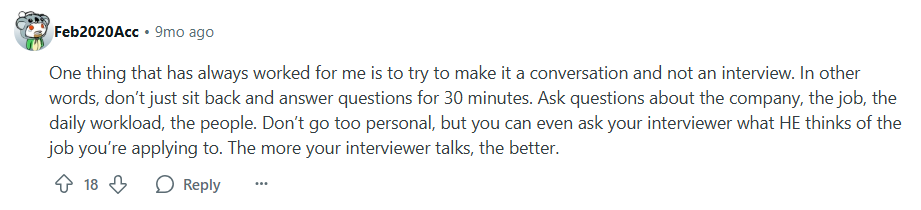
Make sure you’re ready to talk through real examples that show off the skills mentioned in the job description. And always come with a few thoughtful questions about the role or company. (Just hold off on asking about salary or perks until you get the offer.)
This Reddit user shares their valuable interview advice:
I’ve definitely walked out of interviews wishing I’d practiced more. Mock interviews with friends can feel a bit awkward, which is why the AI Interview tool works so well. It lets you rehearse common questions, get feedback on your answers, and try again until you feel confident.
Here’s a sample question from the AI Interview:

Reference checks
Employers typically ask for two or three professional references from past managers or colleagues to verify your work ethic and performance. Make sure to ask your references to ensure they’re prepped and ready to give glowing feedback.
Job offer and negotiation
You’ll receive a formal job offer with details on salary, benefits, and responsibilities. This is your chance to negotiate terms, so know your worth and be ready to discuss it. Each Canadian province has its own minimum wage, so double-check what’s fair in your area. After negotiating, it’s time to sign and celebrate.
Work permits and background checks
If you’re not a Canadian citizen or permanent resident, the company might help you secure a work permit. Background checks, including criminal record checks, are also common, especially for roles involving trust or security.
Onboarding and probation
You did it — you landed the job. Time to celebrate, get to know your team, learn the ropes, and settle into your role (and enjoy that first paycheck). Most companies in Canada have a probation period (usually a few months) to make sure it’s a good match on both sides.
Summary
Here’s a recap of the most important points to keep in mind when writing a Canadian resume:
- Use British English spellings (“favourite,” “centre,” “licence”) and the metric system (kilograms, kilometres, litres).
- In bilingual regions like Quebec, your resume might need to be in French, so tailor the language to the job listing and mention your proficiency level.
- Keep your resume to one page if you’re a new graduate or have limited experience, and up to two pages if you’re experienced.
- Do not include personal details like age, marital status, or nationality. Only share your name, contact information, and LinkedIn.
- Craft a concise objective or summary that highlights your skills, experience, and career goals. Tailor it to the specific job, focusing on what you can bring to the position and how you align with the company’s values.
- List work experience in reverse chronological order. Use action verbs and focus on achievements with measurable results, like “increased sales by 20%.”
- Add relevant degrees, certifications, and coursework, but leave out high school education if you have a university degree.
- Balance hard skills (programming, project management) with soft skills (communication, teamwork), and match them to the job description.
- Customize your resume for each job application, using keywords from the job posting.
- Use a clean, simple design with clear section headings and consistent font and spacing.
FAQs
What makes a good Canadian resume?
A strong Canadian resume is clear, concise, and tailored to the job. Focus on your skills, experience, and achievements using bullet points for easy scanning. Include your contact details, a professional summary or objective, work history, education, and a mix of hard and soft skills. Use action-driven language and incorporate job-specific keywords to ensure your resume aligns with ATS requirements.
Does Canada mainly use a resume or CV?
Canada primarily uses resumes for job applications. A CV is longer, includes your full work history, and is mainly for academic, research, or medical roles. In Quebec, “resume” and “CV” are used interchangeably.
Are Canadian resumes and American resumes basically the same?
Canadian and American resumes are similar in structure, but there are some key differences. Canadians use British English spelling, like in “centre,” “licence,” “defence,” and “colour.” They also use the metric system, so stick to kilograms, litres, and kilometres when providing measurements. For full dates, follow the format Year-Month-Date.
What’s the difference between a Canadian resume and a UK CV?
Resumes and CVs generally have a few differences, but Canadian resumes and UK CVs pretty much follow the same format. If you’re listing your GPA, make sure you add the UK equivalent. A GPA of 3.7–4.0 is First Class (1st) in the UK, 3.3–3.6 is Upper Second Class (2:1), 2.7–3.2 is Lower Second Class (2:2), and 2.0–2.6 is Third Class (3rd).
Is it better for a Canadian resume to be one page or two pages long?
It depends on your experience. If you’re early in your career, aim for one page to keep things concise. For seasoned professionals with more achievements to show off, two pages are fine — just make sure the extra space adds value and remains relevant to the job. Always prioritize readability and job-specific details.

Sarah Coghlan is a writer and editor passionate about making resume and career advice clear and accessible to all. Based in Barcelona, her goal is to help job seekers create standout resumes and navigate the job search process with confidence and ease.