Resume
How to Create a US Resume: Complete Guide With Examples
Learn how to create a US resume with formatting tips, key sections, and real examples to help you write a professional, ATS-friendly resume.

Published on
December 27, 2024
Updated on
April 13, 2026
A strong US resume is concise and tailored to the job. Start with your contact details, followed by a summary highlighting your experience, key skills, and value. Use a reverse chronological format and focus on achievements rather than responsibilities, showing measurable impact where possible. Keep formatting simple and ATS-friendly, with no graphics or complex layouts. Include relevant education, especially if you’re early in your career, and list 6–10 targeted skills that match the job description. Add extra sections, such as projects or languages, only if they strengthen your application.
If you’re applying for jobs in the US, you’ve probably run into this question already: Do I use my CV or a resume? The answer is… kind of both, but not quite. Luckily, you don’t need to start over. What you already have is likely very close; you just need to tweak it to match what US employers expect.
And yes, those expectations matter more than you think. Small differences in format, wording, or even what you leave out can affect whether your resume gets noticed or ignored.
Let’s see how you can boost your chances of landing a US job. This guide will cover:
- The definition of a US resume.
- My top picks of the best US resume examples.
- How to write and what to put on your US resume.
Want a US resume format ready to go? Try our free AI Resume Builder. We can help you build a tailored and professional resume that sticks to best practices in minutes.
You can also check out resume examples from other parts of the world:
What Is a US Resume?
A US resume is a short, targeted document (usually one page) that shows employers why you’re a strong fit for a specific job. Unlike some countries where CVs can be long and detailed, US resumes are concise and easy to scan.
And recruiters in the US move fast. They often spend just a few seconds on an initial scan, so your resume needs to quickly communicate your skills, experience, and value without overwhelming them. That’s why you’ll see plenty of white space, bullet points, and straightforward language.
It’s also smart to tailor your US resume for each job application. You’re not sending the same version everywhere; you just need to adjust it to match the role, highlighting the most relevant experience and skills so employers can immediately see the connection.
The most common format you’ll come across is the reverse-chronological resume, which lists your most recent job first and works backward. This format helps employers quickly understand your career progression and recent achievements.
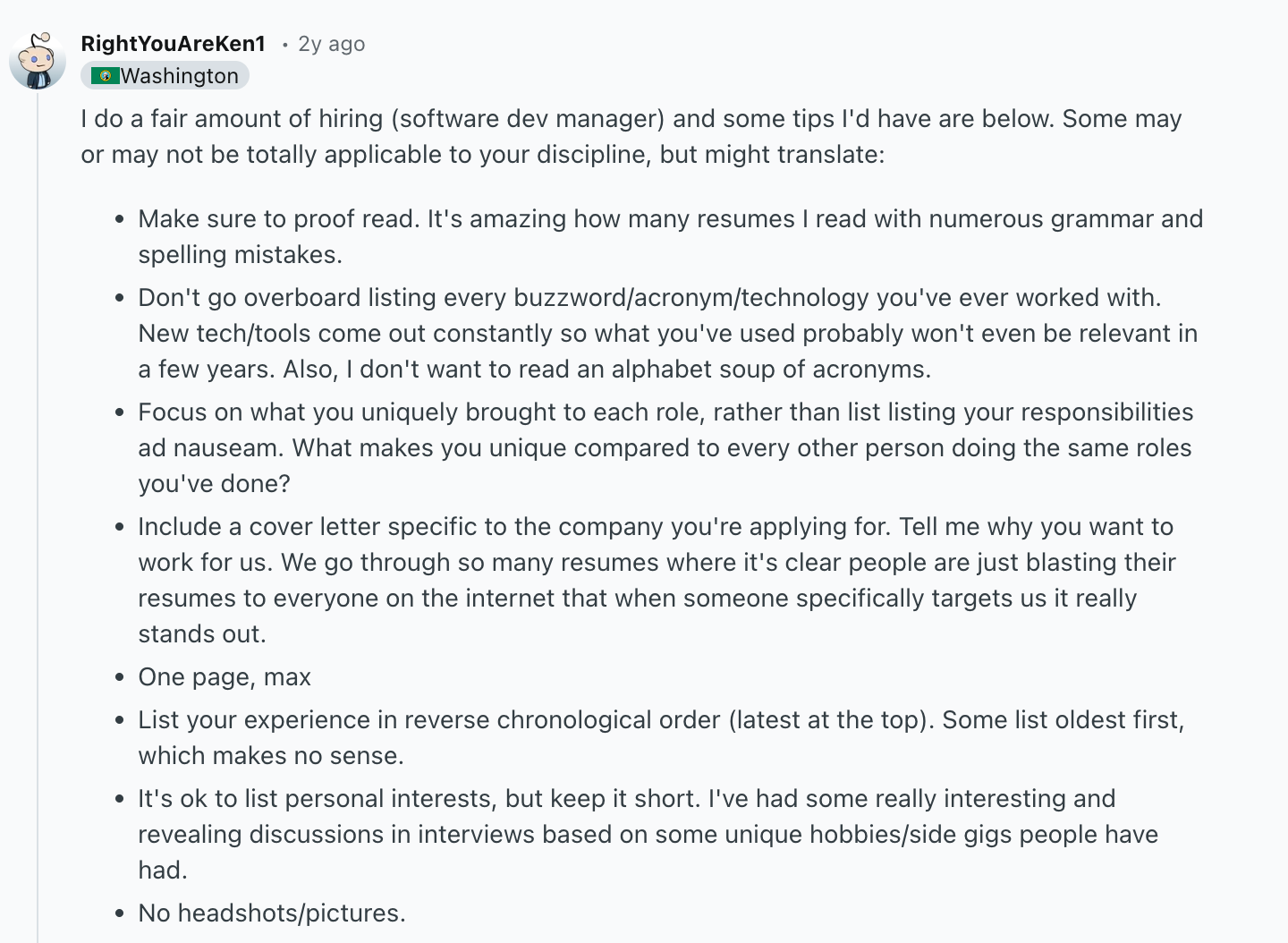
Here’s some useful advice on Reddit from a US recruiter:
Need help tweaking your existing resume for US employers? Ask our AI Resume Agent to make smart changes, tailor your application, or improve bullet points.
Best US Resume Examples
There’s no one “perfect” US resume example. Every resume is unique to your professional story and tailored to the job and industry you want to target. That said, a simple format is always the best way to let your content shine, and luckily, there isn’t a ton of variation regarding simplicity.
To make things easier, here are a few resume examples and templates tailored to different goals, styles, and stages of your career.
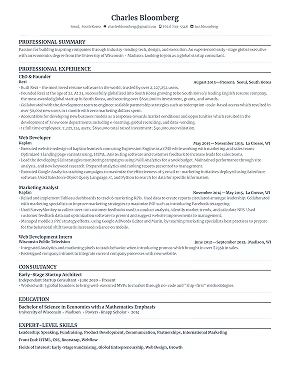
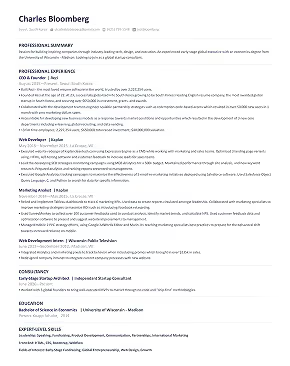
Professional resume example
A professional resume tells a story about your value using a simple structure and design. Instead of listing duties, it highlights achievements and impact that match the job description. You should also tailor each section with specific keywords and requirements, so employers quickly see why you’re a strong fit.

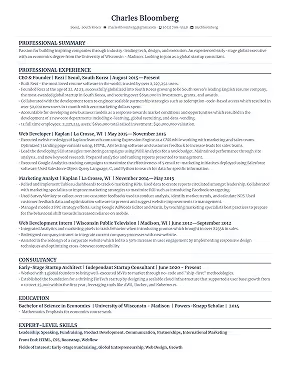
Simple resume example
A simple resume is always preferable because it’s easier to spot your achievements and relevant skills. Organized formatting, professional fonts, and plenty of white space help recruiters scan to find the right details. Skip fancy designs; things like columns or graphics can confuse ATS systems. When in doubt, keep it minimal and let your content do the talking.

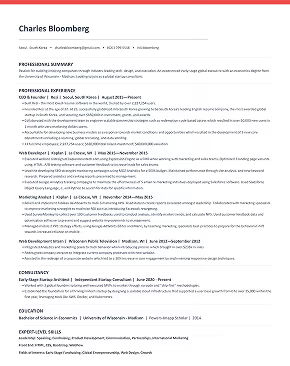
Technical resume example
A technical resume should balance hard skills with real-world impact. List relevant tools, software, or programming languages clearly, but don’t stop there; show how you used them to solve problems. Pair technical expertise with soft skills like teamwork or communication to show you’re also easy to work with.

Entry-level resume example
If you’re just entering the job market, your resume should highlight potential over experience. Use internships, volunteering, or part-time work to show responsibility and initiative. Focus on transferable skills like problem-solving and teamwork, and connect them to concrete examples. Employers know everyone starts somewhere; they just want to see what you can bring.

College student resume example
A college resume should focus on your academic life and how it connects to your career goals. Include coursework, projects, internships, and activities that show relevant skills. Keep it to one page and tailor it for each role. You can keep a longer master resume to note all your skills and experiences, but always submit a focused, targeted version.

Find more professional templates here: The Best ATS-Friendly Resume Templates
What’s the Best Format for a US Resume?
In the US, there are three main resume formats: chronological, functional, and combination. I strongly recommend going with the reverse chronological format (it’s the default option for a reason). It’s familiar, easy to follow, and recruiters can understand your experience without having to search too hard.
That’s my verdict, but here’s how the other formats compare:
- Reverse chronological resume: List your most recent job first, then go backward. This is the safest and most widely accepted option.
- Functional resume: Focuses on skills instead of work history. Useful if you’re changing careers or have gaps, but recruiters can be skeptical.
- Combination resume: Blends skills and experience. Works well if you have strong, relevant skills plus a solid job history.
For design, less really is more. Remember: your resume has one purpose: to get you an interview. It’s not to show off your aesthetics, stand out with colors, or to express your quirks through terrible skill charts.
Stick to simple formatting choices that make your resume easy to read:
- Use professional resume fonts like Arial, Merriweather, or Calibri
- Keep body text between 10–12 points and 14–16 points for section titles
- Leave enough white space so the page doesn’t feel crowded
- Stick to 1-inch margins on all sides
Avoid anything that makes your resume harder to scan or process:
- Graphics, icons, or charts
- Multiple columns
- Decorative bars or unusual layouts
- Bright colors or overly styled elements
Many companies use Applicant Tracking Systems (ATS) to scan resumes and filter them by keywords. If your formatting confuses the system and makes it harder to spot those keywords, your resume will rank lower or not show up at all.
Overall, no one is looking for your life story. Most of us can fit our most relevant professional achievements and qualifications onto one page (especially if you’re early in your career). You can push it to two pages if you have more experience, just keep everything relevant.
Learn more about resume formatting:
- What Does a Resume Look Like
- Best Resume Format for AI Screening
- The Best Resume Format: A Complete Guide
How to Write a US Resume
Here’s an overview of how to write a US resume:
- Include your name and contact details, while avoiding personal details like photos or birthdates that aren’t used in the US.
- Focus on your work achievements by highlighting results, using strong action verbs, and structuring bullet points to show how you created value.
- Add your education and training with key details like your degree, institution, and achievements, and explain any international qualifications.
- Customize your skills to the role by selecting 6–10 relevant hard and transferable skills, aligning them with the job description.
- Consider additional resume sections like projects, languages, volunteering, or awards only if they strengthen your application.
- Write a memorable resume summary that briefly highlights who you are, your key skills, top achievements, and the value you bring.
Keep reading for a full breakdown with US resume examples.
1. Include your name and contact details
Your personal details are how recruiters get in touch with you, and luckily, it’s the easiest part to get right.
Here’s what to include:
- Full name
- Phone number (a US number is preferable)
- Professional email address (first and last name)
- LinkedIn profile link or portfolio link (keep it updated)
And just as important, know what to leave out. In the U.S., you should not include:
- Photo or headshot
- Date of birth
- Marital status
These can all introduce bias, and photos could even automatically disqualify your resume (or raise eyebrows at the very least). Of course, appearance matters more for acting or modelling jobs, but it’s best to keep them off a traditional resume.
2. Focus on your work achievements
Your work experience section is the main focus of your resume. US employers don’t just want to know what you did; they want to know how well you did it and what impact you made.
Shift your mindset from duties to results:
- Don’t list tasks; highlight accomplishments
- Show how your work created value for your employer
- Make your contributions measurable with metrics (when possible)
One of the best ways to structure your resume bullet points is the XYZ formula:
- Accomplished [X] as measured by [Y] by doing [Z]
Here’s what that could look like on your resume:

Start each bullet with strong action verbs like “led,” “developed,” “implemented,” or “improved,” and tailor your content to match the job you’re applying for. Does the job description emphasize teamwork? Then focus on success stories that involved working in a team.
As you write your experience, ask yourself:
- What did I achieve?
- What was my role?
- How big was the impact?
- Why did it matter to the company?
And if you’re applying to a US job, it makes sense to highlight any US work experience. If you’ve never worked with a US company, try checking out internships or volunteer work with US organizations, which could help make your resume more relatable to employers.
Struggling to come up with strong bullets? Try our free AI Resume Bullet Point Generator. Just enter a few career details, and you’ll get a list of resume-ready suggestions tailored to you.

3. Add your education and training
Your education section helps employers understand your background and qualifications, especially if you’re early in your career.
Here’s what you can include:
- Your degree
- Your university or institution
- Graduation date
- Honors, strong GPA (3.8+), or relevant coursework (if applicable)
If your degree is from outside the US, don’t assume employers will automatically understand it. Make it easy for them by clearly stating your degree and mentioning the US equivalent (e.g., “equivalent to a US bachelor’s degree”).
Does the job require specific certifications or licenses? Again, make it easy by including them clearly (with descriptions if necessary) and being ready to provide documentation.
If you don’t have much work experience yet, your education becomes one of your strongest assets. In that case, move it above your work experience section and use it to show relevant knowledge, projects, or anything to prove your transferable skills.
4. Customize your skills to the role
Your skills section is where you align yourself directly with the job, so it should never be generic. For recruiters, it’s a quick way to check you meet the requirements, and for ATS scanners, it’s how you get ranked higher in the system.
Here are the basics of a skills section for a US resume:
- Include about 6–10 skills in a bulleted list or in categories
- Prioritize hard skills (technical, measurable abilities)
- Use your experience section to prove your soft skills
You can also group your skills to make it easier for the recruiter. Take a look:

If your experience comes from another country or a different industry, lean into transferable skills, such as leadership, problem-solving, or project management, that apply anywhere.
And don’t just list every skill under the sun. Imagine a recruiter only skims this section; you want them to see the skills that matter most to the job.
Here’s a quick rundown of how to tailor your skills section:
- Match keywords that are repeated in the job description
- Focus only on what’s relevant to this role
- Skip anything that doesn’t add value
5. Consider additional resume sections
Once your core sections are strong, you can add extras, but only if they support your case for getting that role. Additional resume sections are also useful to have if you’re new to the job-hunting world and you don’t have a stable or lengthy work history to lean on.
Here are some useful extra sections:
- Languages: Especially valuable for international or customer-facing roles (include proficiency level).
- Projects: Great for showing off real-world application of your skills.
- Volunteering: Demonstrates initiative and responsibility.
- Awards and honors: Adds credibility to your achievements.
- Hobbies and interests: Helpful if you’re early in your career; just keep them relevant.
These sections can help you stand out, but only when they reinforce your qualifications, not distract from them.
Here’s how to format these extra sections:

6. Write a memorable resume summary
Your resume summary goes right below your contact details and is your first impression. I recommend writing it last, simply because it’s much easier to sum up your highlights when you already have everything on paper.
Here’s what a strong resume summary looks like:
- Be 2–4 sentences long
- State who you are and your experience level
- Highlight 2–3 key skills
- Include 1–2 notable achievements
- Show what you can bring to the employer
When done right, your summary pulls the reader in and makes them want to keep going. But don’t panic if you don’t have many skills or achievements. In that case, you can write a resume objective, which focuses more on career goals and future aspirations.
Or you can take it easy and use our AI Summary Generator to create a personalised and tailored summary for your resume in seconds.
US Resume Writing Tips
You want to show employers you understand how hiring works in the US, from where you apply to how you present yourself on paper. And all it takes is a few small adjustments to make a big difference in whether your resume gets noticed or ignored.
Here are a few tips to give your resume that all-important extra nudge.
Check out the right job boards
If you were looking for the perfect outfit, it wouldn’t make sense to stick to one store and call it a day. Well, the same applies to jobs (with higher stakes). While the main job boards are popular for a reason, it’s always smart to explore your options with alternatives.
Here are some simple steps you can take:
- Browse major platforms like LinkedIn, Indeed, and company career pages (and USAJOBS for federal roles).
- Explore niche job boards in your industry, as they can be less spammy and more targeted to your industry.
- Use tools like Rezi’s AI Job Search that pull fresh listings directly from company sites to avoid outdated or ghost postings.
- Track your applications in a spreadsheet or notes app so you don’t lose track of where you applied and when to follow up.
Take a look at the smartest places to look for a job: Best Job Search Engines
Tailor your resume to the job posting
If you send the same resume to every job, you’re basically counting on pure luck. In the US, jobs are competitive, and tailoring your resume is becoming standard. You won’t be doing yourself any favors with a generic resume that doesn’t cover any of the basic skills or requirements.
Here’s my advice:
- Study the job description and mirror key skills and keywords in your resume.
- Build a strong master resume, then tweak it slightly for each role.
- Review multiple job postings to spot patterns in what employers are looking for.
- Focus on aligning your experience with the values of this specific company.
Not sure if it’s worth the effort? Here’s what a hiring manager had to say:

Use American English and phrases
This one sounds minor, but it shows that you understand your audience and have that all-important attention to detail. You’re also making it easy for recruiters to read and relate to your resume without any confused double takes (is that actually English or just a spelling mistake?)
Here are some small steps you can take:
- Use US spelling (e.g., “color” instead of “colour,” “center” instead of “centre”).
- Keep your language simple, clear, and direct; avoid overly formal or complicated phrasing.
- Skip cultural references or slang that might not translate well.
Summary
Here’s an overview of everything you need to know about creating a US resume:
- Keep your US resume concise and results-focused. US employers value readability over design, so prioritize substance over style.
- Use a reverse chronological format, listing your most recent experience first. This is the standard in the US, making it easy for recruiters to understand your career progression.
- Maintain simple and ATS-friendly formatting. Stick to one column, avoid graphics or icons, and use professional fonts like Arial or Calibri.
- Focus on achievements, not responsibilities. Show how you added value in each role by highlighting measurable results, impact, or improvements you made.
- Use strong action verbs and structure bullet points clearly. Start with strong action words and, whenever possible, use the XYZ format.
- Tailor your resume for every job application. Match your skills and experience to the job description, use relevant keywords, and adjust your content slightly each time.
- Include a focused skills section with 6–10 relevant abilities. Prioritize hard skills and technical expertise, and use your work experience to demonstrate soft skills.
- Include your degree, institution, and any relevant achievements, and explain international degrees in terms of U.S. equivalents.
- Write a strong summary or objective at the top that highlights who you are, your key skills, and your top achievements.
- Keep your resume length to one page if you’re early in your career, or two pages if you have more experience.
FAQ
What to include in a US resume?
A solid US resume sticks to the essentials and keeps everything relevant to the job. Include your contact details, a summary, work experience, education, and a skills section. Focus on achievements in your experience, what you did, and the results you got. You can also add sections like projects, certifications, or languages if they strengthen your application. Leave out personal details like your photo, age, or marital status.
How to make a US resume for a first job with no experience?
If you’re writing a resume with no experience, start with a strong summary and place your education near the top. Highlight coursework, academic projects, or group work that shows relevant skills. You can also add internships, volunteering, or extracurriculars to demonstrate transferable skills like communication, teamwork, and problem-solving.
Remember, you’re showing potential, not perfection. A skills-focused resume can still make a strong impression even without formal job experience.
Is it a CV or a resume in the USA?
In the US, “resume” and “CV” are not completely interchangeable. A resume is the standard document for most jobs. It’s short (1–2 pages), tailored, and focused on relevant experience. A CV (curriculum vitae) is longer and more detailed, typically used only in academic, research, or medical fields. So, unless you’re applying for a university or research role, you almost always want a resume.
Find out more: Academic CV: How to Write a Curriculum Vitae
Can you use a CV as a resume?
If you’re coming from outside the US, your “CV” is often very similar to what Americans call a resume, so yes, you can use it. But you’ll still want to adjust it to match US expectations. Focus on trimming unnecessary details, keeping it to 1 to 2 pages, and emphasizing achievements over long descriptions. Remove personal information such as your photo or date of birth, and ensure the format is professional and easy to scan.
What does a good American resume look like?
A good US resume looks simple and concise, nothing flashy. It uses a reverse-chronological format, clear section headings, and bullet points for readability. Fonts are standard (like Arial or Calibri), and the layout sticks to one column with plenty of white space. The content focuses on measurable achievements, not just duties, and everything aligns with the job description. It’s usually one page (or two if you have more experience).

Upload or drop your resume to get started
Upload your resume to get started
Score my resume

Lauren Bedford is a seasoned writer with a track record of helping thousands of readers find practical solutions over the past five years. She's tackled a range of topics, always striving to simplify complex jargon. At Rezi, Lauren crafts genuine and actionable content that guides readers in creating standout resumes to land their dream jobs.