
Resume
How to Use Rezi for Job Hopping Applications
Learn to use Rezi for job-hopping to showcase skills, frame career moves positively, and create a growth-driven resume.

Published on
January 27, 2026
Updated on
January 27, 2026
Job hopping isn’t the red flag it used to be, especially for early-career professionals dealing with a fast-changing job market. On your resume, focus less on timelines and more on growth, skills gained, problems solved, and results delivered. Group similar roles, highlight transferable skills, and use a strong summary to show direction and intent. Rezi can help by tailoring your resume, optimizing it for ATS, clarifying your career story, and preparing for interviews, so your experience reads as purposeful progress.
I’ll be honest, I’ve bounced through five jobs in the last four years. Did I have solid reasons for leaving each one? Absolutely. Could I sum it up neatly on a resume? That’s a little trickier, but doable (speaking from my currently employed self). Employers get that the market can be unpredictable, and short stints aren’t automatic deal-breakers.
Instead, use your job application to focus on the story your experience tells: the skills you picked up, how you adapted to different environments, and the clarity you’ve gained about what you want in your career.
Here’s what I’ll cover in this guide:
- Why job-hopping still raises eyebrows.
- How to spin it positively on your resume.
- How Rezi can help you frame your moves as strategic and growth-driven.
See how Rezi can help with our free AI Resume Builder. Simply enter your professional details and get an ATS-friendly, customized resume for any job.
And check out how Rezi can help you out with other job applications:
- Rezi for Tech Job Applications
- Rezi for a Career Change Job Application
- Rezi for Customer Service Job Applications
- Rezi for Student and Graduate Job Applications
Job Hopping Challenges
Job hopping usually refers to sticking around for a year or two before moving on. It often happens because the role doesn’t offer growth, stability, or a future that lines up with your long-term goals.
That said, switching jobs early in your career? Totally normal. I bounced between a cocktail bar, a historical archives center, and a pub in college, and nobody blinked. Later on, though, especially at senior levels, the same pattern can raise eyebrows.
Still, job hopping is more common and accepted than ever. In fact, job hoppers are 64% more likely to feel it speeds up their careers and 48% more likely to see financial perks than tenured employees.
But it’s not a total free pass. Employers may be more open-minded, but you may still need to deal with questions about commitment, consistency, and your career direction.
Here’s a word of warning from someone involved in the hiring process:
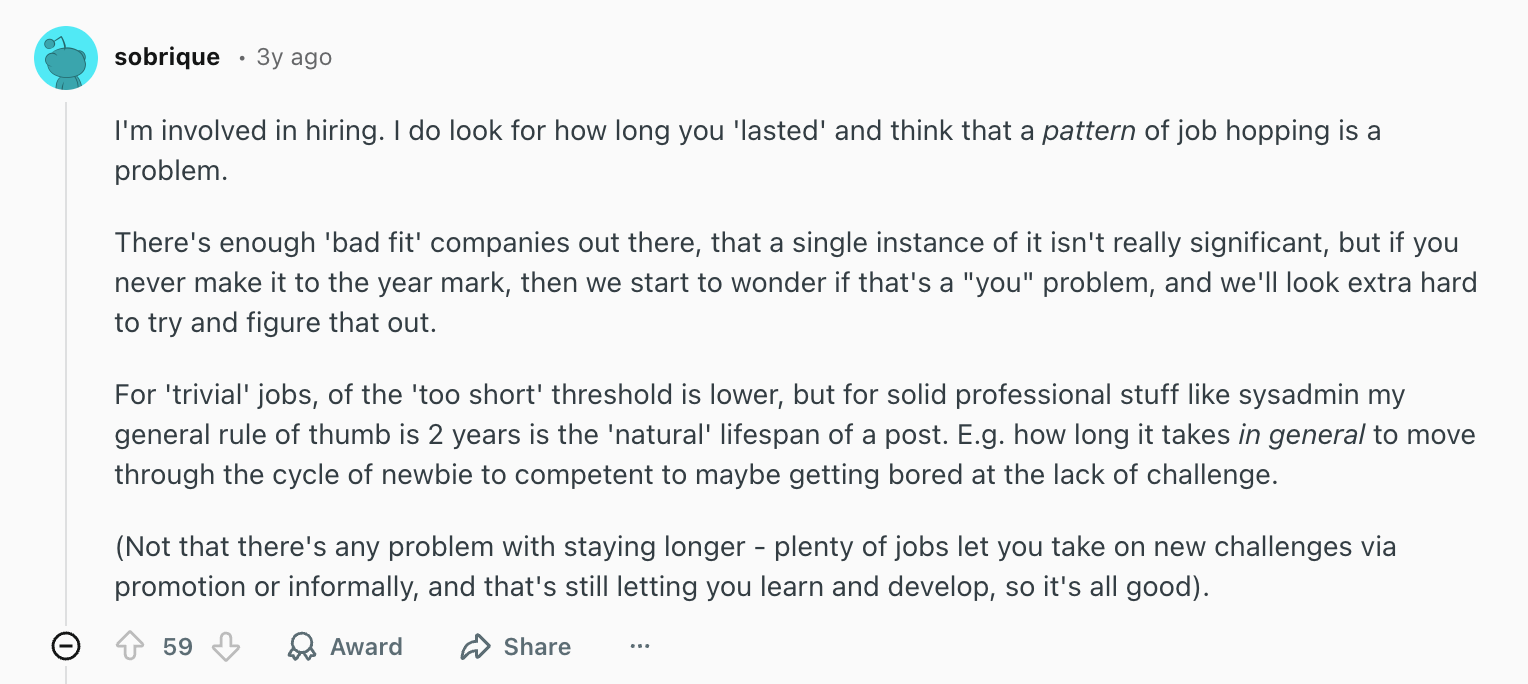
Understanding the challenges job hoppers face makes it easier to tackle them head-on when applying. Let’s dive in.
Questions about lack of commitment
When hiring managers see several short stints, their first concern is usually loyalty. They wonder whether you’ll stay long enough to justify the time, money, and effort it takes to hire and train you. Onboarding alone can take months, and companies want a return on that investment.
Frequent moves can also bring up doubts like:
- Will this person leave once things get hard?
- Are they easily bored or always chasing the next shiny opportunity?
- Can they see long-term projects through to completion?
Employers may also worry that you won’t fully gel with the team or build strong working relationships before moving on. In roles that rely on collaboration and continuity, those doubts could be deal-breakers.
Less time to develop skills
Most of us have felt like a complete imposter in the first few days of a new job. It can often take months just to feel comfortable, and a year or more to excel. So, when someone leaves quickly, employers may assume you never got the chance to develop those all-important skills.
That said, job hopping isn’t automatically a skill killer. When done intentionally, it can help you build a broad, adaptable skill set across teams, industries, or functions. You just need to prove it by showing how each role added something meaningful to your toolkit.
Struggles with career growth
Employers want to see growth, bigger responsibilities, greater skills, and a clear path forward. If your resume is full of short stints with no obvious progression, it can leave them wondering where you’re headed.
Frequent moves can blur your professional identity, too. Are you exploring, pivoting, or just unsure? Without a clear direction, job hopping can look scattered instead of strategic.
But it can also be clarifying. Jumping around can help you figure out what you enjoy, where you excel, and the environments that bring out your best. It’s no big shock that nearly one in three Gen Z workers plans to switch jobs this year. Why? They’re chasing growth, flexibility, and work that actually fits their values.
Thinking about switching careers? Find out more:
How to Explain Job Hopping on a Resume
Job-hopping isn’t the sin it used to be, not even close. Still, if it’s not handled well, it can make a resume feel a little all over the place. At best, it looks busy. At worst, it raises questions about direction. Lying on your resume is not the answer, but you can redirect attention away from how often you moved and toward what you gained along the way: skills, results, and experiences.
Here’s some advice for explaining job hopping on your resume:
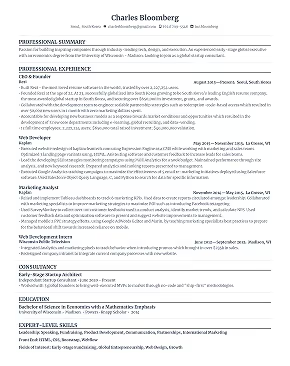
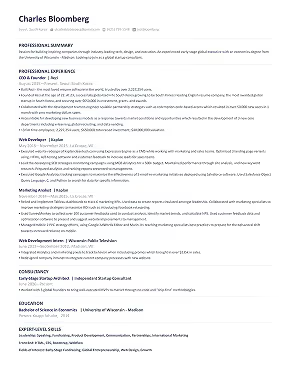
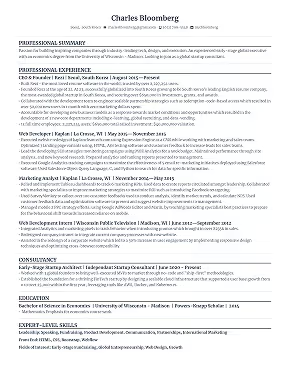
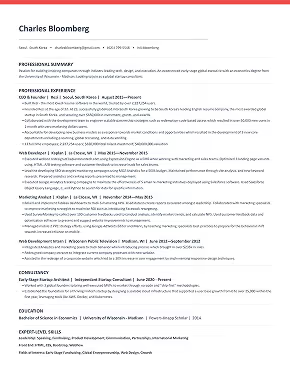
- Frame your experience around themes, not short stints. If you held several similar roles over a short period, group them to show continuity. This takes attention away from how often you moved, to what you actually did and learned. It also helps employers focus on your experience rather than getting distracted by frequent transitions.
- Use dates and formatting strategically. You don’t need to include specific dates for everything. Listing years alone can smooth out quick changes without being misleading. You can also keep employment dates low-key by avoiding highlighting them with bold text or placing them front and center.
- Prioritize roles that match the job you want: Tailor your resume to the position you’re applying for by emphasizing relevant skills and experiences. You can also group freelance work under one heading to better suit the job you want. This shows focus and a stronger connection between your background and the role.
- Edit out roles that don’t serve your story: You’re not required to list every job you’ve ever had. If a role was extremely short or unrelated to your current goals, consider removing it. A tighter resume with purposeful choices tells a stronger career story.
How Rezi Helps Job Hoppers
Here’s a summary of how to use Rezi to build your job-hopping resume:
- Find better opportunities using AI Job Search to focus your career moves and avoid impulsive applications.
- Frame job-hopping positively with AI Resume Agent to turn short stints into a representation of growth and adaptability.
- Outline your goals with AI Summary Generator to show that each career move has purpose and direction.
- Focus on achievements using AI Bullet Point Writer to highlight measurable results over vague responsibilities.
- Emphasize transferable skills with AI Skills Explorer to show how each role contributed to a valuable and versatile skill set.
- Address concerns directly with AI Cover Letter Builder to explain your career moves with confidence and professionalism.
- Explain your job-hopping confidently with AI Interview to prepare for questions and highlight your growth.
Let’s explore in more detail.
1. Find better opportunities using AI Job Search
When you feel stuck or frustrated, it’s tempting to jump at any opportunity that looks better than having your micromanaging boss breathing down your neck. The problem is that impulsive moves can create a muddled resume and make your career path harder to explain.
Before applying, think about your role type, growth path, industry, and skills you want to build. When your job search has more direction, each move feels purposeful, which will make your life easier in the long-term.
How AI Job Search helps:
- Rezi’s AI Job Search connects directly to your resume and surfaces roles that align with your background and goals, helping you avoid panic applications.
- Jobs come straight from company websites, so you focus on real openings instead of outdated or ghost postings.
- You can organize roles by stage (saved, applied, interviewing), so your search stays focused and efficient.
Here’s what the AI Job Search looks like:

Take a look at more popular job search websites: Best Job Search Engines
2. Frame job-hopping positively with AI Resume Agent
One of the biggest challenges for job hoppers is controlling the narrative. Left unexplained, short stints can look like instability. But if you frame them correctly, they can highlight adaptability, fast learning, and exposure to diverse environments.
You want employers to see how each role built on the last and strengthened your skill set. At the same time, your resume still needs to make it past ATS filters, which means using the right keywords, structure, and role-specific language. Lucky for you, having the right tools can make the process much less painful.
How AI Resume Agent works:
- The AI Resume Agent provides a personalized analysis of your resume and flags gaps, weak phrasing, or unclear progression.
- It can help you reword bullets to emphasize growth, impact, and transferable value instead of short tenure.
- You can upload job descriptions, so your resume better reflects the skills and terms employers and ATS scan for.
- Use AI Resume Agent to tailor each version of your resume to the job you’re applying for without starting from scratch.
Here’s what you’ll see when you head to the AI Resume Agent:

And here’s a glimpse into the type of feedback you could get:
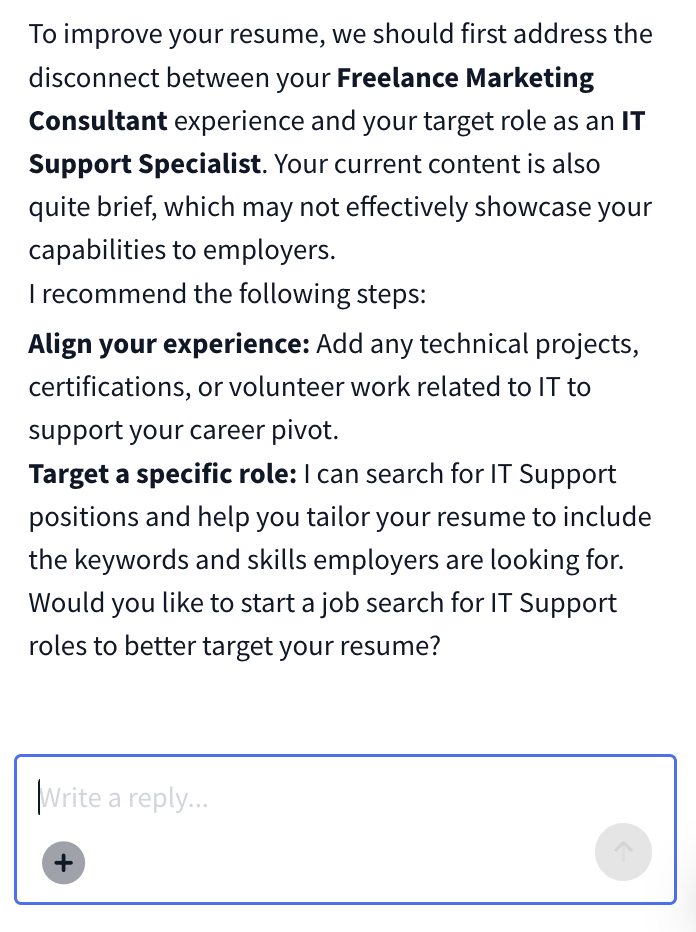
3. Outline your goals with AI Summary Generator
Your resume summary is often the first thing a recruiter reads, setting the tone for how they interpret your experience. A strong summary takes attention away from your job-hopping and puts the focus on how much you learned in these different roles.
How do you do it? Instead of listing titles, your summary should emphasize intent. When you clearly state your focus and goals, frequent moves can look more like exploration with direction (not indecision). Use these first few lines to show that your next step fits into a bigger plan.
How the AI Summary Generator helps:
- The AI Summary Generator writes a professional summary based on your target role, skills, and job description.
- You can use the tool to base your summary on a past role or define a new one if you’re transitioning careers.
- You can regenerate and refine until the summary clearly reflects your goals and direction.
Here’s a summary for an IT Support Specialist role featuring a diverse background:
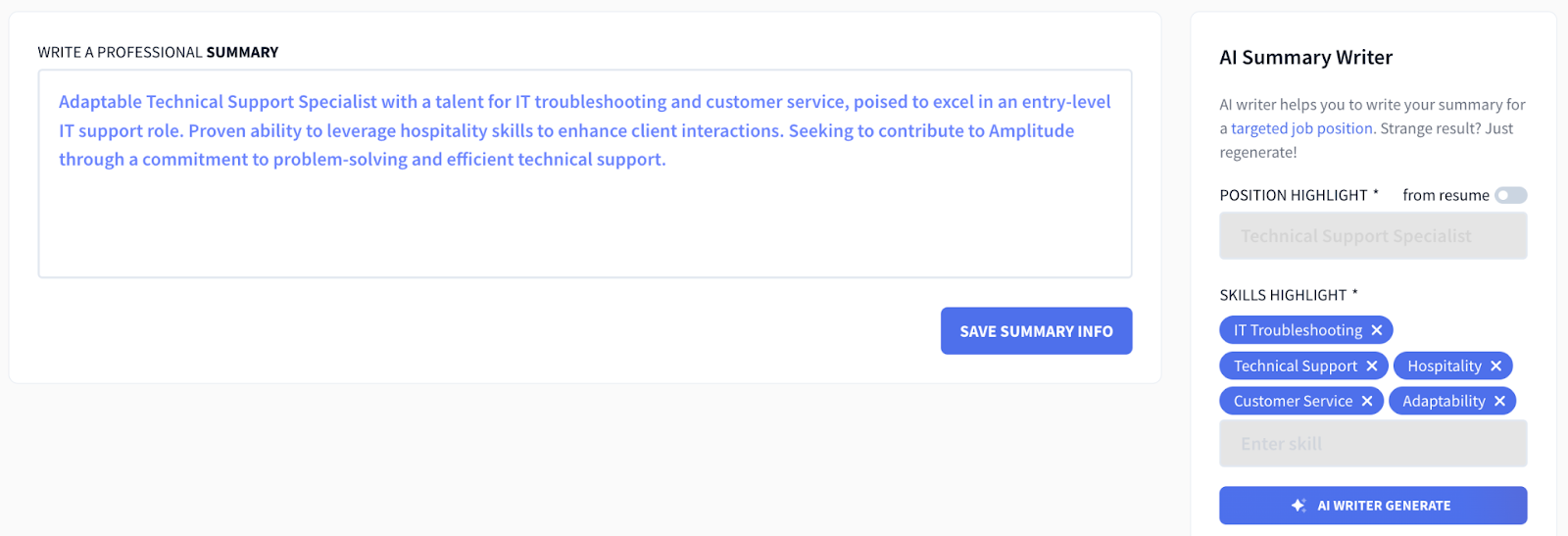
4. Focus on achievements using AI Bullet Point Writer
Short tenures don’t have to mean small impact — but you need to prove it. Don’t undersell yourself by listing responsibilities instead of results. Many employers care less about how long you stayed and more about what you delivered while you were there.
Strong resume bullet points shift the focus to wins, skills, and problems solved, even in a limited timeframe. This is your chance to show momentum and growth. When your roles include positive outcomes, your resume reads more like a series of contributions rather than a timeline of exits.
How the AI Bullet Writer helps:
- The AI Bullet Point Writer helps turn duties into outcome-focused statements.
- It uses your actual role, projects, and context to tailor your points, so nothing sounds generic or made up.
- You can generate bullets with metrics to show results and scale, with each point reinforcing what you gained and how it strengthens your candidacy.
Here’s the AI Bullet Point Writer (in purple) in action when grouping various freelance jobs:

5. Emphasize transferable skills with AI Skills Explorer
If you’ve bounced around several jobs, I would bet you’ve picked up some handy skills along the way. Moving between teams or companies builds a mix of technical abilities, tools, and soft skills that easily carry over into new roles.
Over time, those experiences add up and shape how you work. Your skills section is basically a recruiter checklist, so it’s a smart place to translate all that expertise into resume keywords that recruiters and ATS systems understand.
How AI Skills Explorer helps:
- AI Skills Explorer shows which in-demand skills matter most in your industry right now.
- You can search for technical, soft, hard, or language skills to strengthen your profile.
- The tool suggests skills based on your existing skill set, including overlooked soft skills.
- Adding the right skills improves resume scans and recruiter searches.
Here’s how the AI Skills Explorer generates skills based on your existing expertise:

6. Address concerns directly with AI Cover Letter Builder
Your cover letter gives you the chance to explain context without cluttering your resume. Instead of swerving the topic, you can address frequent moves and explain the “why” behind them. When done well, you can build trust and reframe your choices as intentional and growth-driven.
Stick to writing something honest, confident, and concise — and don’t get defensive. I’m not saying you need to hold your hands up and admit past mistakes, but focus on what you gained and the skills you picked up, rather than putting a spotlight on the negatives.
How AI Cover Letter Builder helps:
- The AI Cover Letter Builder takes details from your resume to stay true to your professional background and skills.
- All you need to do is enter the company and job title to generate a draft that fits the role and industry.
- You can adjust formatting and add your personal experiences, so the final letter feels more like you and not a generic template.
Here are the different ways you can tailor your cover letter:

Check out more cover letter tips and examples:
- Best Cover Letters
- Best AI Cover Letter Generators
- How to Use AI to Write a Cover Letter
- How to Write a Cover Letter for a Career Change
7. Explain your job-hopping confidently with AI Interview
Interviews are where you’ll really get tested. Employers may ask about short stints, gaps, or pivots, and how you answer can either clarify or complicate your story. Preparation helps you respond calmly, honestly, and without over-explaining.
Instead of getting defensive (again, avoid), show self-awareness and growth. Practicing answers tied directly to your skills, relevant experiences, and target role helps you stay focused on value instead of trying to justify your actions.
How AI Interview helps:
- AI Interview generates tailored questions based on your resume and the specific job description.
- You get six customized questions that mix situational, behavioral, and technical scenarios, which you can answer in a simulated video interview.
- Receive feedback on clarity, structure, and tone after answering by voice or text.
Here are your options to personalize your AI Interview:

Learn more about how to nail your interview:
- STAR Method Interview Guide
- Unique Interview Questions to Ask Employers
- Common Interview Questions & Sample Answers
Final Thoughts
Job hopping doesn’t have to stand between you and the job you want. It’s far more common now than it was a decade ago, especially after years of layoffs, restructures, and general market chaos. Employers see movement on resumes all the time, and many understand that careers today don’t follow neat, linear paths.
For early-career professionals in particular, job hopping can be a smart way to test different roles, build confidence, and grow faster than staying stuck in a poor fit. New roles often come with more responsibility, exposure, and opportunities to stretch your skill set. Tools like Rezi can help you shape your resume, focus on achievements, and tell a more cohesive story, but the real work is understanding your own path and owning it.
FAQ
Does job hopping look bad on a resume?
Not necessarily. Job hopping used to signal instability, but today it’s more accepted, especially for early-career professionals exploring different fields. The key is how you frame it. By emphasizing achievements, transferable skills, and purposeful moves, you can present a resume that highlights experience and learning rather than frequent exits.
What is considered too much job hopping?
Switching jobs every year or more frequently can raise questions for hiring managers, especially for mid to senior-level roles. Early in your career, two or three roles in a few years is often acceptable, but as you gain experience, frequent changes could signal a lack of commitment.
Industries that rely heavily on continuity, team cohesion, or project completion may be particularly sensitive. Context also matters: planned contracts, internships, or freelance work are typically viewed differently than repeatedly leaving permanent roles after a few months.
How to make job hopping look good on a resume?
To make job hopping look good on a resume, shift the focus away from timelines and toward impact. Highlight achievements, skill-building, and how each role contributed to your overall growth instead of listing responsibilities.
When possible, group similar short-term roles under one heading to create a sense of continuity. Use strong, results-driven bullet points with measurable outcomes, and tailor your resume to the role you’re applying for by emphasizing relevant and transferable skills. A clear professional summary can tie everything together by framing your career moves as intentional exploration that built adaptability and expertise.
How to explain job hopping in an interview?
When explaining job hopping in an interview, lead with clarity and confidence. Be honest about your moves, but keep the focus on what you gained from each role, such as new skills, broader exposure, and real challenges you worked through. Explain how those experiences helped shape your career goals and guided you toward the role you’re pursuing now.
Skip defensive explanations or blame, and instead frame short stints as intentional steps toward finding the right fit. Come prepared with specific examples of wins from each position and connect them directly to the job you’re interviewing for, showing how your varied experience strengthens your candidacy.
What is the 3-month rule in a job?
The “3-month rule” refers to a probationary or initial adjustment period in many jobs. During this time, both the employer and employee evaluate fit: can you meet expectations, and does the company culture suit you? Staying at least three months shows commitment and lets you gain meaningful experience and insight before deciding to move on.

Upload or drop your resume to get started
Upload your resume to get started
Score my resume

Lauren Bedford is a seasoned writer with a track record of helping thousands of readers find practical solutions over the past five years. She's tackled a range of topics, always striving to simplify complex jargon. At Rezi, Lauren crafts genuine and actionable content that guides readers in creating standout resumes to land their dream jobs.