
Career Advice
How to Become a Product Manager (What to Do & How Long It Takes)
Learn how to become a product manager step-by-step. Discover education options, skills, and the steps to start your career in product management.
Published on
January 21, 2026
Updated on
March 26, 2026
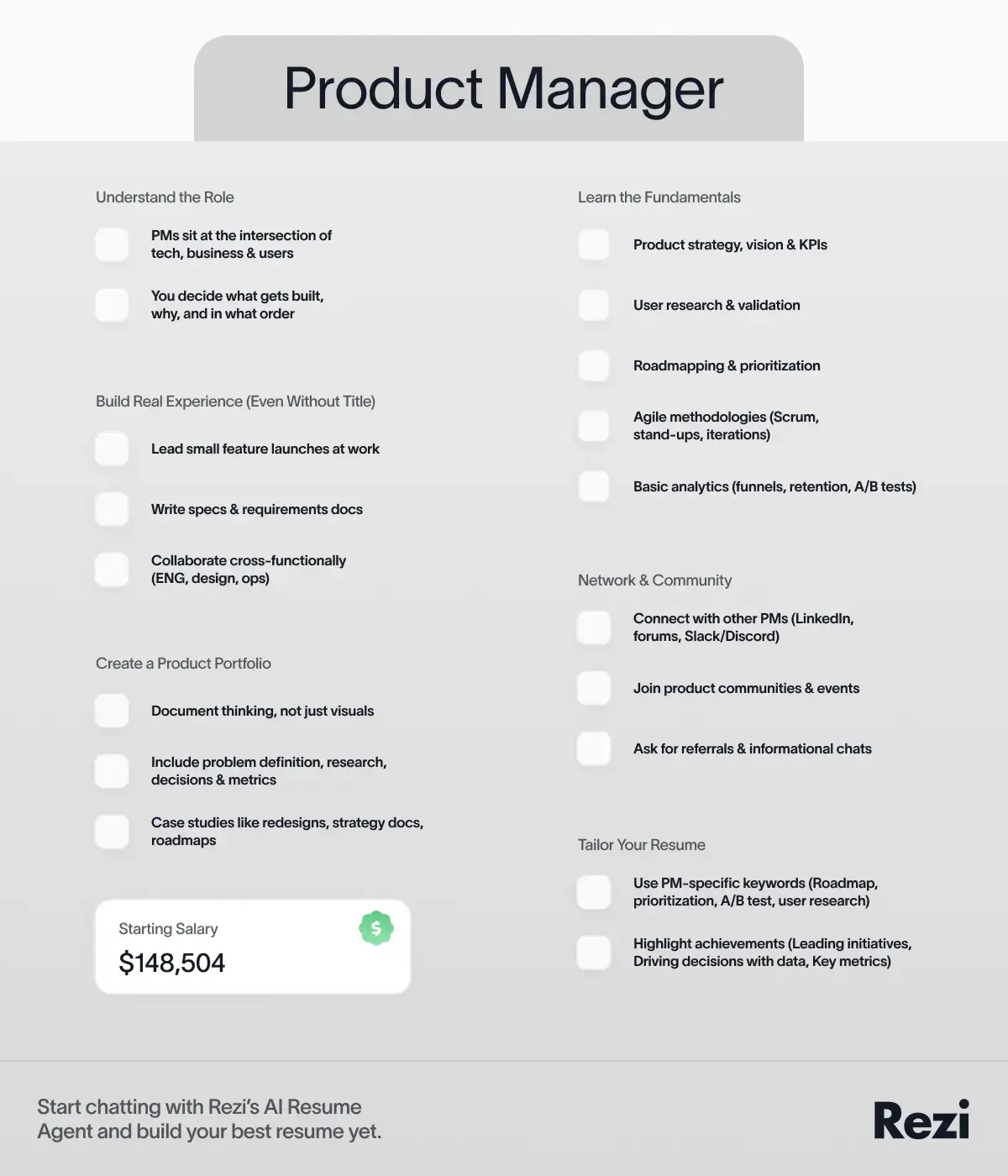
Here’s how to become a product manager: learn the fundamentals of product management, build relevant skills, and create a strong portfolio. Next, tailor your resume with product-focused achievements and then network with other product management professionals. From there, apply for product manager roles and start preparing for product management interviews.
Product managers are the ones who basically sit in the middle of tech, business, and user needs and try to make everyone happy.
(Spoiler: you can’t always please everyone but you can certainly build great products anyway.)
And listen, if you’re coming from product marketing, customer-facing roles, operations, design, engineering — whatever — you’re not behind.
Many product managers never started in product. They slid sideways into the role after discovering they were the one person always asking:
"Wait… why are we building this?"
"Who is this for?"
"What problem are we actually solving?"
In this guide, I’ll break down exactly how to become a product manager regardless of where you’re at in your career. If you’re starting from scratch, mid-career, or hoping to make that marketing-to-product jump without feeling like an impostor, this article is for you.
Or skip this guide and create a professional resume for product manager jobs using our AI resume builder. You can get started for free.
Do You Need a Degree to Become a Product Manager?
No, not at all. There are skilled product managers out there who don’t have a degree or even a technical or business background.
That said, certain degrees help:
- Business
- Computer science
- Information systems
- Psychology (yes — product management is deeply human behavior-focused)
- Communications or marketing
However, any relevant product marketing experience is a huge asset.
Related articles:
What Does a Product Manager Do?
Here’s what product manager responsibilities look like:
- Understanding users. PMs talk to customers constantly. Interviews, support tickets, analytics, market research… the whole package. You’re the detective trying to figure out what people need but aren’t saying out loud.
- Prioritizing what to build. Stakeholders could pitch you hundreds of ideas every week. You decide which actually matters.
- Planning the roadmap. PMs create short-term and long-term plans that outline what features and improvements are coming next and why.
- Collaborating with engineering and design teams. You translate business goals into user stories, specs, and features developers can actually build, and designers can bring to life.
- Tracking results. After launch, PMs measure the impact using metrics like adoption, retention, revenue, or user satisfaction. It’s strategic, but also hands-on. You’re part analyst, part storyteller, part negotiator, and part firefighter on days when everything breaks at once.
Product managers decide what gets built, why, and in what order. Not “how” they get built because that’s on engineering, and not “how it looks” because that’s on design. However, PMs guide everything from the business case to launch day.
If you feel ready to start applying, jump ahead and learn how to use the best career tools for landing a role for a specific field:
- Rezi for Jobs in Tech
- Rezi for Engineering Roles
- Rezi for Project Management
- Rezi for Human Resources (HR)
- Rezi for Marketing Roles
- Rezi for Making a Career Change
How to Become a Product Manager
Here’s how to become a product manager:
- Learn the product management fundamentals (product thinking, UX basics, agile, research).
- Build relevant product management skills through projects, side gigs, or your current job.
- Create a portfolio showcasing the way you think and not just work you’ve done.
- Tailor your resume with product-focused achievements and keywords.
- Network with PMs, join communities, and find referral-friendly connections.
- Apply for associate, junior, or mid-level roles depending on experience.
- Prepare for product management interviews.
There are tons of interesting stories about how people break into product management. One Reddit user even shared that they applied for a PM internship, basically waffled their way through the interview, and somehow still landed the role, which is a level of proof that confidence and curiosity can go a long way.

Others have transitioned from careers like marketing, UX, operations, or even supply chain management. The common thread? They were able to show how their existing skills translated into product work. Chances are, you may already have more transferable skills than you think — it’s just a matter of telling your story the right way on your resume and in your interviews.
Now let’s dive into each step in more detail.
1. Learn the product management fundamentals
First, get comfortable with the core building blocks of the role.
These are the core product management foundations (alternatively, check out this product manager roadmap):
- Product strategy (vision, goals, KPIs)
- User research (interviews, surveys, usability tests)
- Roadmapping & prioritization
- Agile methodologies (scrum, sprints, standups)
- Writing clear requirements (user stories, acceptance criteria)
- Basic UX principles
- Basic data analysis (funnels, retention, cohorts, A/B testing)
You can also learn all of this through:
- Free YouTube channels like PMHQ, Lenny Rachitsky, or Product School
- Product management bootcamps (Pragmatic, Product School, Reforge)
- Online courses (Coursera, Udemy, LinkedIn Learning)
Learn more about top skills to add to your job application:
- Best AI Skills for a Resume
- Computer Skills for a Resume
- Technical Skills to Include on a Resume
- Best Resume Hard Skills
- Best Resume Soft Skills
- High-Income Skills to Learn
2. Build relevant product management skills through projects, side gigs, or your current job
You don’t need a product manager title to do product management work.
Many product managers broke in by already carrying out product management responsibilities before they officially became one.
And you can do that too, right where you are.
If you’re currently employed at a company, look for any opportunities to:
- Lead a small feature launch
- Write a spec or product requirements doc
- Analyze user feedback or product data
- Collaborate with engineers or designers
- Improve a process that annoys everyone (instant brownie points)
And if you're pivoting careers or starting from scratch:
- Redesign an app you already use (with mockups and reasoning)
- Run a small usability test with friends or community groups
- Build a feature proposal for a product that frustrates you
- Volunteer to help a nonprofit, startup, or hackathon team with product decisions
The goal here is to show you can think and act like a product manager.
Related articles:
- Organizational Skills to Put on a Resume
- Interpersonal Skills for a Resume
- How to Describe Leadership Skills on a Resume
- Communication Skills to Put on a Resume
- Programming Skills to Put on a Resume
3. Create a portfolio showcasing the way you think and not just work you’ve done
A product portfolio is quite different from a design portfolio since it’s less about visuals and more about the way you think.
Here’s what you’ll want to demonstrate on your portfolio:
- How you define a problem
- How you research and validate it
- What trade-offs you made
- How you structured your reasoning
- What success metrics you would track
- What you’d improve next
Focus less on the shiny screenshots and more about how you navigated the messy middle. With that in mind, your portfolio could include the following:
- App redesign case studies
- Feature proposals
- User research summaries
- Competitive analyses
- Product strategy docs
- Roadmaps you’ve created
Two or three polished case studies could even outperform a bachelor’s degree and years of experience when it comes to getting interviews. Seriously.
You can then add these to your resume header section and LinkedIn profile.
4. Tailor your resume with product-focused achievements and keywords
Your resume should scream “I already do product management things” even if your job title says otherwise.
So, tailor your resume for product management by highlighting achievements like:
- Leading cross-functional initiatives
- Using data to make decisions
- Launching something (literally anything — a feature, campaign, process, or internal tool)
- Improving user metrics, revenue, or customer satisfaction
- Managing stakeholders or resolving project conflicts
And include resume keywords for product management, such as:
- User research
- Product roadmap
- Feature prioritization
- A/B testing
- Agile/Scrum
- Metrics & KPIs
- Product requirements
If reframing your experience feels difficult (and it usually does for career changers breaking into product management), you can use our AI Resume Agent for personalized suggestions. Tell it your target role is product manager, paste a bullet point from your current resume, and ask it to rewrite it with product management framing. It understands resume best practices, ATS formatting, and the specific language that product management hiring managers look for.
Learn more on writing a strong resume:
- How to Write a Professional Resume
- How to Write a Resume With No Work Experience
- How to Write a Career Change Resume
- How to Write the Work Experience Section
5. Network with PMs, join communities, and find referral-friendly connections
Regardless of your field, networking and connections can get you so much farther than applying to whatever job opportunity you see online.
Product management jobs often have dozens or hundreds of applicants, and hiring managers tend to trust recommendations over cold applications.
You can start building your network by:
- Joining online communities
- Getting more involved in forums like Reddit
- Connecting with like-minded professionals on LinkedIn
Don’t focus on getting a job out of the people you might meet. Instead, focus on having genuine conversations about the field. Show curiosity.
6. Apply for associate, junior, or mid-level roles depending on experience
Don’t wait until you feel “ready.” After completing all the steps discussed above, start applying for the right positions.
Look for job titles like:
- Associate Product Manager (APM)
- Product Manager
- Product Analyst
- Product Owner
- Program Manager (at some companies)
- Growth roles (great fit for marketing backgrounds)
And if you’re currently employed, see if there are any internal mobility opportunities within your company. Apply early, apply often, and keep refining your portfolio as you go.
Relevant guides for job searching:
- The Best Job Search Strategies
- The Best Job Search Engines
- Why It’s Hard to Find a Job (And What You Should Do)
7. Prepare for product management interviews
Product manager interviews typically include:
- Product sense questions (e.g., “How would you improve Instagram Stories?”)
- Execution questions (prioritization, trade-offs, metrics)
- Analytical questions (“What metrics would you track for Uber Eats?”)
- Technical fundamentals (APIs, databases, how features work)
- Behavioral questions using the STAR method
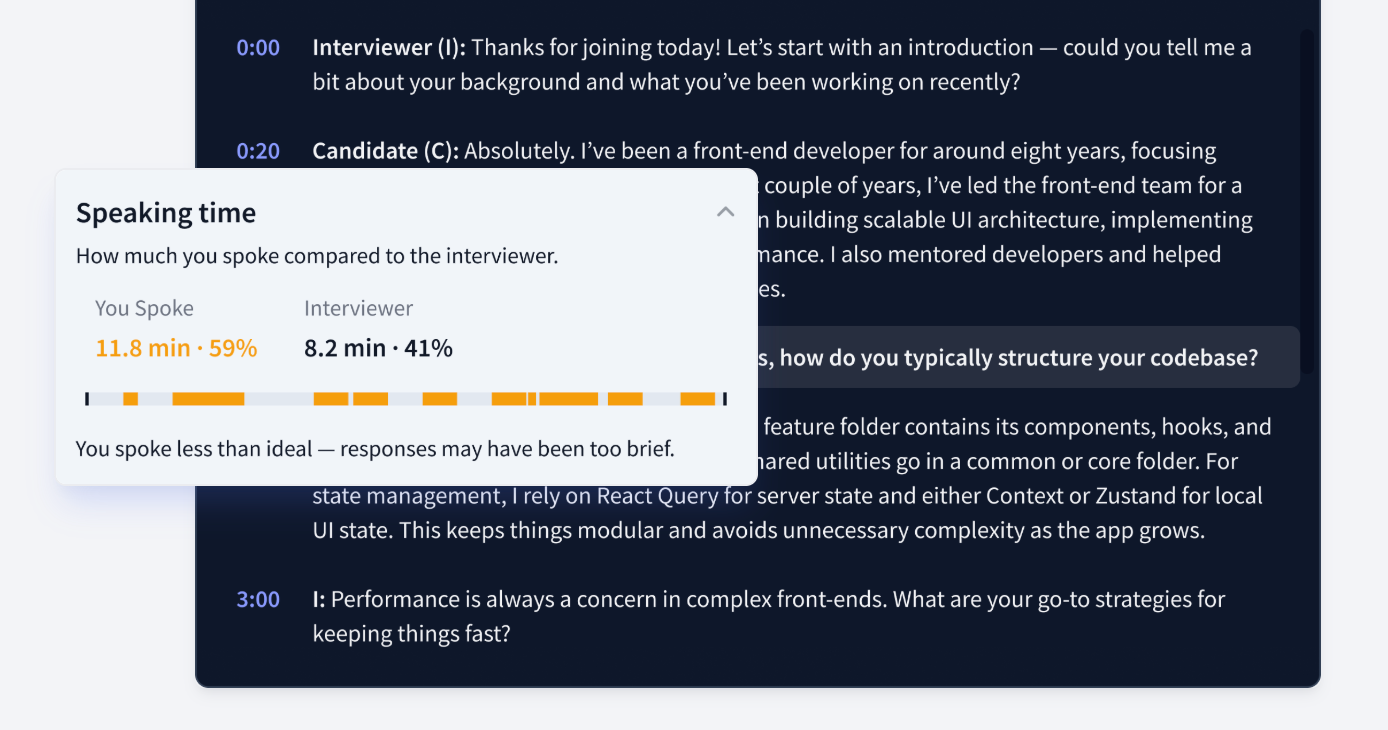
Practice out loud. Recording yourself works wonders (and yes, I get that it’s painfully awkward at first).
For realistic product manager interview practice, you can use Rezi AI Interview. It gives you job-specific questions focused on your resume and target role. You’ll also receive detailed feedback based on the best practices.
Does It Take Long to Become a Product Manager?
Most people transition into product in 6–18 months, depending on:
- Your current role
- How quickly you can build a portfolio
- Whether you pursue certifications or bootcamps
- How active you are in networking
It’s rarely instant, but not nearly as long or complicated as it may look from the outside. However, it can feel difficult with the current landscape of the job market.
What Do Average Salaries Look Like for Product Managers?
The estimated average salary for product managers is $148,504 in the US, according to Glassdoor. This also varies depending on experience, seniority level, location, and industry. Some companies, like those in tech, may include bonuses, equity, and perks on top of the base salary.
Summary
Here’s a quick recap on how to become a product manager:
- Learn PM fundamentals: user research, strategy, UX, agile, data.
- Build experience without waiting for permission: side projects, cross-functional work, shadowing.
- Create a PM portfolio with 2–3 strong case studies.
- Tailor your resume to highlight product-focused achievements.
- Network with PMs and join product communities.
- Apply for associate, junior, or transition-friendly roles.
- Prep for product sense, execution, and behavioral interviews.
To break into the product management field, focus on proving that you can think like one. And if you already have product marketing experience, you’re a lot closer than you think.
FAQs
Do you need a technical background to become a product manager?
It’s certainly helpful, but not always needed to break into product management. Product managers can come from non-technical backgrounds like marketing, psychology, customer success, or consulting. Think of it like knowing how a kitchen works without being the chef.
Is a product management certification worth it?
Certifications aren’t required, but they can help if you’re switching careers or lack experience. However, don’t mistake a certificate for a portfolio. Real experience, case studies, and projects often matter more than certifications.
Is product management stressful?
It can be. After all, you’re juggling deadlines, stakeholders, user needs, and unexpected fires. Still, it’s one of the most rewarding roles in tech because you get to shape something meaningful and see people actually use what you helped build. Good boundaries and good teams make a huge difference.
What’s the difference between a product manager and a product owner?
Product managers are the broader, strategic role: vision, roadmap, research, business outcomes. On the other hand, product owners are more tactical: backlog management, writing user stories, working closely with engineering in agile. However, this also depends on the organization. Some companies merge the titles, while others treat them as separate tracks. Always read the job description to see what they really want.

Upload or drop your resume to get started
Upload your resume to get started
Score my resume

Astley Cervania is a career writer and editor who has been sharing resume and job search insights for 5+ years. He shapes the direction of the Rezi blog, providing practical answers for important career-related questions and helping hundreds of thousands of people navigate the job market and build resumes that land interviews.