

Discover internship resume examples with modern templates and expert guidance. Learn how to write a professional, ATS-friendly resume that lands internships.


Your internship resume is all about showing potential, not a long work history. Focus on a one-page format with consistent fonts, spacing, and headings that make it easy to scan. Highlight education, relevant coursework, projects, and extracurriculars to show skills and initiative, and include any work, volunteer, or part-time experience by emphasizing success stories. Tailor your resume to each internship by using keywords from the job description and showing alignment with the company’s culture. Include only skills you can confidently use and keep your resume updated as you gain experience.
We’ve spoken to a lot of students and graduates looking to enter the workforce. Many are unsure of how to write an internship resume without any experience.
You could either leave half the page blank (not ideal) or cram it with random hobbies and childhood awards (also not ideal). Employers don’t expect you to have a strong professional background for an internship position.
But there are ways to fill up your resume without sounding like you peaked in high school.
Below, I’ll share the best internship resume examples and give you my top internship resume templates so you know what to include and how to make the best impression (even if your work experience is limited to babysitting).
Need help putting everything together? Try our free AI Resume Builder. Simply enter your details to get a customized job application with feedback on how to improve.
And check out more resume examples and tips for students:
- Student Resume Examples
- First Year Student Resume Examples
- Second Year Student Resume Examples
- Third Year Student Resume Examples
- Fourth Year Student Resume Examples
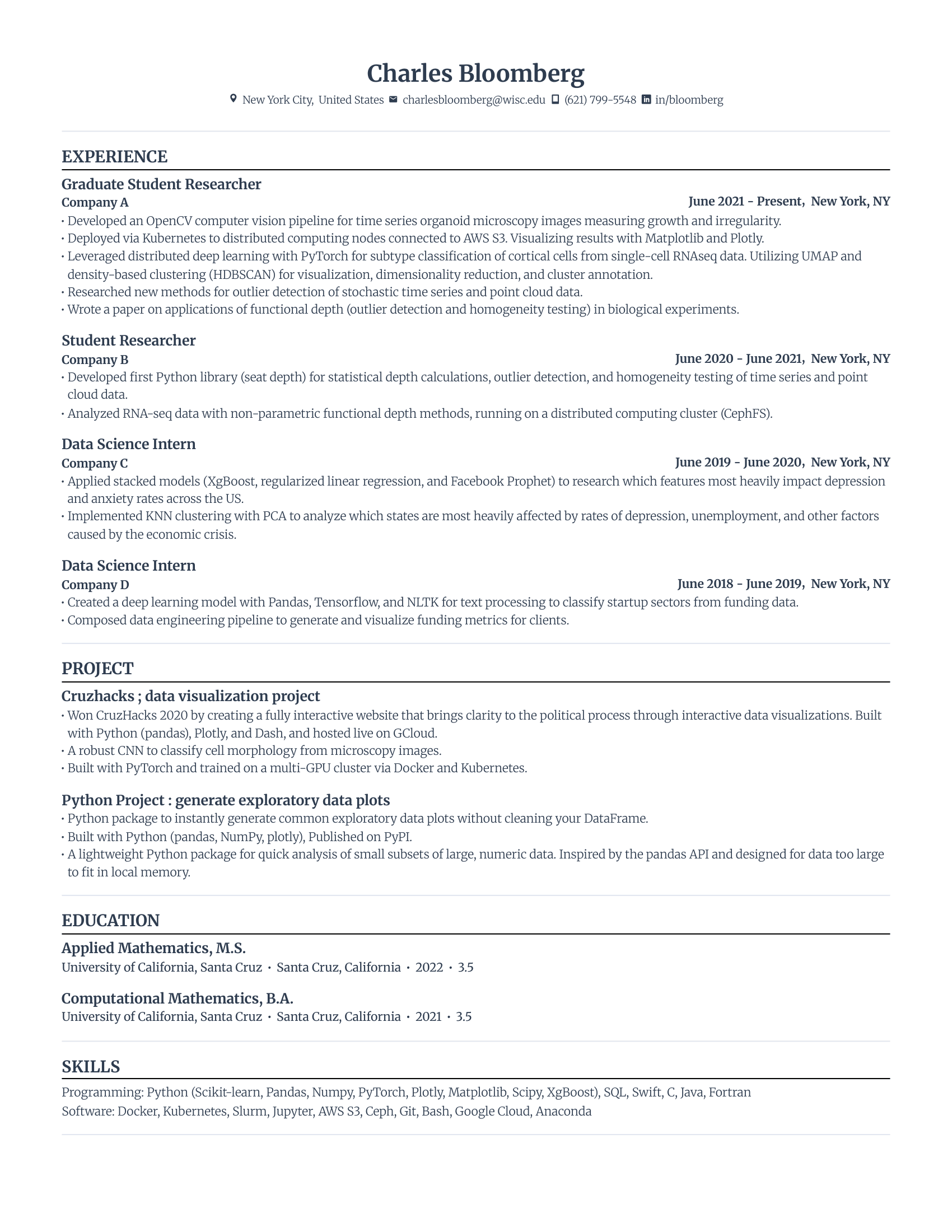
ATS-Friendly Internship Resume Example
Many companies use applicant tracking systems (ATS) to filter resumes. Your intern resume needs to be written and formatted in a way that’s ATS-friendly. To do this, you’ll need an ATS resume template and make sure your content includes keywords from the job description.
Here’s an internship resume example to fill out with your own details:
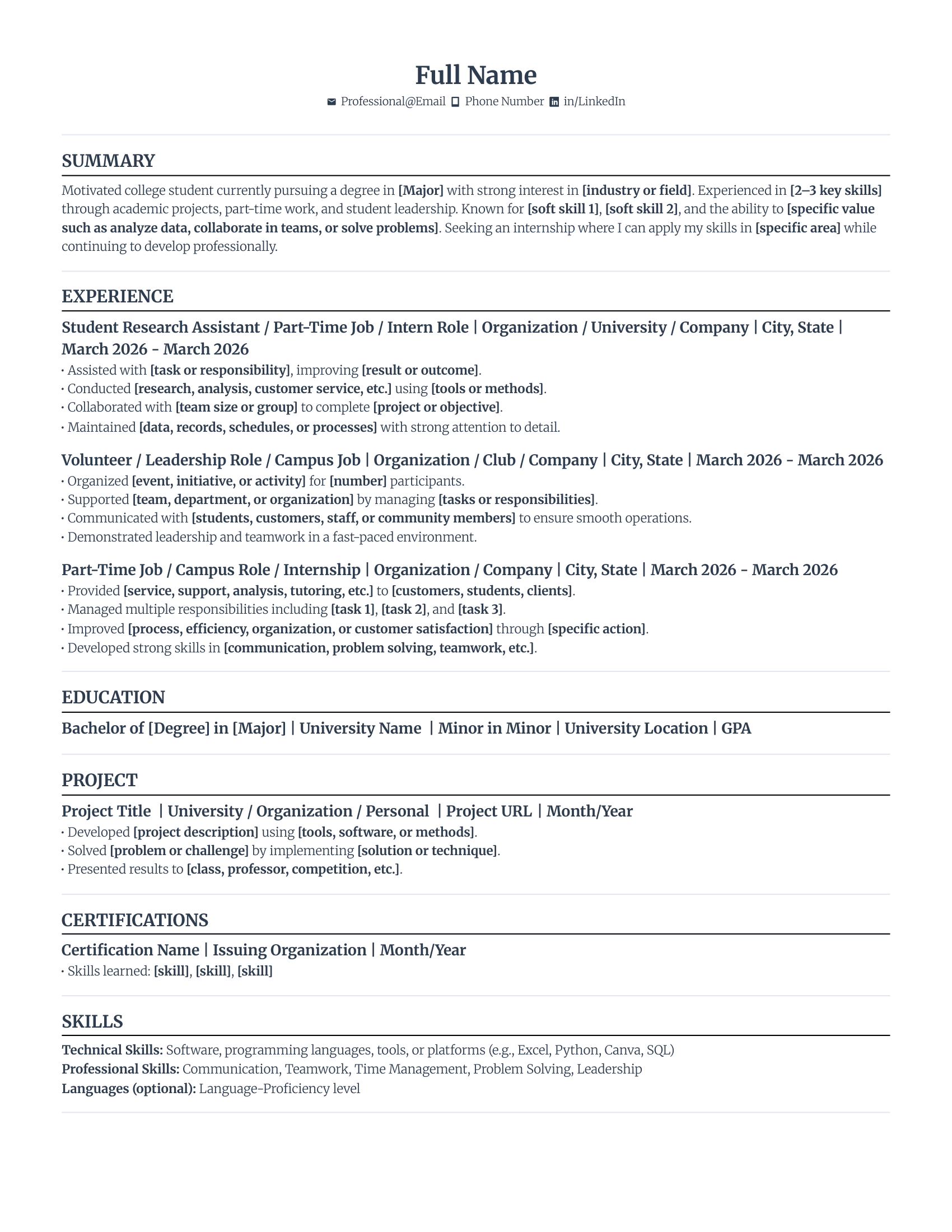
Here’s why this internship resume works:
- It prioritizes potential: Internship candidates rarely have extensive professional experience. This format highlights student roles, volunteering, part-time jobs, and projects, which still show responsibility and transferable skills.
- It balances academics and practical experience: Internship recruiters expect students to show education and application of knowledge. Including projects and relevant coursework brings that together.
- It emphasizes transferable skills: Employers hiring interns often value soft skills just as much as technical ability. The template encourages bullet points that prove these skills through real actions.
- It’s ATS and recruiter-friendly: Internship resumes are typically one page, and this structure ensures minimal design elements and clear sections that recruiters can scan quickly.
- It helps students who think they “don’t have experience”: Many students underestimate experiences like group projects, campus jobs, or volunteering. You can use this template to show that those experiences are valid and valuable.
Looking for something more specific? Below, I’ve included internship resume examples and templates for different industries and academic levels.
Internship Resume Examples by Industry
Most internship resumes stick to a standard format, but small tweaks can help you stand out depending on the industry. That banking internship? I’m sure employers would enjoy seeing measurable success stories. And that marketing position? All those evenings spent promoting college events on social media could finally pay off.
Below are some internship resume examples and tips for different industries. You can also use these as a base template for your own internship resume.
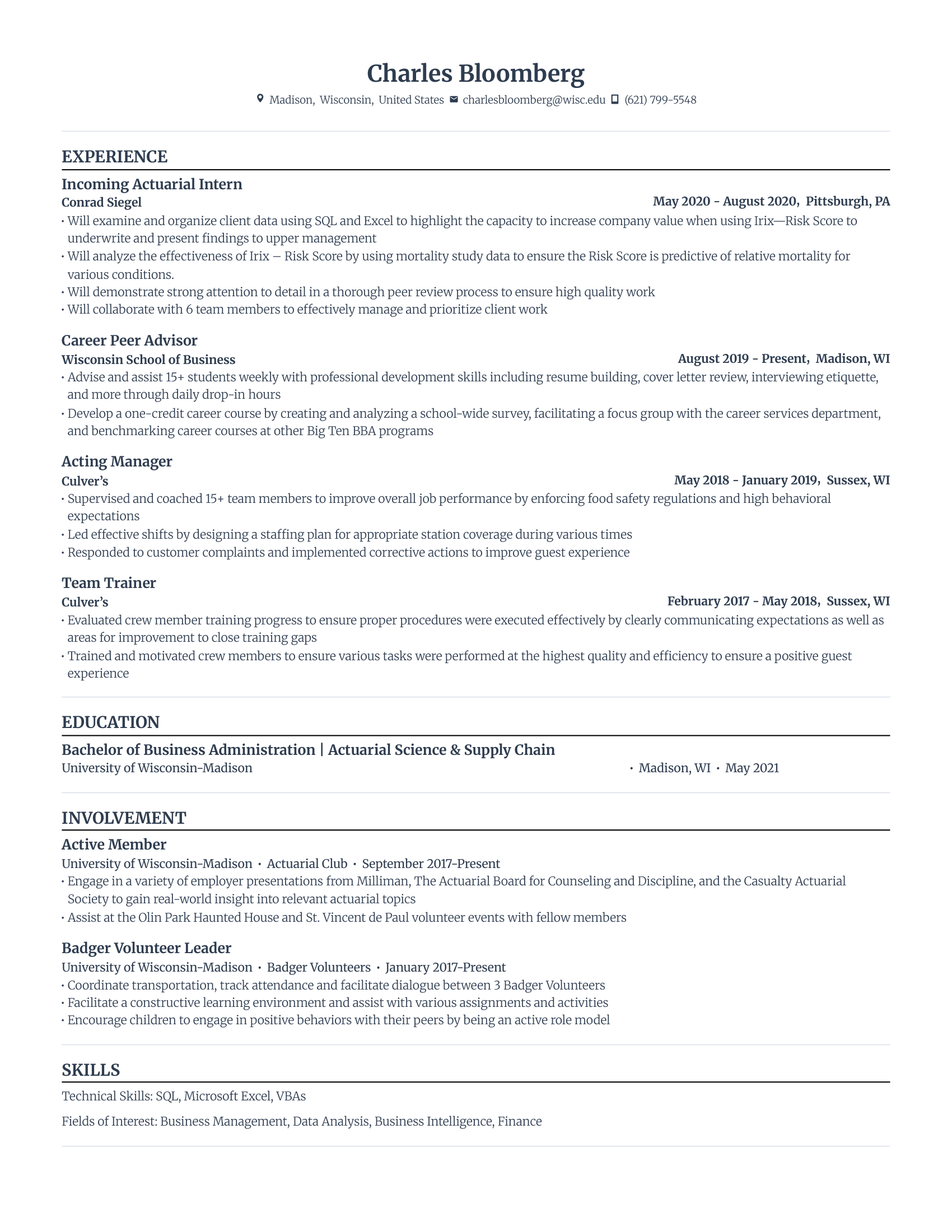
Business internship resume template
If you lack experience, your business internship resume should include certifications and student projects to help bridge the gap. Highlight extracurriculars that show leadership, initiative, problem-solving, and communication skills. Employers want evidence that you’re proactive and comfortable thinking strategically.
Technical internship resume template
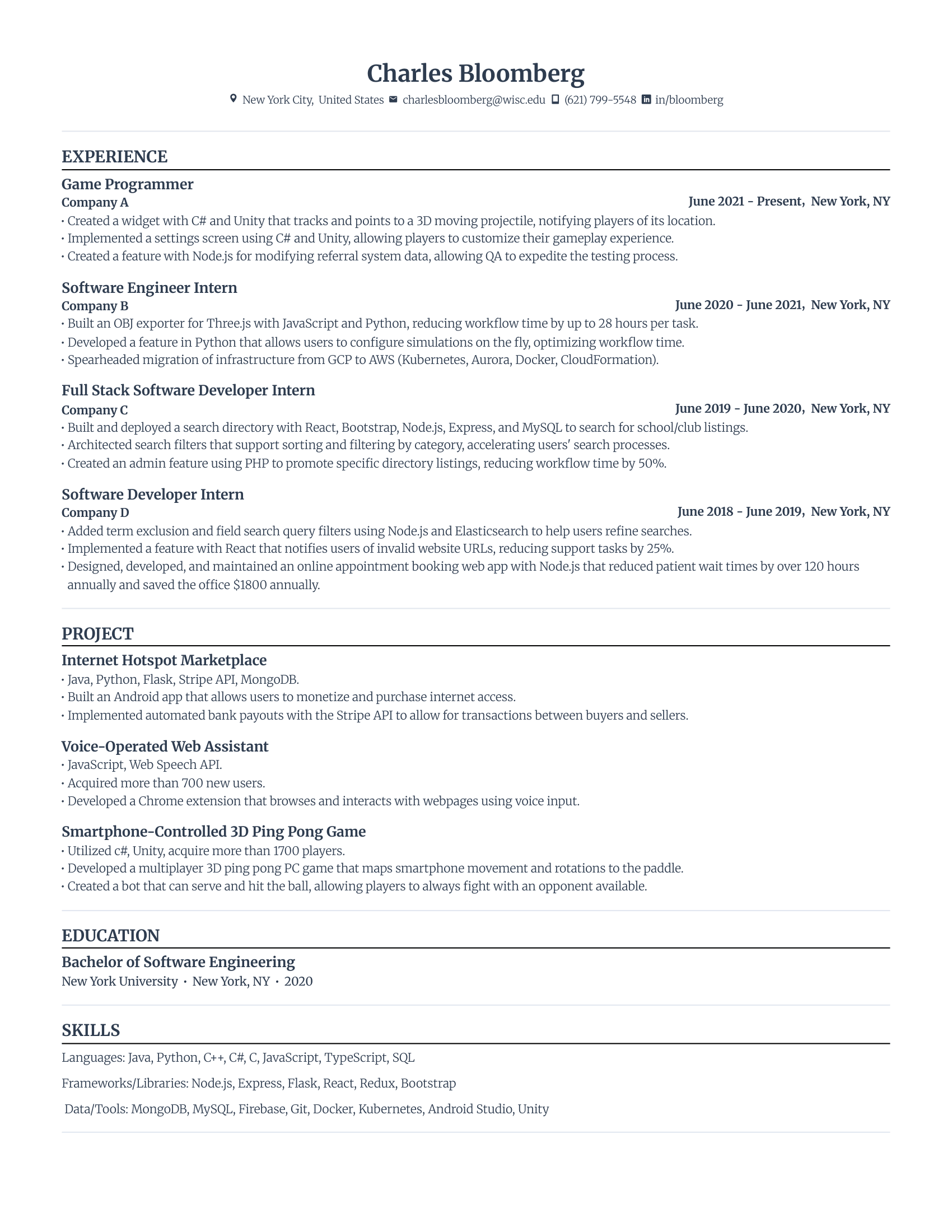
Your technical internship resume should include tools, programming languages, and methodologies alongside real outcomes or projects. Academic coursework helps validate your foundation, but side projects and certifications prove applied skills. Whenever possible, include measurable results to show how your technical knowledge translates into impact.
Engineering internship resume template
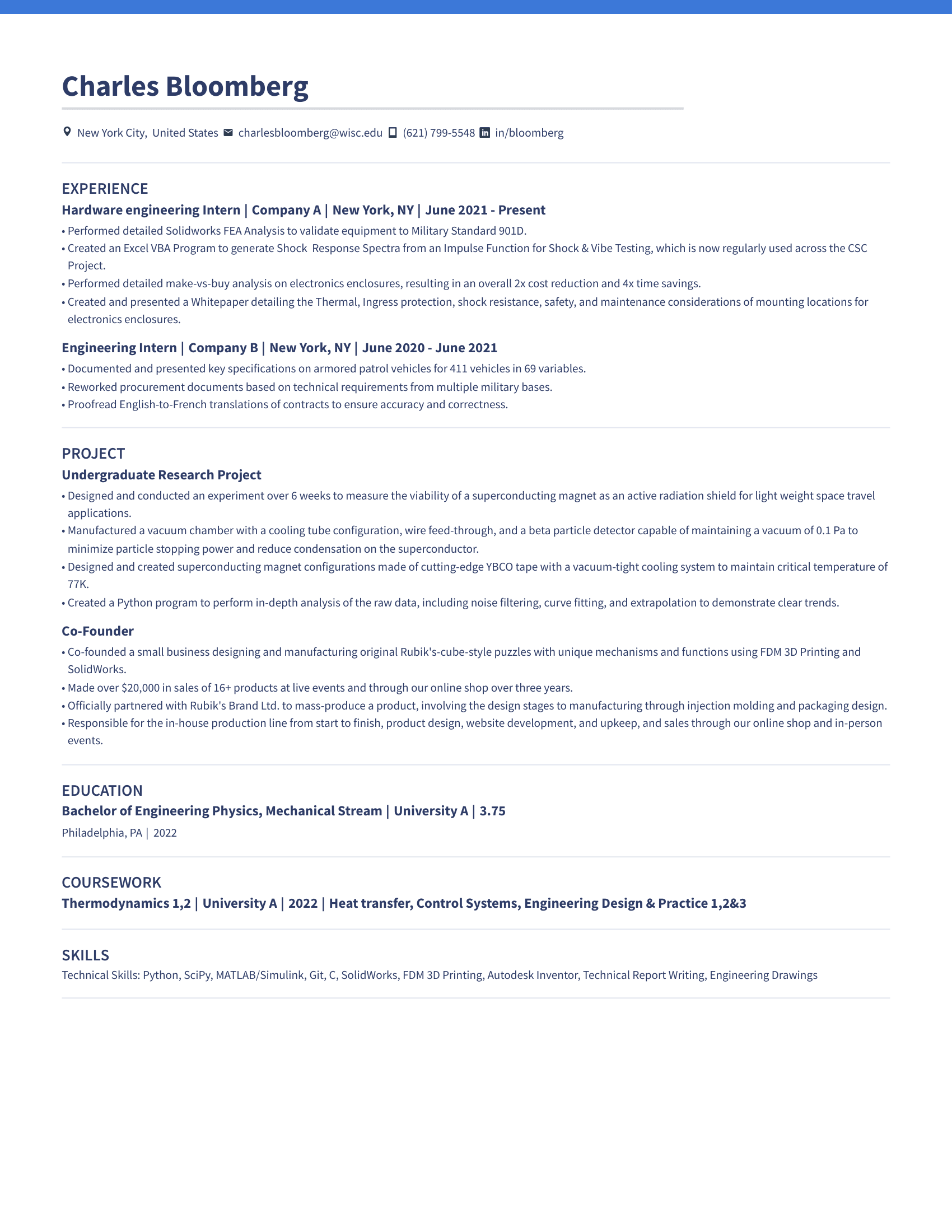
Go beyond listing tools like MATLAB or Python on your engineering intern resume by explaining how you used them in projects. Hands-on experience is critical, so include group work or design projects. Employers want interns who can apply theory, collaborate effectively, and continuously improve their technical skills.
Research internship resume template
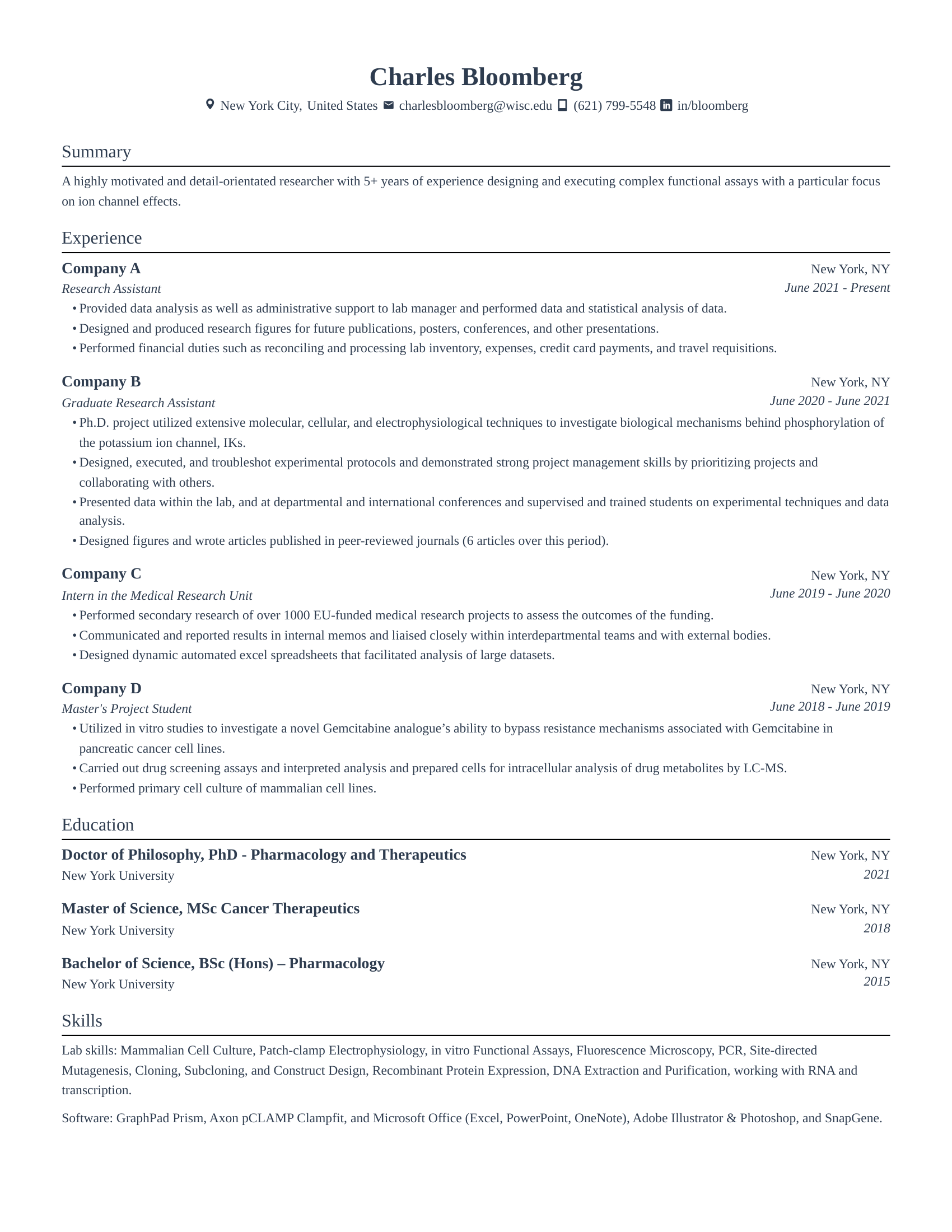
In a research or academic intern resume, education usually comes first, followed by research experience and academic milestones. You can also include your thesis topics and relevant coursework. Early-career candidates can also list non-academic work to show transferable skills. Research resumes grow over time, so showing progress is as important as final results.
IT internship resume template
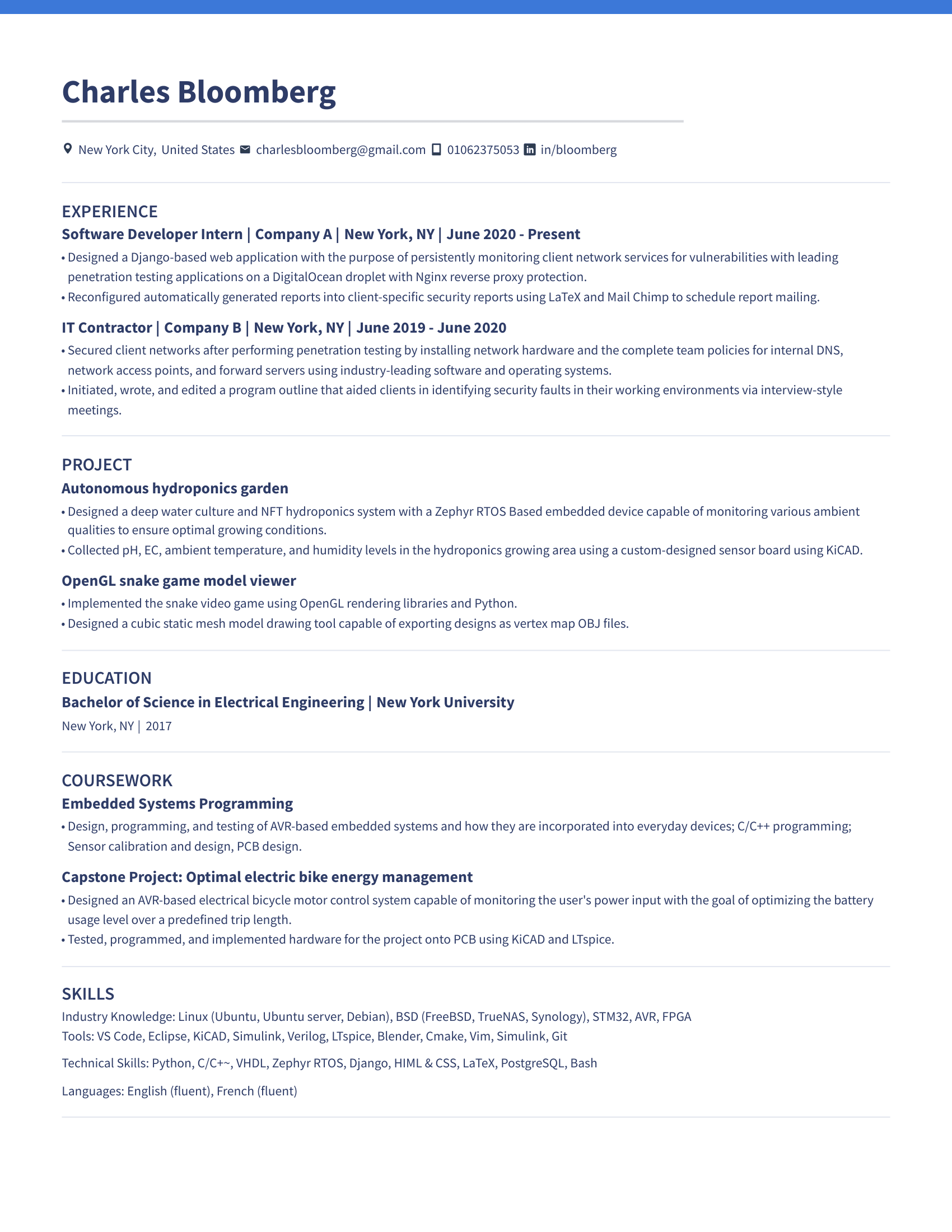
Your IT intern resume should clearly list technical skills so Applicant Tracking Systems (ATS) can pick them up. Support them with examples from coursework, projects, or coding challenges. Personal projects, portfolios, and certifications show initiative beyond classwork. Balance technical ability with teamwork and communication to show you’re ready for real environments.
Medical internship resume template
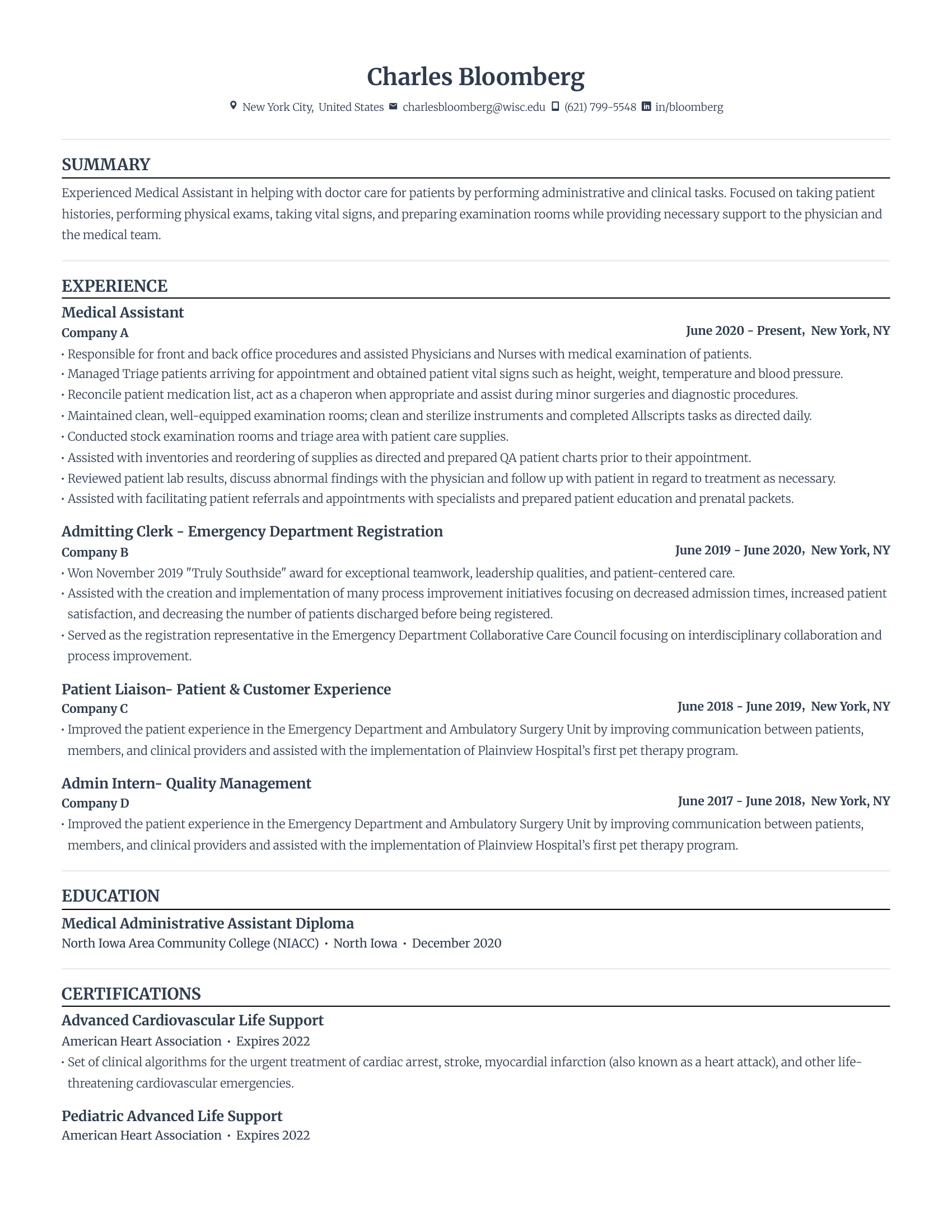
Since formal experience may be limited, your medical intern resume should focus on academic performance, research, simulations, and clinical workshops. Highlight teamwork, communication, and working under pressure. You can reference career interests and specific medical fields, but then back them up with relevant coursework or projects from medical school.
Marketing internship resume template
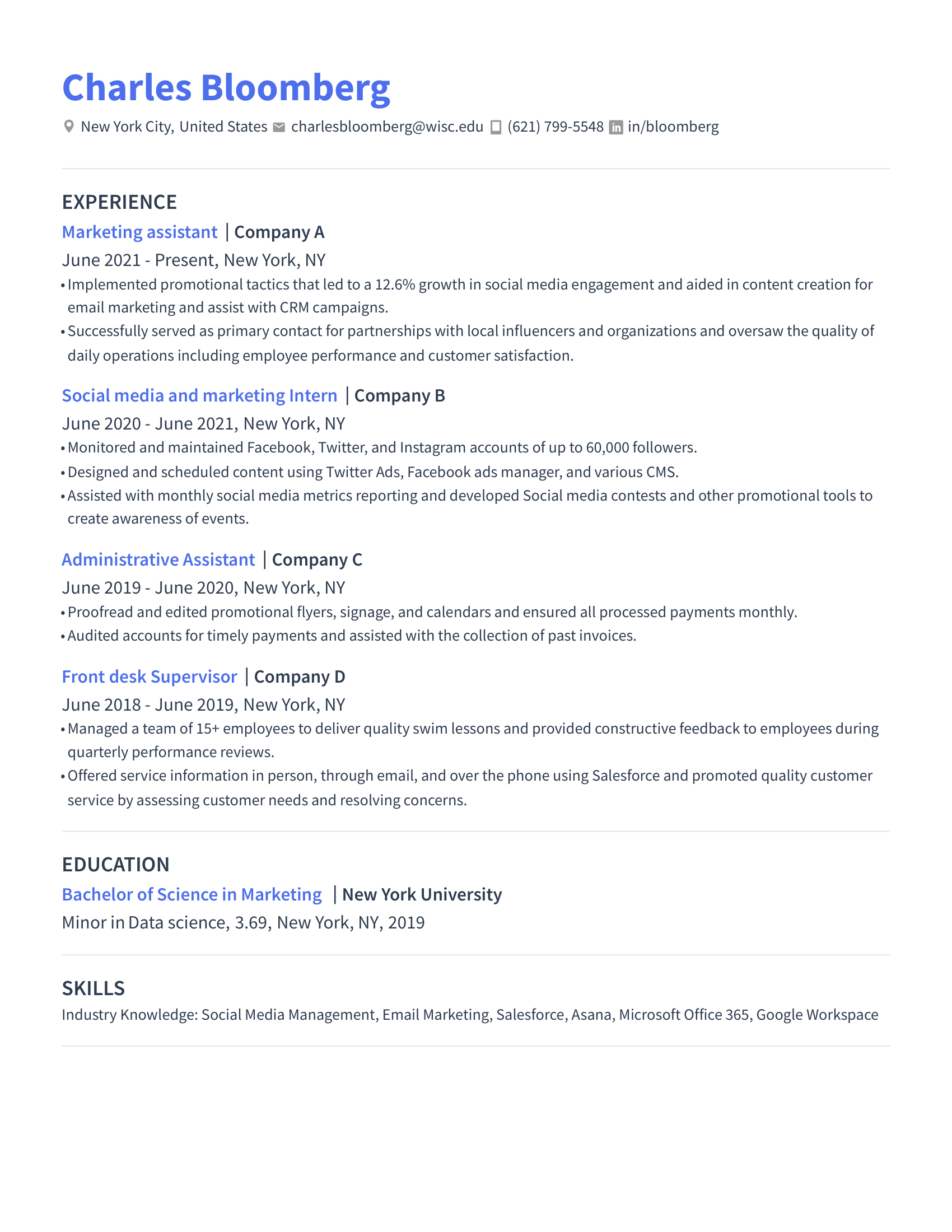
Your marketing internship resume should mention your knowledge of social media, content creation, campaigns, or analytics projects (even small ones). Familiarity with tools like Canva or SEO can also add value. Certifications in analytics or digital marketing help validate skills and show you’re ready to support real marketing initiatives.
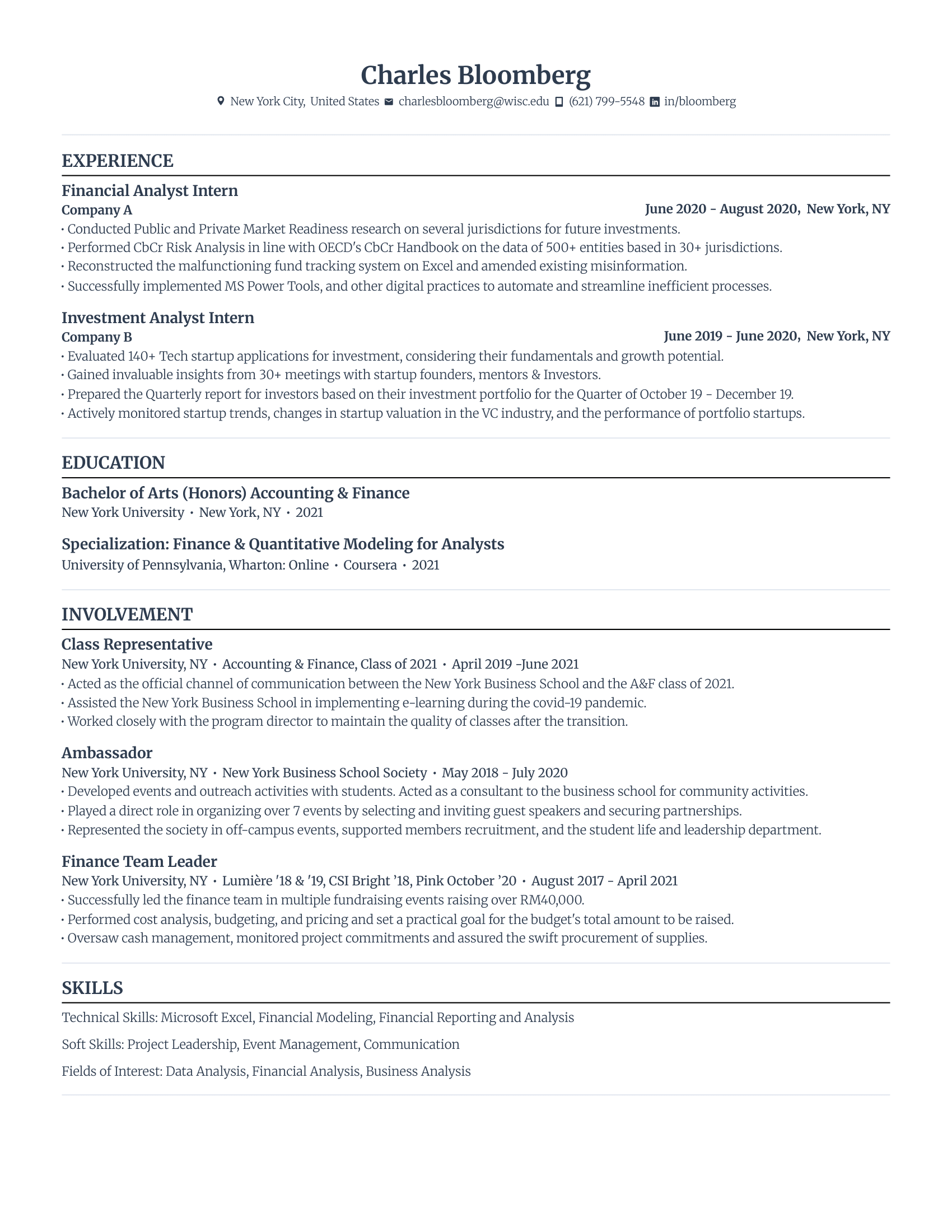
Finance internship resume template
Your finance intern resume should include coursework in finance, economics, accounting, or data analysis. Student projects, case studies, or part-time jobs help show discipline and analytical thinking. Use numbers to demonstrate accuracy and financial potential. Don’t have direct finance experience? Lean on educational achievements and transferable skills.
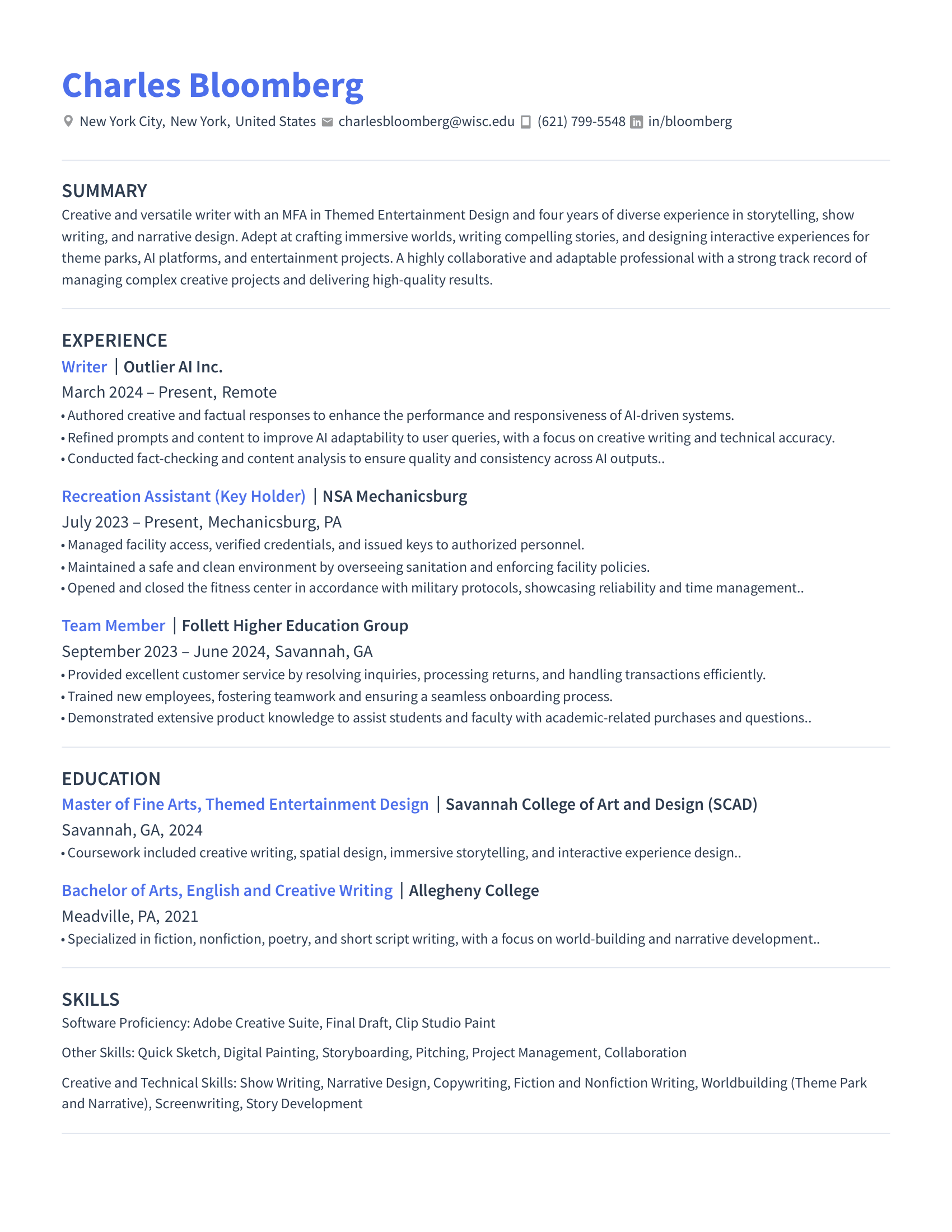
Summer internship resume template
Summer internships focus on learning and exposure, so show readiness to jump in quickly. Highlight relevant coursework, skills, and leadership roles in student organizations. Informal experience still counts if it’s related. Employers want to see enthusiasm, adaptability, and proof that you’ll make the most of a short-term opportunity.
Check out more popular resume templates:
- Free Canva Resume Templates
- Free Professional Resume Templates
- Free Google Docs Resume Templates
- The Best ATS-Friendly Resume Templates
- MS Word Resume Templates to Make Your Job Hunt Easier
Student Internship Resume Templates
Internships help you build experience, explore different career paths, and prepare you for meetings that could’ve been emails. But there’s stiff competition, with almost half of college students securing an internship during their bachelor’s degree, according to Gallup. Getting your own coveted place starts with your internship application and resume.
Check out these intern resume templates of what to include for different stages in your academic timeline:
High-school resume template
For a high school internship resume, let your education lead (since it’s your strongest asset right now). Include your school, expected graduation date, GPA (if it’s over 3.8), and any honors or advanced classes. Then, show essential skills gained through clubs, volunteering, sports, or part-time work.

College student resume template
Your college resume should focus on your education, detailing your degree, major, and university, followed by any honors or scholarships. Use academic projects to show practical, job-related skills you’ve built in class. Relevant part-time jobs, volunteering, or student organizations can also demonstrate key soft skills and transferable abilities.
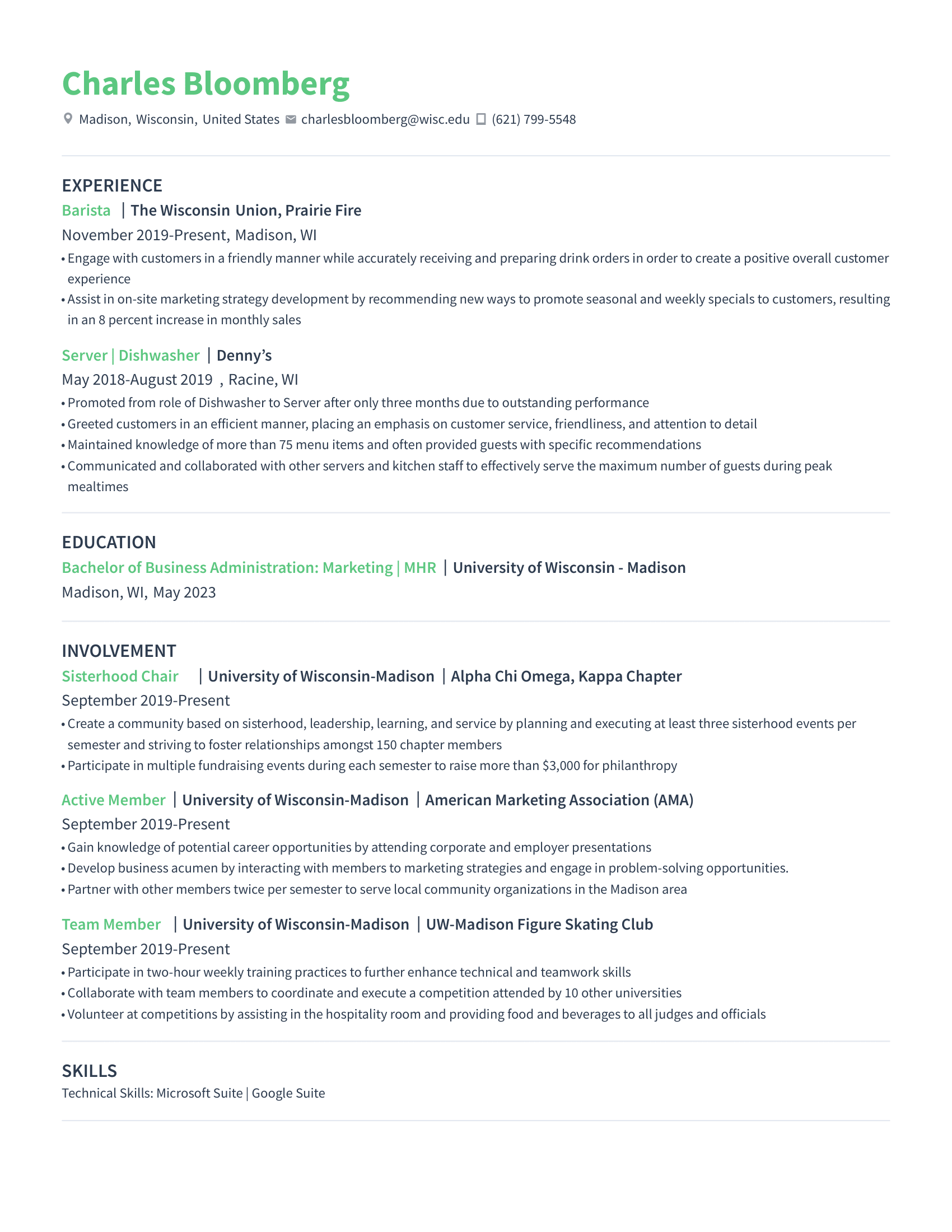
Harvard resume template
If you attended a well-known university such as Harvard, place the school name prominently to grab attention. Focus on advanced or specialized coursework that supports the internship. Include meaningful academic projects, research, or a thesis to show depth. Skip introductory courses and instead highlight work that demonstrates analytical thinking and academic rigor.
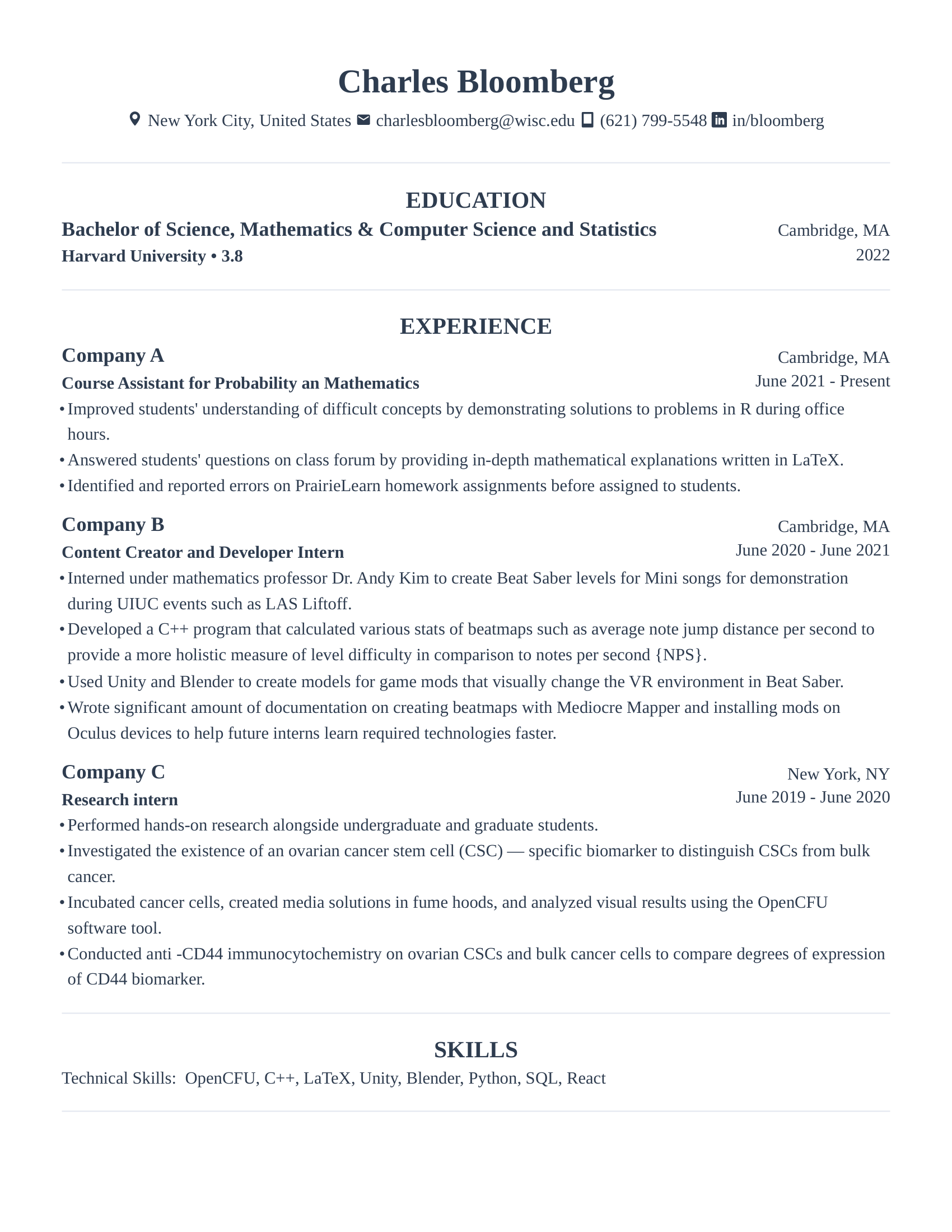
Graduate resume template
Add value to your college graduate internship resume by including part-time jobs and summer work to show reliability and professionalism. Emphasize projects, research, or extracurriculars that align with the role. Employers want proof you can apply knowledge, meet deadlines, and contribute meaningfully, even if your experience comes from multiple sources.
How to Write an Internship Resume
Here’s how to write an internship resume:
- Choose a professional format and layout by keeping your resume to one page with a reverse-chronological structure, consistent fonts and spacing, and clear headings.
- Create a strong objective or summary that briefly explains who you are and what you’re looking for, showing the reader that you wrote your resume with intention.
- List your degree and relevant coursework in a way that connects your academic background to the internship.
- Outline any work experience or volunteer jobs by focusing on what you contributed, handled, or improved in part-time roles, volunteering, or school projects.
- Add skills tailored to the internship by choosing a small set of technical and transferable skills that support the rest of your resume.
- Include additional sections and extracurriculars to show initiative and curiosity through projects, clubs, research, leadership roles, or awards.
Let’s explore in more detail below.
1. Choose a professional format and layout
Before we even get into what you’re writing, let’s talk about how it looks.
Employers often spend seconds scanning your resume content, not minutes admiring the design. A clean, professional one-page layout ensures your resume is clear and easy to scan.
Here are some basic formatting rules for an intern resume:
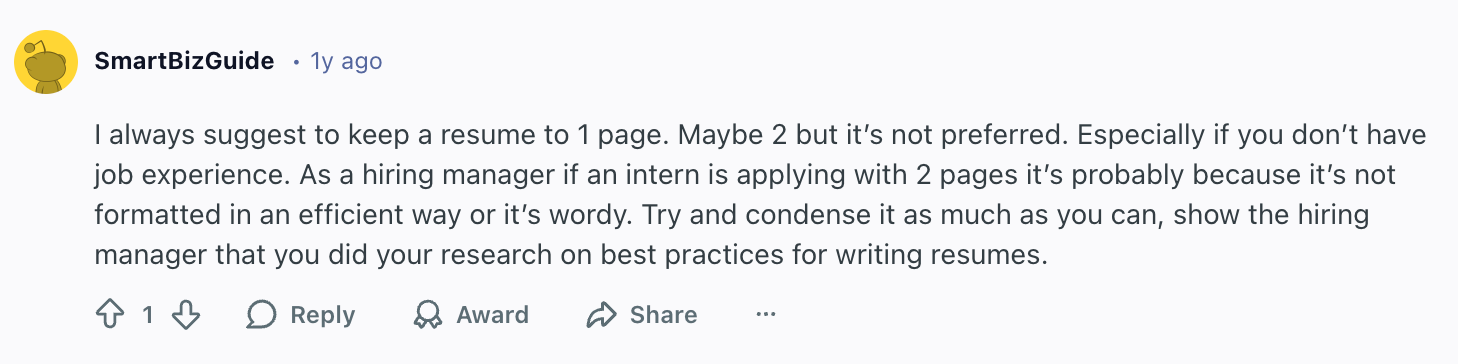
- Keep your resume to one page. As an intern, anything longer usually signals unnecessary filler rather than more value. (Only extend to a second page if you have exceptional achievements or professional experience worth noting, but one page is usually enough for most internship resumes.)
- Use a professional, readable resume font like Calibri, Arial, or Georgia, sized 10–12 pt for body text and slightly larger (14–16 pt) for headings.
- Stick to a reverse-chronological format, listing your most recent experience or education first, so recruiters see what’s current.
- Be consistent with spacing, dates, and formatting (same date style, bullet style, and margins throughout).
- Use resume bullet points and bold headings to highlight key roles or institutions without cluttering the page.
Take a look at this resume formatting advice from a hiring manager:
Learn more about resume formatting: ATS Resume Format
2. Create a strong objective or summary
Your resume objective or summary is a “quick intro,” not your life story. Just answer this question: Who are you, and why are you here? Stick to 2–3 lines and place them right below your name and contact information.
If you’re new to the working world and still figuring things out, an objective works because it focuses more on your career goals and direction. If you’ve done a couple of internships or relevant roles, a resume summary is better for highlighting your selling points.
What matters most is that it feels intentional. Generic statements don’t stick. You want the reader to feel like this resume was written for this role, not copied and pasted for 30 applications.
Here’s an example resume objective for a finance internship:
Motivated economics student with hands-on experience in data analysis and academic research. Strong foundation in financial modeling, with a growing interest in investment analysis. Seeking an internship at X Digital where I can continue to build real-world finance skills.
Need guidance? Check out our AI Summary Writer. It takes skills and experiences from your resume to generate a personalized resume summary in seconds.
3. List your degree and relevant coursework
When you’re early in your career, your education section tells a big part of your story, and that’s completely expected. Everyone starts somewhere. But this section isn’t just about listing your degree; it’s about showing how your academic work connects to the internship.
What classes actually taught you something useful, and which projects pushed your skills to their full potential? That’s what you want to highlight. A strong GPA, honors, coursework, or scholarships are worth mentioning, but don’t feel pressure to list every grade. Focus on depth and relevance, not volume.
Here’s how you can add detail to your education section without overdoing it:
Bachelor of Science in Computer Science
University of Illinois | Expected May 2026
GPA: 3.8
Relevant Coursework: Data Structures, Software Engineering, Database Systems
Project: Designed a group-based inventory system using Java and SQL, focusing on the user experience.
Find out more:
- How to Put Your GPA on a Resume
- How to List Relevant Coursework on Your Resume
- Common Resume Mistakes For Students & Grads
4. Outline any work experience or volunteer jobs
Filling out your work experience section can be daunting if you don’t have much under your belt. But honestly, most internships don’t expect perfectly aligned experience (or often any experience at all). They just want to see that you’ve shown up somewhere, contributed, and learned something.
That could be a part-time job, volunteering, tutoring, or even a major school project. What matters is how you describe it. Instead of listing duties, talk about what you handled, improved, or supported. And above all, focus on results. Clarify how you made an impact in a previous role or project. Numbers help because they give your claims credibility.
Don’t have any experience? Lean more on your education or personal projects — anything that shows a strong work ethic on your resume.
Here’s how to add impact to your work experience section:
Barista
Local Café | August 2024–Present
• Managed high-volume orders during peak hours while maintaining accuracy.
• Collaborated with a team of 5 to streamline closing procedures.
• Provided consistent customer service in a fast-paced environment.
That tells me a lot more than “made coffee.”
Want your points to make more of an impact? Use our AI Bullet Point Writer. It quickly generates tailored bullets based on your role and the job description so you can speak directly to the employer’s needs.
5. Include skills tailored to the internship
Don’t overcompensate in your skills section by adding everything you’ve ever learned. Instead, focus on what supports the rest of your resume. Aka, quality over quantity.
Technical and hard skills carry the most weight, but only list the ones you’d feel confident using (you don’t want to slip up on your first day). Soft skills also matter, but they’re more convincing when shown elsewhere. For example, your experience or education section should include specific examples of using these abilities to get positive outcomes.
Not sure which skills to include? Start by pulling the most important ones from the job ad and think about where they naturally fit into your resume. According to a 2025 NACE report, the top factor in hiring interns is having skills that directly match the role, so don’t slack on this section.
Here’s how you can categorize your skills section and stay specific:
Technical Skills: Advanced Excel (Pivot Tables), Python, SQL, Cloud Computing, C++
Additional Skills: Data organization, adaptability, negotiation, customer service
Check out our AI Skills Explorer to explore and add industry-specific skills to your resume.
Related guides:
- Best Skills for a Resume
- Technical Skills for a Resume
- Transferable Skills Examples for Resumes
- Communication Skills for a Resume
6. Add extra sections and extracurriculars
Creating more resume sections is where you can really round yourself out as a candidate. Projects, clubs, research, leadership roles, and awards all show how you spend your time when no one’s forcing you to.
You could include a single project or academic award in your education section, but if you have a few to mention, you can create your own section to give them more attention.
Remember: only include details relevant to the internship and that you can talk about confidently in an interview. If it shows effort, curiosity, or growth, it probably belongs here.
Here are a couple of extra sections for inspiration:
Clubs and Societies
Finance Club: Analyst Team Member
• Analyzed mock portfolios and presented findings to peers
Entrepreneurship Society: Event Coordinator
• Planned and promoted workshops, increasing student participation by 30%
Projects
Market Research Report | 2025
• Conducted survey analysis and summarized consumer trends for a semester-long project
Personal Budgeting App | 2024
• Designed a Python-based tool to track expenses and savings goals, implementing data validation and reporting features
Learn how to add value with extra resume sections:
- Awards on a Resume
- Best Projects on a Resume
- Achievements on a Resume
- Certifications on Your Resume
- Extracurricular Activities on a Resume
What to Put on an Internship Resume With No Experience
When you don’t have much experience, relevance is your biggest advantage. Tailor each resume by mirroring internship skills and language from the job ad and matching the company’s tone. Use specific action verbs and concrete skills instead of generic buzzwords. Avoid padding your resume with unrelated details; focus on growth. Finally, keep your resume updated as you gain experience so it evolves with you.
Don’t panic if you have no work experience. Internships are there for you to gain a professional background and build the foundation for your future career. But you still have to find ways to sell yourself, especially with hundreds of other students after the same opportunity. Aim to show intention, effort, and transferable skills, not to pretend you’ve already had a full-time job.
Here’s how I’d approach it if I were building an internship resume:
Tailor your resume to the internship
When you’re desperate, it’s easy to fall into the trap of sending the same resume everywhere and hoping for the best. But when you don’t have experience, tailoring your resume matters even more because relevance becomes your biggest strength. You want the recruiter to see a match between what they want and what you’ve done, even if it’s from school or projects.
What you can do:
- Mirror the job description language by pulling 5–7 key skills or requirements and reflecting them naturally in your resume (especially in your summary, work experience, coursework, and projects).
- Match the company’s vibe. Formal companies get professional, straightforward language; startups can handle slightly more personality and initiative-focused wording.
Learn how to speed up the process: How to Use AI to Tailor a Resume to the Job Description
Replace generic buzzwords with keywords
Words like “hardworking” or “team player” are fine, but they don’t prove anything — and recruiters see them all day long. Specific language shows you understand the role and have actually done something relevant, even if it wasn’t in a formal job.
What you can do:
- Start each bullet with a strong action verb (built, analyzed, coordinated, led) and describe what you owned or contributed to, even in school or group settings.
- Swap buzzwords for concrete skills pulled from the posting (tools, software, methods, technical terms) so both recruiters and ATS systems notice you.
Don’t overcompensate for the lack of experience
I understand the urge to fill the page; it feels safer. But adding unrelated details actually makes your resume weaker. When you have limited experience, clarity and focus matter more than volume. Employers understand that this is an internship, not a management position, so don’t feel the need to cram every life experience if it doesn’t add any value.
What you can do:
- Choose relevance over completeness by cutting anything that doesn’t support the requirements of the internship or show valuable soft skills, even if you’re proud of it.
- Use school, projects, and extracurriculars strategically to show skill development, responsibility, and growth instead of padding with filler.
Find out more: How to Write a Resume With No Experience
Update your resume as your career progresses
Your resume isn’t a one-and-done document. As you gain education, certifications, or experience, older information naturally becomes less important. Keeping things current (even when you’re not applying for jobs) ensures things stay professional and saves you a lot of effort down the line.
What you can do:
- Remove outdated sections (like high school) once you’ve progressed to college or advanced training, unless it’s your highest credential. You can also replace your academic achievements and side quests with professional ones as your career unfolds.
- Add wins immediately. After a project, role, or achievement, update your resume or LinkedIn right away so you’re never rebuilding from scratch.
Summary
Here’s an overview of everything you need to know about internship resumes:
- Keep your resume to one page by focusing on the experiences, coursework, and projects most relevant to the internship. Quality over quantity makes you look organized and professional.
- Choose a professional, easy-to-read layout with consistent fonts (Calibri, Arial, Georgia), spacing, and date formatting to make your resume visually appealing.
- Tailor and tweak each resume to the internship by reflecting keywords from the job posting and showing alignment with the company’s culture.
- Highlight your education, relevant coursework, and academic projects when work experience is limited to show skills and initiative.
- Include any work, volunteer, or campus experience (even unrelated jobs) by framing them around transferable skills and accomplishments.
- Start every bullet point with a strong action verb (organized, led, analyzed, designed) to be more specific about your role and impact.
- Demonstrate results wherever possible with numbers, project outcomes, or measurable achievements instead of generic statements.
- List only the skills you can confidently use, including technical and soft skills, and support soft skills with examples elsewhere on the resume.
- Update your resume regularly as you gain experience, new projects, or certifications to keep it current and ready for future applications.
- Proofread carefully and keep formatting consistent; spelling mistakes or uneven spacing are the easiest way to lose credibility.
FAQ
How to write a degree on a resume?
List the full degree name, your major, the school, and your expected graduation date if you haven’t finished yet. If your GPA is strong or you earned honors, that’s also worth including. You can also add relevant coursework or academic projects in your education section if they help explain what you actually know how to do.
What to put on a resume for a first job?
Focus on your education, school projects, part-time jobs, volunteering, extracurriculars, and skills you’ve actually used. Even retail or campus jobs count if you frame them around responsibility, teamwork skills, or problem-solving. Think less about job titles and more about what you did and what abilities you picked up along the way.
Related: What to Put on a Resume
How to make your internship resume ATS-friendly?
To make your internship resume ATS-friendly, you need to think about both keywords and formatting. ATS software scans resumes for relevant skills, job titles, and qualifications, so you want your resume to “speak its language.”
Start by pulling key skills, tools, or qualifications from the job ad and weaving them naturally into your resume. Keep your formatting simple by avoiding tables, graphics, or unusual fonts, and stick to standard headings like “Experience,” “Education,” and “Skills.” Using standard file types like PDF or Word (.docx) also helps ensure the system can read your resume correctly.
Should you include a picture on your resume?
You should not include a photo on your resume, especially if you’re applying in the U.S., Canada, or the UK. Photos can introduce bias and are often discouraged or filtered out entirely. Employers care about your qualifications, not what you look like.
The only exceptions are certain countries or industries (like acting or modeling), but for internships in most fields, skip the photo and keep things professional.
How to put an internship on your resume?
An internship goes in your experience section just like any other role. List your title, the company, dates, and then focus on what you contributed, learned, or supported. Don’t downplay it just because it wasn’t full-time, but also be honest and clearly state that it was an internship.
Use action verbs and outcomes, even if they’re small. Employers care that you showed up, learned quickly, and added value.

Lauren Bedford
Lauren Bedford is a seasoned writer with a track record of helping thousands of readers find practical solutions over the past five years. She's tackled a range of topics, always striving to simplify complex jargon. At Rezi, Lauren crafts genuine and actionable content that guides readers in creating standout resumes to land their dream jobs.

